

Meanwhile, data from bulk density of peat soil, in both Jajangkit and Ulin areas,
can be categorized as dense bulk density with above 0.3 g/cm
3 value. According to
Kool et al. (2006), the high peat bulk density in Central Kalimantan was caused by
compaction and decomposition resulted from the clearing of peat swamp forest and
cultivation for agriculture or plantation. Additionally, Ramezani et al. (2017) stated
that high soil bulk density values are associated with low hydraulic conductivity
values. The implication of denser soil is the lower interconnection degree of the soil
pores, and thereby the sub-surface water cannot move or flow seamlessly (Şen
2014), as a result, time needed for water in canal to flow in and reach a certain
distance from the blocked canal is longer, and sometimes, the canal cannot compensate water losses on peatland, such as due to evapotranspiration. This case is
obvious in Jajangkit canal during dry season, in which the correlation between
groundwater level and surface water level was almost none or, in other words,
canal water did not have much impact on the GWL in site. The ability of peat soil
to absorb and store rainfall as well as flow up towards soil surface very much relies
on the bulk density level, the higher the soil density, then the lower ability of water to
infiltrate the soil (Dariah et al. 2011).
20.4.5 Conclusion
In summary, the canal blocking installed was able to maintain and retain the surface
water level in the canals during drought. Moreover, in the transition from dry to rainy
season, the blocked site (Jajangkit) showed acceleration and increase of both
groundwater level and surface water level compared to the unblocked site (Ulin).
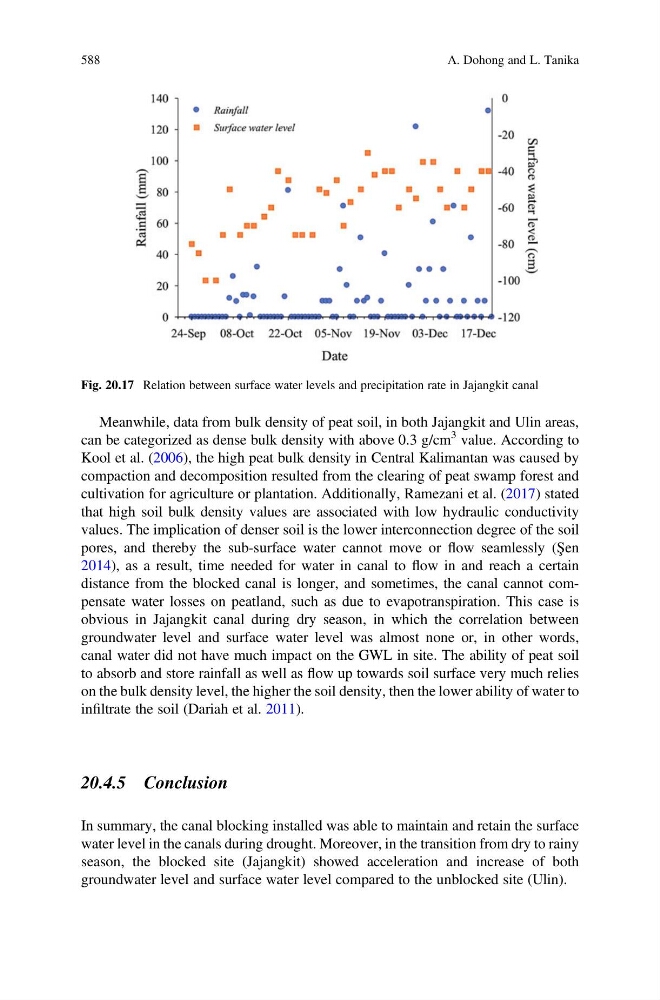
Fig. 20.17 Relation between surface water levels and precipitation rate in Jajangkit canal
588
A. Dohong and L. Tanika
can be categorized as dense bulk density with above 0.3 g/cm
3 value. According to
Kool et al. (2006), the high peat bulk density in Central Kalimantan was caused by
compaction and decomposition resulted from the clearing of peat swamp forest and
cultivation for agriculture or plantation. Additionally, Ramezani et al. (2017) stated
that high soil bulk density values are associated with low hydraulic conductivity
values. The implication of denser soil is the lower interconnection degree of the soil
pores, and thereby the sub-surface water cannot move or flow seamlessly (Şen
2014), as a result, time needed for water in canal to flow in and reach a certain
distance from the blocked canal is longer, and sometimes, the canal cannot compensate water losses on peatland, such as due to evapotranspiration. This case is
obvious in Jajangkit canal during dry season, in which the correlation between
groundwater level and surface water level was almost none or, in other words,
canal water did not have much impact on the GWL in site. The ability of peat soil
to absorb and store rainfall as well as flow up towards soil surface very much relies
on the bulk density level, the higher the soil density, then the lower ability of water to
infiltrate the soil (Dariah et al. 2011).
20.4.5 Conclusion
In summary, the canal blocking installed was able to maintain and retain the surface
water level in the canals during drought. Moreover, in the transition from dry to rainy
season, the blocked site (Jajangkit) showed acceleration and increase of both
groundwater level and surface water level compared to the unblocked site (Ulin).
Fig. 20.17 Relation between surface water levels and precipitation rate in Jajangkit canal
588
A. Dohong and L. Tanika