

3. Throughfall, much of the rain reaches the ground surface of the forest floor, then
infiltrates into the ground.
19.2.1 Water Flow and Balance
Total amount of the rain which reaches the ground surface by the throughfall and
stemflow supplies groundwater and soil moisture. Water in the soil layer, soil
moisture, and groundwater are partly used for evapotranspiration through the trees
and surface grass, and others flow out as horizontal runoff and downward infiltration.
If the amount of throughfall is larger than the total amount of horizontal runoff,
infiltration, and evapotranspiration, the water stock in the soil layer increases, which
means higher groundwater level (GWL) and also lower GWL when the condition is
reversed (Fig. 19.2).
Kayama et al. (2000) showed the rates of water flow components, such as the
gross rainfall, interception, evapotranspiration, throughfall, stemflow, runoff, and
storage change, during the rainy season in a tropical peat swamp forest in the
Sebangau Catchment, Central Kalimantan, Indonesia.
Total amount of gross rainfall from Dec. 16, 1998 to Feb. 7, 1999 was 494.5 mm
at the site. And the total amount of throughfall, stemflow, and interception was
85.4%, 1.6%, and 13%, respectively (Fig. 19.3). The crown interceptions of several
forest types vary from 6.2% to 22.0% depending on forest type as shown in
Table 19.1. The interception measured in the forest of the Sebangau River Catchment was approximately the same as that measured at the tropical dry forest in
Brazil, 14.6–15.6% (Calvo-Alvarado et al. 2018), slightly lower than that of a logged
forest in Kalimantan, 6.2% (Asdak et al. 1998).
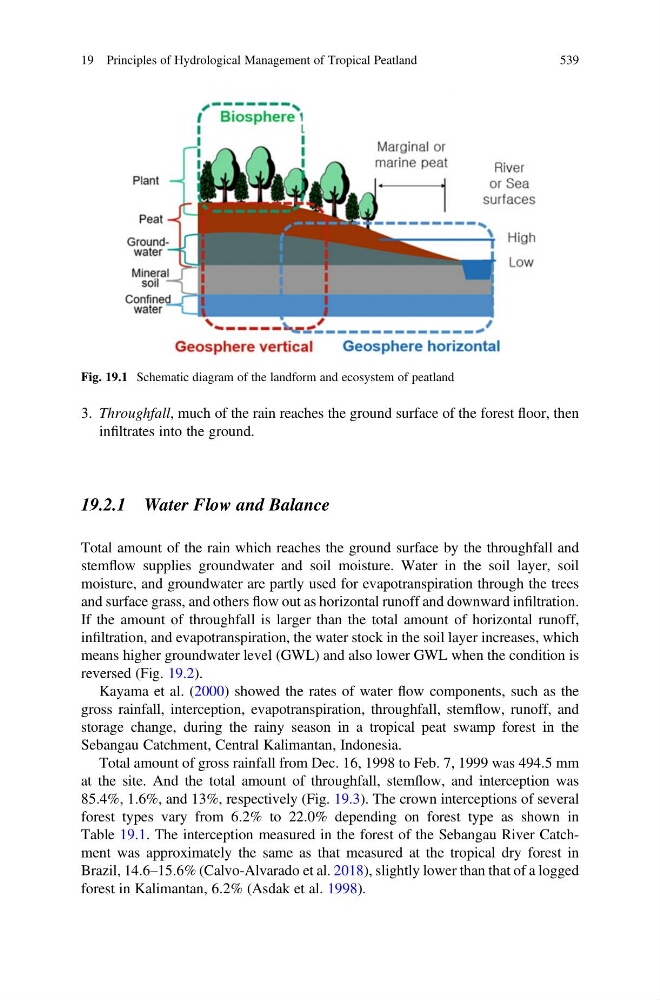
Fig. 19.1 Schematic diagram of the landform and ecosystem of peatland
19 Principles of Hydrological Management of Tropical Peatland
539
infiltrates into the ground.
19.2.1 Water Flow and Balance
Total amount of the rain which reaches the ground surface by the throughfall and
stemflow supplies groundwater and soil moisture. Water in the soil layer, soil
moisture, and groundwater are partly used for evapotranspiration through the trees
and surface grass, and others flow out as horizontal runoff and downward infiltration.
If the amount of throughfall is larger than the total amount of horizontal runoff,
infiltration, and evapotranspiration, the water stock in the soil layer increases, which
means higher groundwater level (GWL) and also lower GWL when the condition is
reversed (Fig. 19.2).
Kayama et al. (2000) showed the rates of water flow components, such as the
gross rainfall, interception, evapotranspiration, throughfall, stemflow, runoff, and
storage change, during the rainy season in a tropical peat swamp forest in the
Sebangau Catchment, Central Kalimantan, Indonesia.
Total amount of gross rainfall from Dec. 16, 1998 to Feb. 7, 1999 was 494.5 mm
at the site. And the total amount of throughfall, stemflow, and interception was
85.4%, 1.6%, and 13%, respectively (Fig. 19.3). The crown interceptions of several
forest types vary from 6.2% to 22.0% depending on forest type as shown in
Table 19.1. The interception measured in the forest of the Sebangau River Catchment was approximately the same as that measured at the tropical dry forest in
Brazil, 14.6–15.6% (Calvo-Alvarado et al. 2018), slightly lower than that of a logged
forest in Kalimantan, 6.2% (Asdak et al. 1998).
Fig. 19.1 Schematic diagram of the landform and ecosystem of peatland
19 Principles of Hydrological Management of Tropical Peatland
539