

comply with a range of BMPs. In order to ensure a clear and standardized understanding of the requirement, the RSPO has adopted a generic definition for peat and
organic soil (histosol), called the “RSPO Organic & Peat Soil Classification” which
is to be used globally with the exception of countries having national definitions of
histosol as specified in their respective NIs.
In order to ensure proper management of peatlands within the management area,
areas containing peat, whether planted or not, are to be identified, documented and
reported to the RSPO in the newly introduced peat inventory.
The requirement for drainability assessments was further strengthened, requiring
drainability assessments to be conducted at least 5 years prior to replanting and oil
palm phased out and the assessed areas rehabilitated, if results of the assessment
conclude that the natural drainability limit will be reached within 40 years, or two
cycles of oil palm planting, whichever is greater. To ensure standardization of the
methodology used to conduct drainability assessments, on 11 June 2019 the RSPO
introduced the “RSPO Drainability Assessment Procedure” (RSPO 2019), which
was developed by Wetlands International under the guidance of the Second RSPO
Peatland Working Group (PLWG-2).
Both volume I and volume II of the BMP Peat Manuals, originally introduced in
2012, were substantially revised and updated in the period 2017–2019 incorporating
new information, methods and practices on management of peatlands (Parish et al.
2019a, b). Implementation of key BMPs specified in both Manuals was made
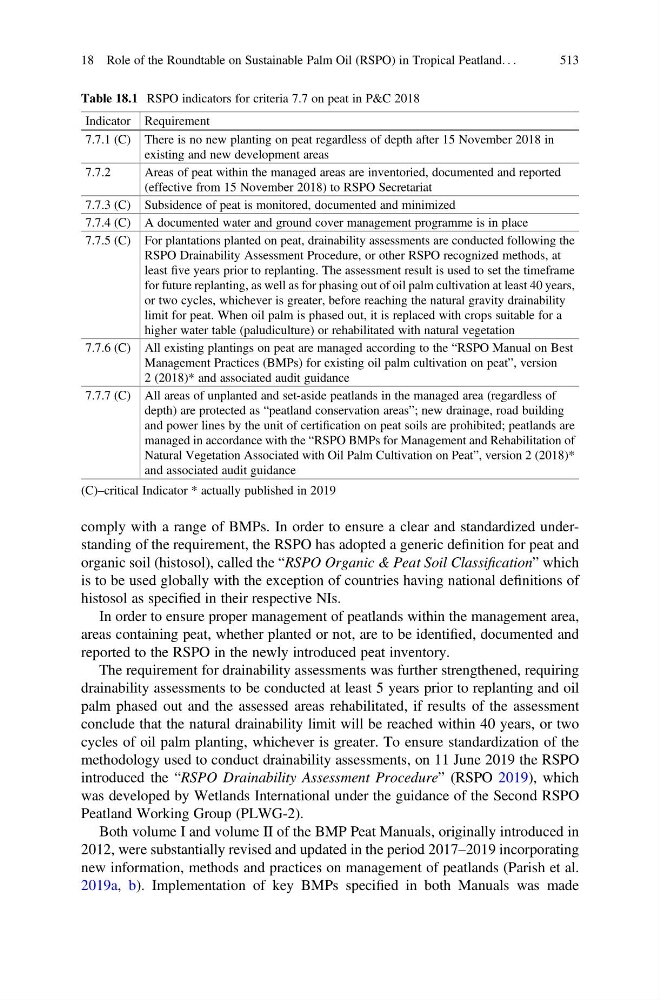
Table 18.1 RSPO indicators for criteria 7.7 on peat in P&C 2018
Indicator Requirement
7.7.1 (C) There is no new planting on peat regardless of depth after 15 November 2018 in
existing and new development areas
7.7.2
Areas of peat within the managed areas are inventoried, documented and reported
(effective from 15 November 2018) to RSPO Secretariat
7.7.3 (C) Subsidence of peat is monitored, documented and minimized
7.7.4 (C) A documented water and ground cover management programme is in place
7.7.5 (C) For plantations planted on peat, drainability assessments are conducted following the
RSPO Drainability Assessment Procedure, or other RSPO recognized methods, at
least five years prior to replanting. The assessment result is used to set the timeframe
for future replanting, as well as for phasing out of oil palm cultivation at least 40 years,
or two cycles, whichever is greater, before reaching the natural gravity drainability
limit for peat. When oil palm is phased out, it is replaced with crops suitable for a
higher water table (paludiculture) or rehabilitated with natural vegetation
7.7.6 (C) All existing plantings on peat are managed according to the “RSPO Manual on Best
Management Practices (BMPs) for existing oil palm cultivation on peat”, version
2 (2018)* and associated audit guidance
7.7.7 (C) All areas of unplanted and set-aside peatlands in the managed area (regardless of
depth) are protected as “peatland conservation areas”; new drainage, road building
and power lines by the unit of certification on peat soils are prohibited; peatlands are
managed in accordance with the “RSPO BMPs for Management and Rehabilitation of
Natural Vegetation Associated with Oil Palm Cultivation on Peat”, version 2 (2018)*
and associated audit guidance
(C)–critical Indicator * actually published in 2019
18 Role of the Roundtable on Sustainable Palm Oil (RSPO) in Tropical Peatland. . .
513
organic soil (histosol), called the “RSPO Organic & Peat Soil Classification” which
is to be used globally with the exception of countries having national definitions of
histosol as specified in their respective NIs.
In order to ensure proper management of peatlands within the management area,
areas containing peat, whether planted or not, are to be identified, documented and
reported to the RSPO in the newly introduced peat inventory.
The requirement for drainability assessments was further strengthened, requiring
drainability assessments to be conducted at least 5 years prior to replanting and oil
palm phased out and the assessed areas rehabilitated, if results of the assessment
conclude that the natural drainability limit will be reached within 40 years, or two
cycles of oil palm planting, whichever is greater. To ensure standardization of the
methodology used to conduct drainability assessments, on 11 June 2019 the RSPO
introduced the “RSPO Drainability Assessment Procedure” (RSPO 2019), which
was developed by Wetlands International under the guidance of the Second RSPO
Peatland Working Group (PLWG-2).
Both volume I and volume II of the BMP Peat Manuals, originally introduced in
2012, were substantially revised and updated in the period 2017–2019 incorporating
new information, methods and practices on management of peatlands (Parish et al.
2019a, b). Implementation of key BMPs specified in both Manuals was made
Table 18.1 RSPO indicators for criteria 7.7 on peat in P&C 2018
Indicator Requirement
7.7.1 (C) There is no new planting on peat regardless of depth after 15 November 2018 in
existing and new development areas
7.7.2
Areas of peat within the managed areas are inventoried, documented and reported
(effective from 15 November 2018) to RSPO Secretariat
7.7.3 (C) Subsidence of peat is monitored, documented and minimized
7.7.4 (C) A documented water and ground cover management programme is in place
7.7.5 (C) For plantations planted on peat, drainability assessments are conducted following the
RSPO Drainability Assessment Procedure, or other RSPO recognized methods, at
least five years prior to replanting. The assessment result is used to set the timeframe
for future replanting, as well as for phasing out of oil palm cultivation at least 40 years,
or two cycles, whichever is greater, before reaching the natural gravity drainability
limit for peat. When oil palm is phased out, it is replaced with crops suitable for a
higher water table (paludiculture) or rehabilitated with natural vegetation
7.7.6 (C) All existing plantings on peat are managed according to the “RSPO Manual on Best
Management Practices (BMPs) for existing oil palm cultivation on peat”, version
2 (2018)* and associated audit guidance
7.7.7 (C) All areas of unplanted and set-aside peatlands in the managed area (regardless of
depth) are protected as “peatland conservation areas”; new drainage, road building
and power lines by the unit of certification on peat soils are prohibited; peatlands are
managed in accordance with the “RSPO BMPs for Management and Rehabilitation of
Natural Vegetation Associated with Oil Palm Cultivation on Peat”, version 2 (2018)*
and associated audit guidance
(C)–critical Indicator * actually published in 2019
18 Role of the Roundtable on Sustainable Palm Oil (RSPO) in Tropical Peatland. . .
513