

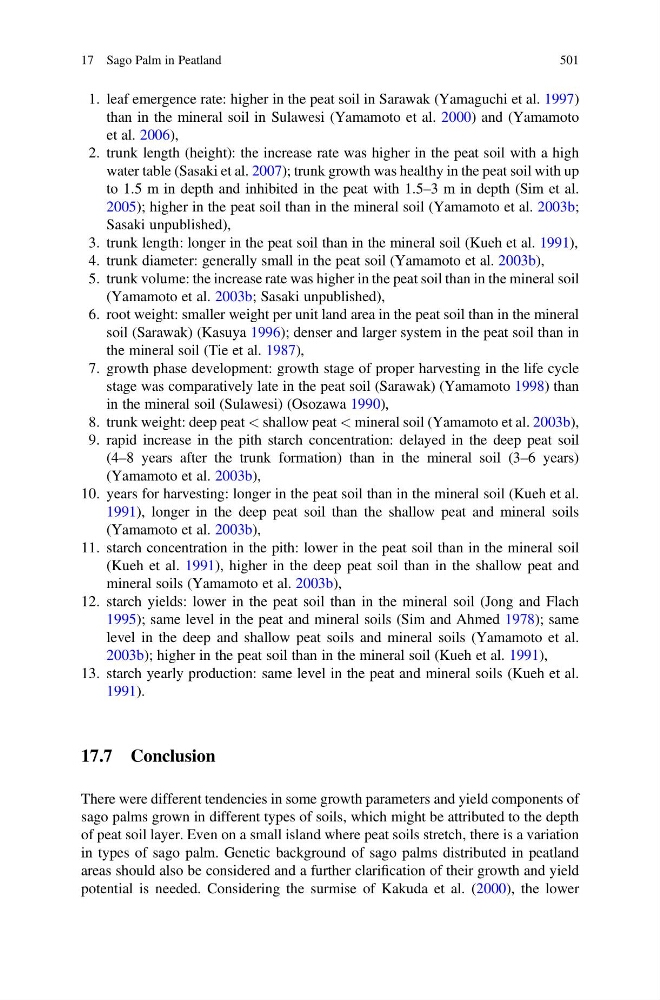
1. leaf emergence rate: higher in the peat soil in Sarawak (Yamaguchi et al. 1997)
than in the mineral soil in Sulawesi (Yamamoto et al. 2000) and (Yamamoto
et al. 2006),
2. trunk length (height): the increase rate was higher in the peat soil with a high
water table (Sasaki et al. 2007); trunk growth was healthy in the peat soil with up
to 1.5 m in depth and inhibited in the peat with 1.5–3 m in depth (Sim et al.
2005); higher in the peat soil than in the mineral soil (Yamamoto et al. 2003b;
Sasaki unpublished),
3. trunk length: longer in the peat soil than in the mineral soil (Kueh et al. 1991),
4. trunk diameter: generally small in the peat soil (Yamamoto et al. 2003b),
5. trunk volume: the increase rate was higher in the peat soil than in the mineral soil
(Yamamoto et al. 2003b; Sasaki unpublished),
6. root weight: smaller weight per unit land area in the peat soil than in the mineral
soil (Sarawak) (Kasuya 1996); denser and larger system in the peat soil than in
the mineral soil (Tie et al. 1987),
7. growth phase development: growth stage of proper harvesting in the life cycle
stage was comparatively late in the peat soil (Sarawak) (Yamamoto 1998) than
in the mineral soil (Sulawesi) (Osozawa 1990),
8. trunk weight: deep peat < shallow peat < mineral soil (Yamamoto et al. 2003b),
9. rapid increase in the pith starch concentration: delayed in the deep peat soil
(4–8 years after the trunk formation) than in the mineral soil (3–6 years)
(Yamamoto et al. 2003b),
10. years for harvesting: longer in the peat soil than in the mineral soil (Kueh et al.
1991), longer in the deep peat soil than the shallow peat and mineral soils
(Yamamoto et al. 2003b),
11. starch concentration in the pith: lower in the peat soil than in the mineral soil
(Kueh et al. 1991), higher in the deep peat soil than in the shallow peat and
mineral soils (Yamamoto et al. 2003b),
12. starch yields: lower in the peat soil than in the mineral soil (Jong and Flach
1995); same level in the peat and mineral soils (Sim and Ahmed 1978); same
level in the deep and shallow peat soils and mineral soils (Yamamoto et al.
2003b); higher in the peat soil than in the mineral soil (Kueh et al. 1991),
13. starch yearly production: same level in the peat and mineral soils (Kueh et al.
1991).
17.7 Conclusion
There were different tendencies in some growth parameters and yield components of
sago palms grown in different types of soils, which might be attributed to the depth
of peat soil layer. Even on a small island where peat soils stretch, there is a variation
in types of sago palm. Genetic background of sago palms distributed in peatland
areas should also be considered and a further clarification of their growth and yield
potential is needed. Considering the surmise of Kakuda et al. (2000), the lower
17 Sago Palm in Peatland
501
than in the mineral soil in Sulawesi (Yamamoto et al. 2000) and (Yamamoto
et al. 2006),
2. trunk length (height): the increase rate was higher in the peat soil with a high
water table (Sasaki et al. 2007); trunk growth was healthy in the peat soil with up
to 1.5 m in depth and inhibited in the peat with 1.5–3 m in depth (Sim et al.
2005); higher in the peat soil than in the mineral soil (Yamamoto et al. 2003b;
Sasaki unpublished),
3. trunk length: longer in the peat soil than in the mineral soil (Kueh et al. 1991),
4. trunk diameter: generally small in the peat soil (Yamamoto et al. 2003b),
5. trunk volume: the increase rate was higher in the peat soil than in the mineral soil
(Yamamoto et al. 2003b; Sasaki unpublished),
6. root weight: smaller weight per unit land area in the peat soil than in the mineral
soil (Sarawak) (Kasuya 1996); denser and larger system in the peat soil than in
the mineral soil (Tie et al. 1987),
7. growth phase development: growth stage of proper harvesting in the life cycle
stage was comparatively late in the peat soil (Sarawak) (Yamamoto 1998) than
in the mineral soil (Sulawesi) (Osozawa 1990),
8. trunk weight: deep peat < shallow peat < mineral soil (Yamamoto et al. 2003b),
9. rapid increase in the pith starch concentration: delayed in the deep peat soil
(4–8 years after the trunk formation) than in the mineral soil (3–6 years)
(Yamamoto et al. 2003b),
10. years for harvesting: longer in the peat soil than in the mineral soil (Kueh et al.
1991), longer in the deep peat soil than the shallow peat and mineral soils
(Yamamoto et al. 2003b),
11. starch concentration in the pith: lower in the peat soil than in the mineral soil
(Kueh et al. 1991), higher in the deep peat soil than in the shallow peat and
mineral soils (Yamamoto et al. 2003b),
12. starch yields: lower in the peat soil than in the mineral soil (Jong and Flach
1995); same level in the peat and mineral soils (Sim and Ahmed 1978); same
level in the deep and shallow peat soils and mineral soils (Yamamoto et al.
2003b); higher in the peat soil than in the mineral soil (Kueh et al. 1991),
13. starch yearly production: same level in the peat and mineral soils (Kueh et al.
1991).
17.7 Conclusion
There were different tendencies in some growth parameters and yield components of
sago palms grown in different types of soils, which might be attributed to the depth
of peat soil layer. Even on a small island where peat soils stretch, there is a variation
in types of sago palm. Genetic background of sago palms distributed in peatland
areas should also be considered and a further clarification of their growth and yield
potential is needed. Considering the surmise of Kakuda et al. (2000), the lower
17 Sago Palm in Peatland
501