

are tried and trusted and there are few very examples of paludiculture for farmers to
copy and (2) insufficient information/knowledge about paludiculture species (performance, growth, markets, and so on). These two reasons are linked and can only be
overcome by the implementation of rigorous paludiculture trials, with full rewetting
and sourcing of correct, peatland adaptive species and propagation material. There is
reason for optimism as various agencies are currently developing paludiculture
programs in Indonesia, including FOERDIA, ICRAF, UGM, Food and Agriculture
Organization (FAO), Global Green Growth Institute (GGGI) Indonesia, and the
United Nations Environment Program (UNEP).
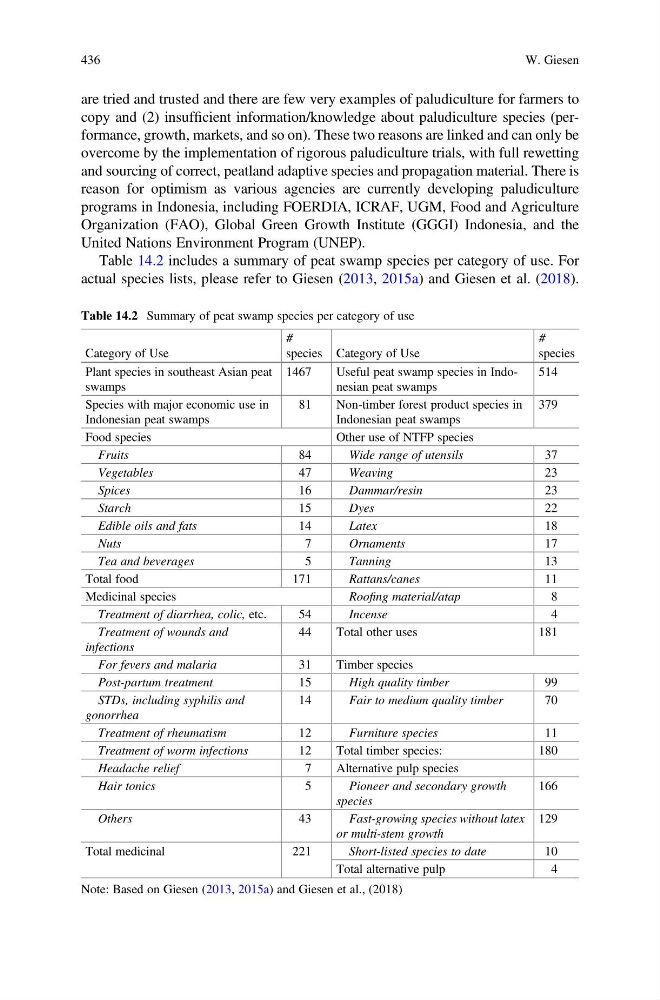
Table 14.2 includes a summary of peat swamp species per category of use. For
actual species lists, please refer to Giesen (2013, 2015a) and Giesen et al. (2018).
Table 14.2 Summary of peat swamp species per category of use
Category of Use
#
species Category of Use
#
species
Plant species in southeast Asian peat
swamps
1467
Useful peat swamp species in Indonesian peat swamps
514
Species with major economic use in
Indonesian peat swamps
81
Non-timber forest product species in
Indonesian peat swamps
379
Food species
Other use of NTFP species
Fruits
84
Wide range of utensils
37
Vegetables
47
Weaving
23
Spices
16
Dammar/resin
23
Starch
15
Dyes
22
Edible oils and fats
14
Latex
18
Nuts
7
Ornaments
17
Tea and beverages
5
Tanning
13
Total food
171
Rattans/canes
11
Medicinal species
Roofing material/atap
8
Treatment of diarrhea, colic, etc.
54
Incense
4
Treatment of wounds and
infections
44
Total other uses
181
For fevers and malaria
31
Timber species
Post-partum treatment
15
High quality timber
99
STDs, including syphilis and
gonorrhea
14
Fair to medium quality timber
70
Treatment of rheumatism
12
Furniture species
11
Treatment of worm infections
12
Total timber species:
180
Headache relief
7
Alternative pulp species
Hair tonics
5
Pioneer and secondary growth
species
166
Others
43
Fast-growing species without latex
or multi-stem growth
129
Total medicinal
221
Short-listed species to date
10
Total alternative pulp
4
Note: Based on Giesen (2013, 2015a) and Giesen et al., (2018)
436
W. Giesen
copy and (2) insufficient information/knowledge about paludiculture species (performance, growth, markets, and so on). These two reasons are linked and can only be
overcome by the implementation of rigorous paludiculture trials, with full rewetting
and sourcing of correct, peatland adaptive species and propagation material. There is
reason for optimism as various agencies are currently developing paludiculture
programs in Indonesia, including FOERDIA, ICRAF, UGM, Food and Agriculture
Organization (FAO), Global Green Growth Institute (GGGI) Indonesia, and the
United Nations Environment Program (UNEP).
Table 14.2 includes a summary of peat swamp species per category of use. For
actual species lists, please refer to Giesen (2013, 2015a) and Giesen et al. (2018).
Table 14.2 Summary of peat swamp species per category of use
Category of Use
#
species Category of Use
#
species
Plant species in southeast Asian peat
swamps
1467
Useful peat swamp species in Indonesian peat swamps
514
Species with major economic use in
Indonesian peat swamps
81
Non-timber forest product species in
Indonesian peat swamps
379
Food species
Other use of NTFP species
Fruits
84
Wide range of utensils
37
Vegetables
47
Weaving
23
Spices
16
Dammar/resin
23
Starch
15
Dyes
22
Edible oils and fats
14
Latex
18
Nuts
7
Ornaments
17
Tea and beverages
5
Tanning
13
Total food
171
Rattans/canes
11
Medicinal species
Roofing material/atap
8
Treatment of diarrhea, colic, etc.
54
Incense
4
Treatment of wounds and
infections
44
Total other uses
181
For fevers and malaria
31
Timber species
Post-partum treatment
15
High quality timber
99
STDs, including syphilis and
gonorrhea
14
Fair to medium quality timber
70
Treatment of rheumatism
12
Furniture species
11
Treatment of worm infections
12
Total timber species:
180
Headache relief
7
Alternative pulp species
Hair tonics
5
Pioneer and secondary growth
species
166
Others
43
Fast-growing species without latex
or multi-stem growth
129
Total medicinal
221
Short-listed species to date
10
Total alternative pulp
4
Note: Based on Giesen (2013, 2015a) and Giesen et al., (2018)
436
W. Giesen