

1. Bulk density and particle density, and total pore space decreased trend with an
increase of biochar application rate.
2. Fast pore drainage decreased trend with an increase of biochar rate.
3. Available water pore and water retention increased trend with an increase of
biochar application rate.
4. Water permeability decreased trend with an increase of biochar application rate.
Thus, large amount of biochar application will change soil physical properties,
namely (1) decreasing air space inside the soil and (2) increasing water holding
capacity. If biochar application increases, the oxygen diffusion rate into soil will
decrease. Therefore, it is suggested that a large amount of biochar application,
probably more than 250 t ha
À1 in this case, will be ineffective for plant growth.
Biochar application reduces soil bulk density, increases soil porosity, and retains
water (Ardiyani et al. 2015; Githinji 2014; Masulili et al. 2010; Asai et al. 2009).
Biochar application to acid soils increases porosity by about 10% and available
water pores by 2% (Masulili et al. 2010).
The cacao shell biochar with 15 t ha
À1 application increases the aggregate
stability index of Ultisol from 67.28% to 130.12% (Shalsabila et al. 2017). Soil
aggregate stability index is the ratio of dry Diameter Mass Ratio (DMR) to wet
DMR, where DMR is the average value of an aggregate particle. The stable
aggregate will contribute to plants. The stable aggregate is influenced by organic
matter because it activates microorganisms to exudate biofilm-like compounds.
Thus, the high rate of land degradation occurs in soil with a very low organic matter
content, for which biochar that inoculated microorganisms is very useful.
Biochar improves water retention in semi-arid regions such as North Lombok
(Suwardji et al. 2012). Thus, biochar application is important to improve soil
physical properties of (1) aggregation and (2) water holding capacity (Dariah and
Heryani 2014).
1000
fungi
bacteria
Total fungi
× 10 5 (cfu/g)
total fungi
× 10 5 (cfu/g)
Total
bacteria × 10 7
cfu/g
total
bacteria × 10 7
(cfu/g)
900
800
700
600
500
400
300
200
100
0
7
8
9
pH of biochar
10
11
y = –0.199x 2 + 13.96x – 31.89
R 2 = 0.242
12
4000
3500
3000
2500
2000
1500
1000
500
0
1000
900
800
700
600
500
400
300
200
100
0
0
1 0
2 0
3 0
4 0
5 0
6 0
organic carbon of biochar (%)
4000
3500
3000
2500
2000
1500
1000
500
fungi
bacteria
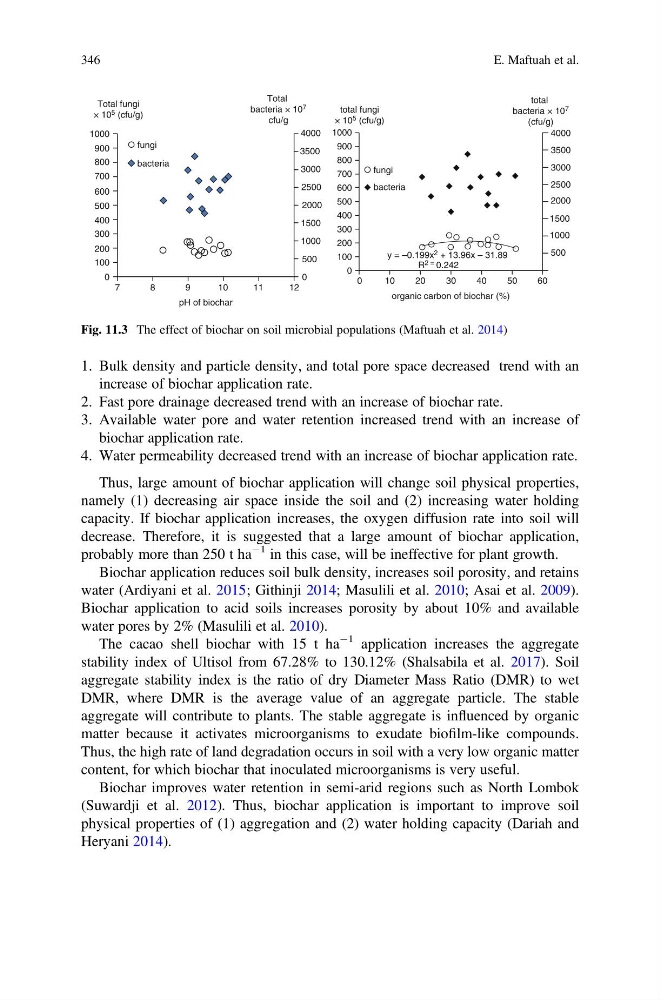
Fig. 11.3 The effect of biochar on soil microbial populations (Maftuah et al. 2014)
346
E. Maftuah et al.
increase of biochar application rate.
2. Fast pore drainage decreased trend with an increase of biochar rate.
3. Available water pore and water retention increased trend with an increase of
biochar application rate.
4. Water permeability decreased trend with an increase of biochar application rate.
Thus, large amount of biochar application will change soil physical properties,
namely (1) decreasing air space inside the soil and (2) increasing water holding
capacity. If biochar application increases, the oxygen diffusion rate into soil will
decrease. Therefore, it is suggested that a large amount of biochar application,
probably more than 250 t ha
À1 in this case, will be ineffective for plant growth.
Biochar application reduces soil bulk density, increases soil porosity, and retains
water (Ardiyani et al. 2015; Githinji 2014; Masulili et al. 2010; Asai et al. 2009).
Biochar application to acid soils increases porosity by about 10% and available
water pores by 2% (Masulili et al. 2010).
The cacao shell biochar with 15 t ha
À1 application increases the aggregate
stability index of Ultisol from 67.28% to 130.12% (Shalsabila et al. 2017). Soil
aggregate stability index is the ratio of dry Diameter Mass Ratio (DMR) to wet
DMR, where DMR is the average value of an aggregate particle. The stable
aggregate will contribute to plants. The stable aggregate is influenced by organic
matter because it activates microorganisms to exudate biofilm-like compounds.
Thus, the high rate of land degradation occurs in soil with a very low organic matter
content, for which biochar that inoculated microorganisms is very useful.
Biochar improves water retention in semi-arid regions such as North Lombok
(Suwardji et al. 2012). Thus, biochar application is important to improve soil
physical properties of (1) aggregation and (2) water holding capacity (Dariah and
Heryani 2014).
1000
fungi
bacteria
Total fungi
× 10 5 (cfu/g)
total fungi
× 10 5 (cfu/g)
Total
bacteria × 10 7
cfu/g
total
bacteria × 10 7
(cfu/g)
900
800
700
600
500
400
300
200
100
0
7
8
9
pH of biochar
10
11
y = –0.199x 2 + 13.96x – 31.89
R 2 = 0.242
12
4000
3500
3000
2500
2000
1500
1000
500
0
1000
900
800
700
600
500
400
300
200
100
0
0
1 0
2 0
3 0
4 0
5 0
6 0
organic carbon of biochar (%)
4000
3500
3000
2500
2000
1500
1000
500
fungi
bacteria
Fig. 11.3 The effect of biochar on soil microbial populations (Maftuah et al. 2014)
346
E. Maftuah et al.