

10.1 Introduction
Oil palm is a highly economic plant for a tropical country such as Indonesia where
the development of the crop is not only limited on mineral soils but also on peat soils.
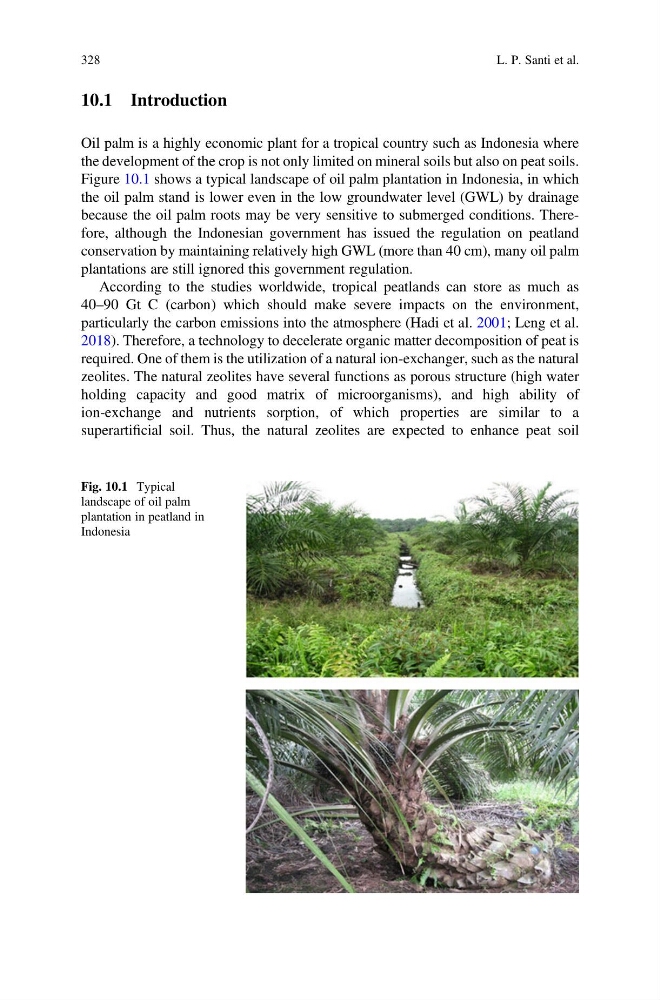
Figure 10.1 shows a typical landscape of oil palm plantation in Indonesia, in which
the oil palm stand is lower even in the low groundwater level (GWL) by drainage
because the oil palm roots may be very sensitive to submerged conditions. Therefore, although the Indonesian government has issued the regulation on peatland
conservation by maintaining relatively high GWL (more than 40 cm), many oil palm
plantations are still ignored this government regulation.
According to the studies worldwide, tropical peatlands can store as much as
40–90 Gt C (carbon) which should make severe impacts on the environment,
particularly the carbon emissions into the atmosphere (Hadi et al. 2001; Leng et al.
2018). Therefore, a technology to decelerate organic matter decomposition of peat is
required. One of them is the utilization of a natural ion-exchanger, such as the natural
zeolites. The natural zeolites have several functions as porous structure (high water
holding capacity and good matrix of microorganisms), and high ability of
ion-exchange and nutrients sorption, of which properties are similar to a
superartificial soil. Thus, the natural zeolites are expected to enhance peat soil
Fig. 10.1 Typical
landscape of oil palm
plantation in peatland in
Indonesia
328
L. P. Santi et al.
Oil palm is a highly economic plant for a tropical country such as Indonesia where
the development of the crop is not only limited on mineral soils but also on peat soils.
Figure 10.1 shows a typical landscape of oil palm plantation in Indonesia, in which
the oil palm stand is lower even in the low groundwater level (GWL) by drainage
because the oil palm roots may be very sensitive to submerged conditions. Therefore, although the Indonesian government has issued the regulation on peatland
conservation by maintaining relatively high GWL (more than 40 cm), many oil palm
plantations are still ignored this government regulation.
According to the studies worldwide, tropical peatlands can store as much as
40–90 Gt C (carbon) which should make severe impacts on the environment,
particularly the carbon emissions into the atmosphere (Hadi et al. 2001; Leng et al.
2018). Therefore, a technology to decelerate organic matter decomposition of peat is
required. One of them is the utilization of a natural ion-exchanger, such as the natural
zeolites. The natural zeolites have several functions as porous structure (high water
holding capacity and good matrix of microorganisms), and high ability of
ion-exchange and nutrients sorption, of which properties are similar to a
superartificial soil. Thus, the natural zeolites are expected to enhance peat soil
Fig. 10.1 Typical
landscape of oil palm
plantation in peatland in
Indonesia
328
L. P. Santi et al.