

Another interesting finding is that areal roots grow very well below the oil palm
trunks. The other key point of AeroHydro culture is land surface management, which
maintains the surface moisture by adding AeroHydro media and litter on the surface.
AeroHydro media clearly triggered and attracted upward lateral root growth to
absorb nutrients and obtain oxygen. Plants can still grow better even in high water
conditions because their needs (nutrients and oxygen) are fulfilled from the surface.
Draining peatlands is no longer needed with this technique, and the peat stays
appropriately wet (Fig. 7.21).
Another improvement was observed in leaf parameters, which grew greener and
grew more new fronds (oil palm and sago) and new leaves (Shorea balangeran)
compared to the leaves in the control plots (conventional technique). Plants can
obtain enough nutrients from the provided AeroHydro media. In conventional
systems, fertilizer is often put directly into the soil. This causes most fertilizer to
leach; therefore, it is inefficient. The various components of AeroHydro media
include zeolite, which absorbs various minerals and nutrients. It performs the same
function as a slow-release function, which holds the material so that it is not easily
washed away (leached) by the acid in peatlands. Since the AeroHydro media are
placed on the surface, there is no direct interaction with the peat soil or chemical
reactions that lead to leaching. Other biological components, such as compost
enriched with mycorrhizae and liquid organic biofertilizer containing plant
a)
b)
c)
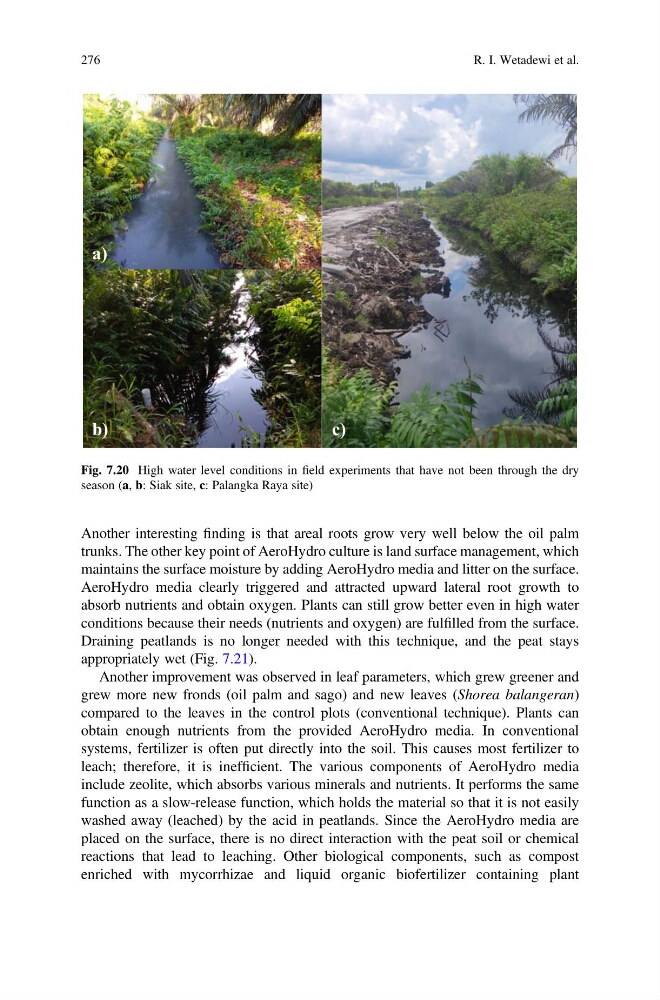
Fig. 7.20 High water level conditions in field experiments that have not been through the dry
season (a, b: Siak site, c: Palangka Raya site)
276
R. I. Wetadewi et al.
trunks. The other key point of AeroHydro culture is land surface management, which
maintains the surface moisture by adding AeroHydro media and litter on the surface.
AeroHydro media clearly triggered and attracted upward lateral root growth to
absorb nutrients and obtain oxygen. Plants can still grow better even in high water
conditions because their needs (nutrients and oxygen) are fulfilled from the surface.
Draining peatlands is no longer needed with this technique, and the peat stays
appropriately wet (Fig. 7.21).
Another improvement was observed in leaf parameters, which grew greener and
grew more new fronds (oil palm and sago) and new leaves (Shorea balangeran)
compared to the leaves in the control plots (conventional technique). Plants can
obtain enough nutrients from the provided AeroHydro media. In conventional
systems, fertilizer is often put directly into the soil. This causes most fertilizer to
leach; therefore, it is inefficient. The various components of AeroHydro media
include zeolite, which absorbs various minerals and nutrients. It performs the same
function as a slow-release function, which holds the material so that it is not easily
washed away (leached) by the acid in peatlands. Since the AeroHydro media are
placed on the surface, there is no direct interaction with the peat soil or chemical
reactions that lead to leaching. Other biological components, such as compost
enriched with mycorrhizae and liquid organic biofertilizer containing plant
a)
b)
c)
Fig. 7.20 High water level conditions in field experiments that have not been through the dry
season (a, b: Siak site, c: Palangka Raya site)
276
R. I. Wetadewi et al.