

depend on evaporation from land for more than a third of their water supply,
showing that for many megacities, terrestrial dependence is higher in dry years
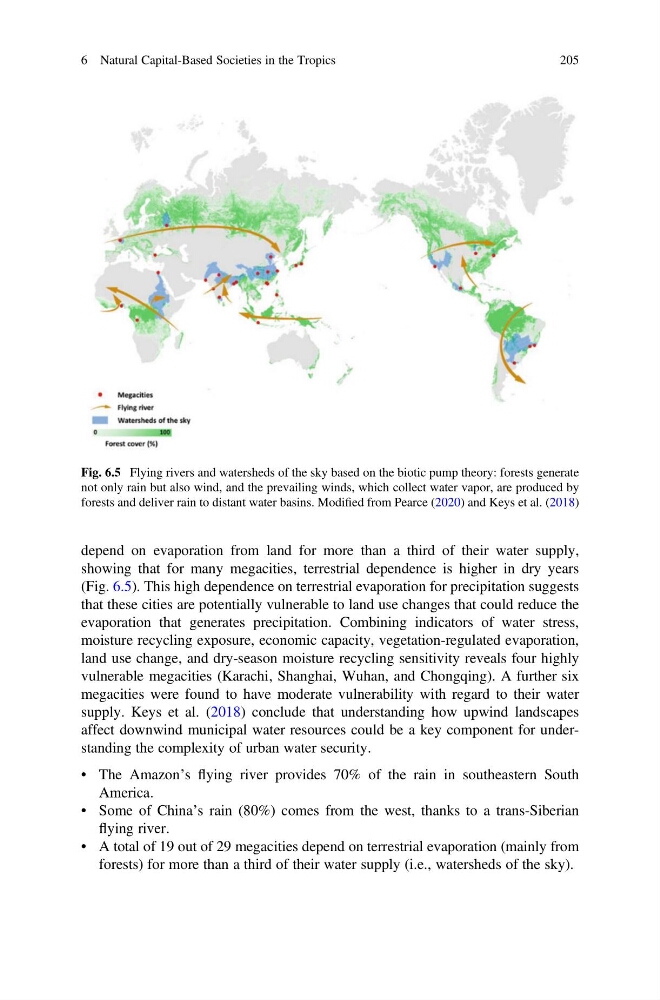
(Fig. 6.5). This high dependence on terrestrial evaporation for precipitation suggests
that these cities are potentially vulnerable to land use changes that could reduce the
evaporation that generates precipitation. Combining indicators of water stress,
moisture recycling exposure, economic capacity, vegetation-regulated evaporation,
land use change, and dry-season moisture recycling sensitivity reveals four highly
vulnerable megacities (Karachi, Shanghai, Wuhan, and Chongqing). A further six
megacities were found to have moderate vulnerability with regard to their water
supply. Keys et al. (2018) conclude that understanding how upwind landscapes
affect downwind municipal water resources could be a key component for understanding the complexity of urban water security.
• The Amazon’s flying river provides 70% of the rain in southeastern South
America.
• Some of China’s rain (80%) comes from the west, thanks to a trans-Siberian
flying river.
• A total of 19 out of 29 megacities depend on terrestrial evaporation (mainly from
forests) for more than a third of their water supply (i.e., watersheds of the sky).
Fig. 6.5 Flying rivers and watersheds of the sky based on the biotic pump theory: forests generate
not only rain but also wind, and the prevailing winds, which collect water vapor, are produced by
forests and deliver rain to distant water basins. Modified from Pearce (2020) and Keys et al. (2018)
6 Natural Capital-Based Societies in the Tropics
205
showing that for many megacities, terrestrial dependence is higher in dry years
(Fig. 6.5). This high dependence on terrestrial evaporation for precipitation suggests
that these cities are potentially vulnerable to land use changes that could reduce the
evaporation that generates precipitation. Combining indicators of water stress,
moisture recycling exposure, economic capacity, vegetation-regulated evaporation,
land use change, and dry-season moisture recycling sensitivity reveals four highly
vulnerable megacities (Karachi, Shanghai, Wuhan, and Chongqing). A further six
megacities were found to have moderate vulnerability with regard to their water
supply. Keys et al. (2018) conclude that understanding how upwind landscapes
affect downwind municipal water resources could be a key component for understanding the complexity of urban water security.
• The Amazon’s flying river provides 70% of the rain in southeastern South
America.
• Some of China’s rain (80%) comes from the west, thanks to a trans-Siberian
flying river.
• A total of 19 out of 29 megacities depend on terrestrial evaporation (mainly from
forests) for more than a third of their water supply (i.e., watersheds of the sky).
Fig. 6.5 Flying rivers and watersheds of the sky based on the biotic pump theory: forests generate
not only rain but also wind, and the prevailing winds, which collect water vapor, are produced by
forests and deliver rain to distant water basins. Modified from Pearce (2020) and Keys et al. (2018)
6 Natural Capital-Based Societies in the Tropics
205