

264
P. Jenni and T. S. Virdee
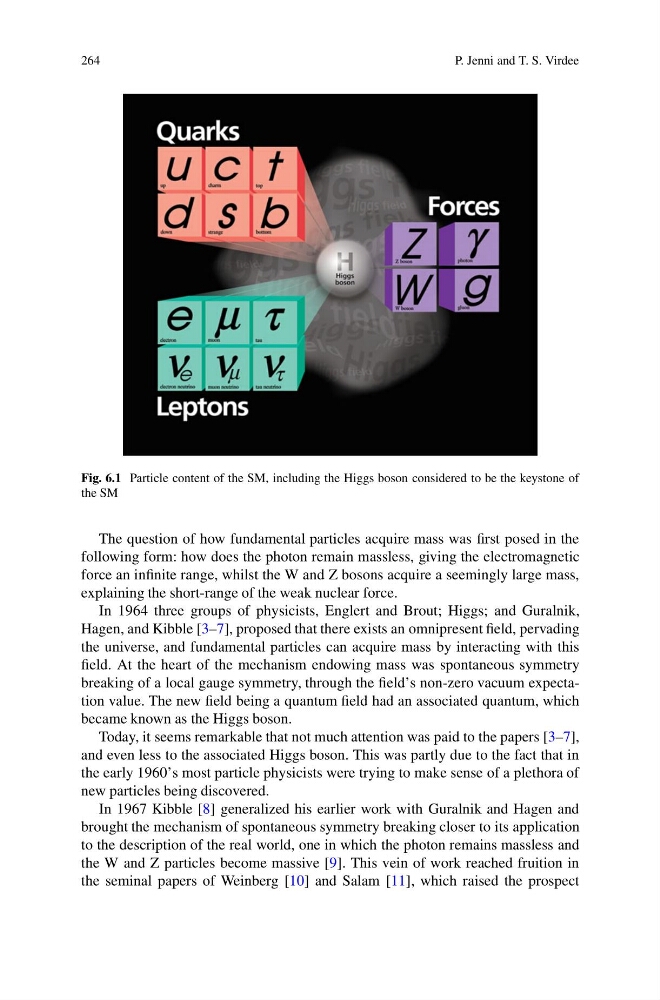
Fig. 6.1 Particle content of the SM, including the Higgs boson considered to be the keystone of
the SM
The question of how fundamental particles acquire mass was first posed in the
following form: how does the photon remain massless, giving the electromagnetic
force an infinite range, whilst the W and Z bosons acquire a seemingly large mass,
explaining the short-range of the weak nuclear force.
In 1964 three groups of physicists, Englert and Brout; Higgs; and Guralnik,
Hagen, and Kibble [3–7], proposed that there exists an omnipresent field, pervading
the universe, and fundamental particles can acquire mass by interacting with this
field. At the heart of the mechanism endowing mass was spontaneous symmetry
breaking of a local gauge symmetry, through the field’s non-zero vacuum expectation value. The new field being a quantum field had an associated quantum, which
became known as the Higgs boson.
Today, it seems remarkable that not much attention was paid to the papers [3–7],
and even less to the associated Higgs boson. This was partly due to the fact that in
the early 1960’s most particle physicists were trying to make sense of a plethora of
new particles being discovered.
In 1967 Kibble [8] generalized his earlier work with Guralnik and Hagen and
brought the mechanism of spontaneous symmetry breaking closer to its application
to the description of the real world, one in which the photon remains massless and
the W and Z particles become massive [9]. This vein of work reached fruition in
the seminal papers of Weinberg [10] and Salam [11], which raised the prospect
P. Jenni and T. S. Virdee
Fig. 6.1 Particle content of the SM, including the Higgs boson considered to be the keystone of
the SM
The question of how fundamental particles acquire mass was first posed in the
following form: how does the photon remain massless, giving the electromagnetic
force an infinite range, whilst the W and Z bosons acquire a seemingly large mass,
explaining the short-range of the weak nuclear force.
In 1964 three groups of physicists, Englert and Brout; Higgs; and Guralnik,
Hagen, and Kibble [3–7], proposed that there exists an omnipresent field, pervading
the universe, and fundamental particles can acquire mass by interacting with this
field. At the heart of the mechanism endowing mass was spontaneous symmetry
breaking of a local gauge symmetry, through the field’s non-zero vacuum expectation value. The new field being a quantum field had an associated quantum, which
became known as the Higgs boson.
Today, it seems remarkable that not much attention was paid to the papers [3–7],
and even less to the associated Higgs boson. This was partly due to the fact that in
the early 1960’s most particle physicists were trying to make sense of a plethora of
new particles being discovered.
In 1967 Kibble [8] generalized his earlier work with Guralnik and Hagen and
brought the mechanism of spontaneous symmetry breaking closer to its application
to the description of the real world, one in which the photon remains massless and
the W and Z particles become massive [9]. This vein of work reached fruition in
the seminal papers of Weinberg [10] and Salam [11], which raised the prospect