

86
P. Lecoq
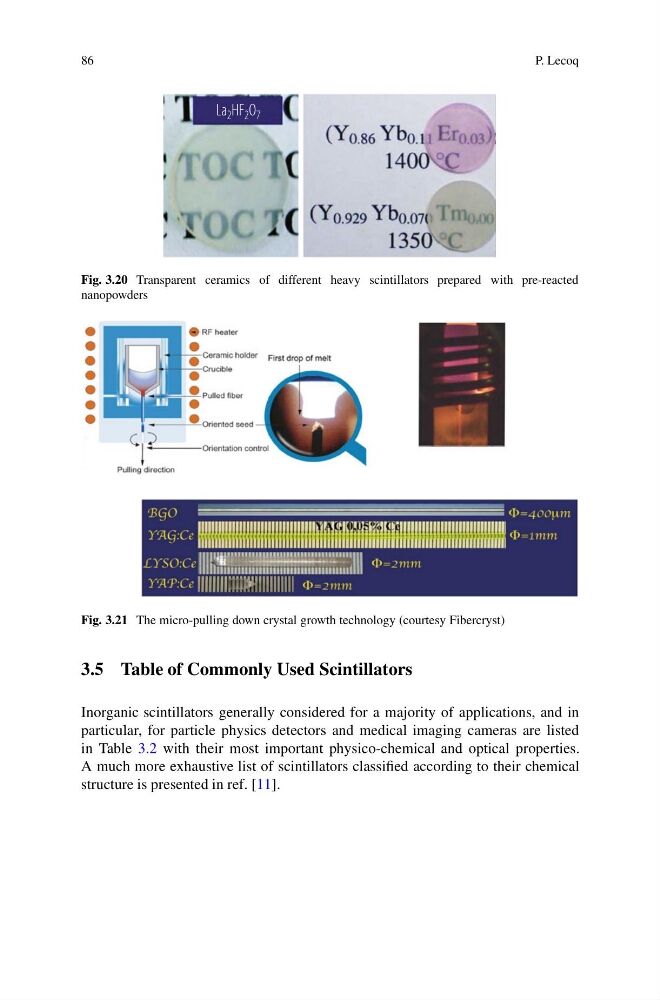
Fig. 3.20 Transparent ceramics of different heavy scintillators prepared with pre-reacted
nanopowders
Fig. 3.21 The micro-pulling down crystal growth technology (courtesy Fibercryst)
3.5 Table of Commonly Used Scintillators
Inorganic scintillators generally considered for a majority of applications, and in
particular, for particle physics detectors and medical imaging cameras are listed
in Table 3.2 with their most important physico-chemical and optical properties.
A much more exhaustive list of scintillators classified according to their chemical
structure is presented in ref. [11].
P. Lecoq
Fig. 3.20 Transparent ceramics of different heavy scintillators prepared with pre-reacted
nanopowders
Fig. 3.21 The micro-pulling down crystal growth technology (courtesy Fibercryst)
3.5 Table of Commonly Used Scintillators
Inorganic scintillators generally considered for a majority of applications, and in
particular, for particle physics detectors and medical imaging cameras are listed
in Table 3.2 with their most important physico-chemical and optical properties.
A much more exhaustive list of scintillators classified according to their chemical
structure is presented in ref. [11].