

16 Integration of Detectors into a Large Experiment: Examples from ATLAS. . .
749
Atlas computing model
Castor
Tier-0
Tier-2
Tier-2
Tier-2
Tier-1
Tier-1
Tier-1
CAF
Prompt reconstruction
Calibration & alignment
express stream analysis
RAW Re-processing
HITS reconstruction
Simulation
analysis
650 MB/sec
50-500 MB/sec
50-500 MB/sec
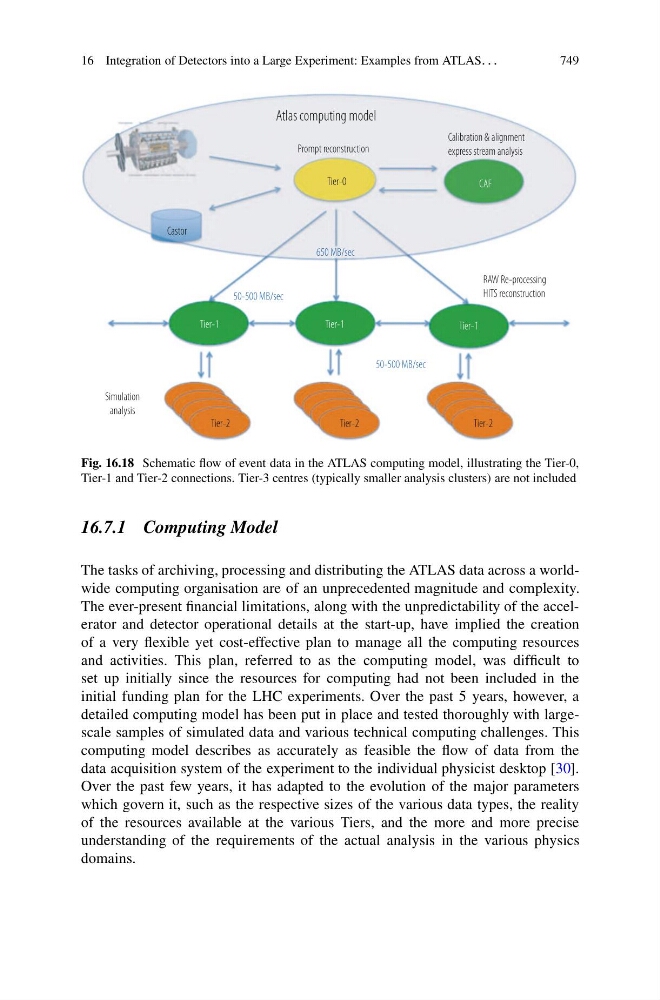
Fig. 16.18 Schematic flow of event data in the ATLAS computing model, illustrating the Tier-0,
Tier-1 and Tier-2 connections. Tier-3 centres (typically smaller analysis clusters) are not included
16.7.1 Computing Model
The tasks of archiving, processing and distributing the ATLAS data across a worldwide computing organisation are of an unprecedented magnitude and complexity.
The ever-present financial limitations, along with the unpredictability of the accelerator and detector operational details at the start-up, have implied the creation
of a very flexible yet cost-effective plan to manage all the computing resources
and activities. This plan, referred to as the computing model, was difficult to
set up initially since the resources for computing had not been included in the
initial funding plan for the LHC experiments. Over the past 5 years, however, a
detailed computing model has been put in place and tested thoroughly with largescale samples of simulated data and various technical computing challenges. This
computing model describes as accurately as feasible the flow of data from the
data acquisition system of the experiment to the individual physicist desktop [30].
Over the past few years, it has adapted to the evolution of the major parameters
which govern it, such as the respective sizes of the various data types, the reality
of the resources available at the various Tiers, and the more and more precise
understanding of the requirements of the actual analysis in the various physics
domains.