

542
W. H. Smith
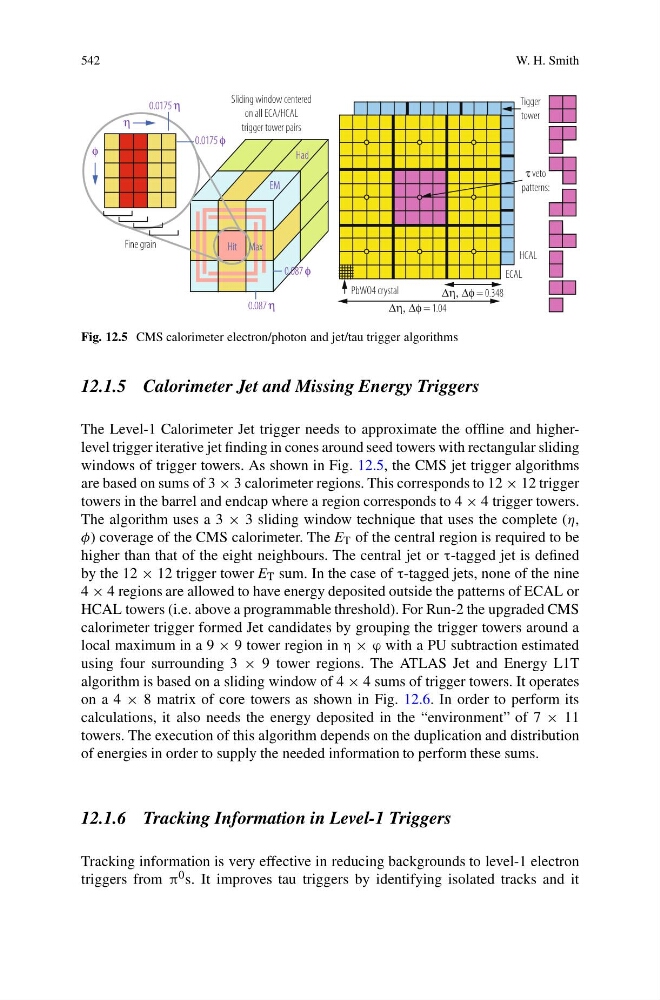
Fig. 12.5 CMS calorimeter electron/photon and jet/tau trigger algorithms
12.1.5 Calorimeter Jet and Missing Energy Triggers
The Level-1 Calorimeter Jet trigger needs to approximate the offline and higherlevel trigger iterative jet finding in cones around seed towers with rectangular sliding
windows of trigger towers. As shown in Fig. 12.5, the CMS jet trigger algorithms
are based on sums of 3 × 3 calorimeter regions. This corresponds to 12 × 12 trigger
towers in the barrel and endcap where a region corresponds to 4 × 4 trigger towers.
The algorithm uses a 3 × 3 sliding window technique that uses the complete (η,
φ) coverage of the CMS calorimeter. The E T of the central region is required to be
higher than that of the eight neighbours. The central jet or τ-tagged jet is defined
by the 12 × 12 trigger tower E T sum. In the case of τ-tagged jets, none of the nine
4 × 4 regions are allowed to have energy deposited outside the patterns of ECAL or
HCAL towers (i.e. above a programmable threshold). For Run-2 the upgraded CMS
calorimeter trigger formed Jet candidates by grouping the trigger towers around a
local maximum in a 9 × 9 tower region in η × ϕ with a PU subtraction estimated
using four surrounding 3 × 9 tower regions. The ATLAS Jet and Energy L1T
algorithm is based on a sliding window of 4 × 4 sums of trigger towers. It operates
on a 4 × 8 matrix of core towers as shown in Fig. 12.6. In order to perform its
calculations, it also needs the energy deposited in the “environment” of 7 × 11
towers. The execution of this algorithm depends on the duplication and distribution
of energies in order to supply the needed information to perform these sums.
12.1.6 Tracking Information in Level-1 Triggers
Tracking information is very effective in reducing backgrounds to level-1 electron
triggers from π 0 s. It improves tau triggers by identifying isolated tracks and it
W. H. Smith
Fig. 12.5 CMS calorimeter electron/photon and jet/tau trigger algorithms
12.1.5 Calorimeter Jet and Missing Energy Triggers
The Level-1 Calorimeter Jet trigger needs to approximate the offline and higherlevel trigger iterative jet finding in cones around seed towers with rectangular sliding
windows of trigger towers. As shown in Fig. 12.5, the CMS jet trigger algorithms
are based on sums of 3 × 3 calorimeter regions. This corresponds to 12 × 12 trigger
towers in the barrel and endcap where a region corresponds to 4 × 4 trigger towers.
The algorithm uses a 3 × 3 sliding window technique that uses the complete (η,
φ) coverage of the CMS calorimeter. The E T of the central region is required to be
higher than that of the eight neighbours. The central jet or τ-tagged jet is defined
by the 12 × 12 trigger tower E T sum. In the case of τ-tagged jets, none of the nine
4 × 4 regions are allowed to have energy deposited outside the patterns of ECAL or
HCAL towers (i.e. above a programmable threshold). For Run-2 the upgraded CMS
calorimeter trigger formed Jet candidates by grouping the trigger towers around a
local maximum in a 9 × 9 tower region in η × ϕ with a PU subtraction estimated
using four surrounding 3 × 9 tower regions. The ATLAS Jet and Energy L1T
algorithm is based on a sliding window of 4 × 4 sums of trigger towers. It operates
on a 4 × 8 matrix of core towers as shown in Fig. 12.6. In order to perform its
calculations, it also needs the energy deposited in the “environment” of 7 × 11
towers. The execution of this algorithm depends on the duplication and distribution
of energies in order to supply the needed information to perform these sums.
12.1.6 Tracking Information in Level-1 Triggers
Tracking information is very effective in reducing backgrounds to level-1 electron
triggers from π 0 s. It improves tau triggers by identifying isolated tracks and it