

534
W. H. Smith
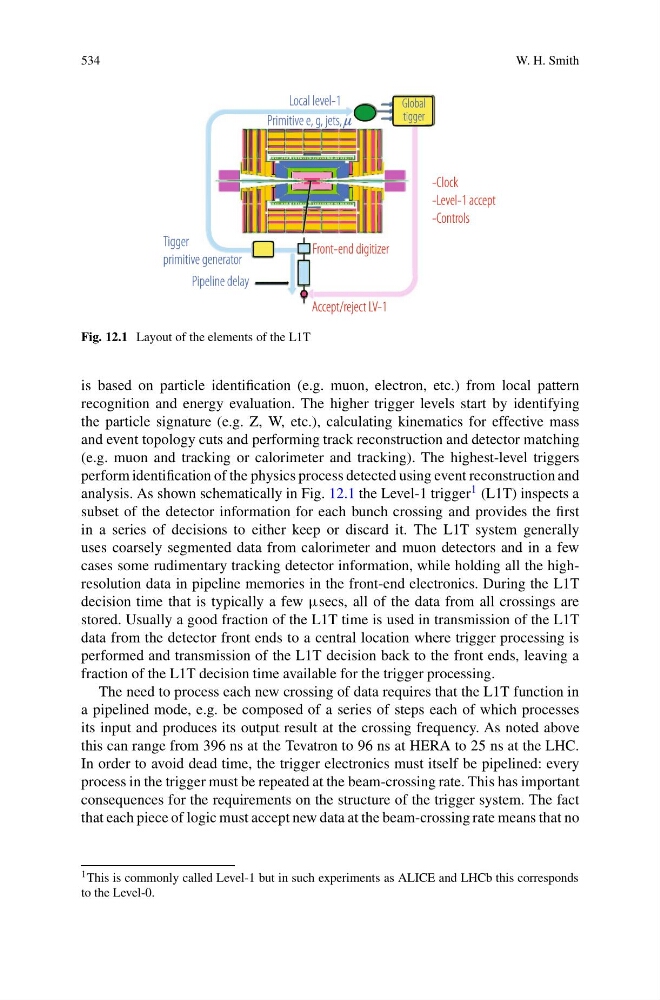
Fig. 12.1 Layout of the elements of the L1T
is based on particle identification (e.g. muon, electron, etc.) from local pattern
recognition and energy evaluation. The higher trigger levels start by identifying
the particle signature (e.g. Z, W, etc.), calculating kinematics for effective mass
and event topology cuts and performing track reconstruction and detector matching
(e.g. muon and tracking or calorimeter and tracking). The highest-level triggers
perform identification of the physics process detected using event reconstruction and
analysis. As shown schematically in Fig. 12.1 the Level-1 trigger 1 (L1T) inspects a
subset of the detector information for each bunch crossing and provides the first
in a series of decisions to either keep or discard it. The L1T system generally
uses coarsely segmented data from calorimeter and muon detectors and in a few
cases some rudimentary tracking detector information, while holding all the highresolution data in pipeline memories in the front-end electronics. During the L1T
decision time that is typically a few μsecs, all of the data from all crossings are
stored. Usually a good fraction of the L1T time is used in transmission of the L1T
data from the detector front ends to a central location where trigger processing is
performed and transmission of the L1T decision back to the front ends, leaving a
fraction of the L1T decision time available for the trigger processing.
The need to process each new crossing of data requires that the L1T function in
a pipelined mode, e.g. be composed of a series of steps each of which processes
its input and produces its output result at the crossing frequency. As noted above
this can range from 396 ns at the Tevatron to 96 ns at HERA to 25 ns at the LHC.
In order to avoid dead time, the trigger electronics must itself be pipelined: every
process in the trigger must be repeated at the beam-crossing rate. This has important
consequences for the requirements on the structure of the trigger system. The fact
that each piece of logic must accept new data at the beam-crossing rate means that no
1 This is commonly called Level-1 but in such experiments as ALICE and LHCb this corresponds
to the Level-0.
W. H. Smith
Fig. 12.1 Layout of the elements of the L1T
is based on particle identification (e.g. muon, electron, etc.) from local pattern
recognition and energy evaluation. The higher trigger levels start by identifying
the particle signature (e.g. Z, W, etc.), calculating kinematics for effective mass
and event topology cuts and performing track reconstruction and detector matching
(e.g. muon and tracking or calorimeter and tracking). The highest-level triggers
perform identification of the physics process detected using event reconstruction and
analysis. As shown schematically in Fig. 12.1 the Level-1 trigger 1 (L1T) inspects a
subset of the detector information for each bunch crossing and provides the first
in a series of decisions to either keep or discard it. The L1T system generally
uses coarsely segmented data from calorimeter and muon detectors and in a few
cases some rudimentary tracking detector information, while holding all the highresolution data in pipeline memories in the front-end electronics. During the L1T
decision time that is typically a few μsecs, all of the data from all crossings are
stored. Usually a good fraction of the L1T time is used in transmission of the L1T
data from the detector front ends to a central location where trigger processing is
performed and transmission of the L1T decision back to the front ends, leaving a
fraction of the L1T decision time available for the trigger processing.
The need to process each new crossing of data requires that the L1T function in
a pipelined mode, e.g. be composed of a series of steps each of which processes
its input and produces its output result at the crossing frequency. As noted above
this can range from 396 ns at the Tevatron to 96 ns at HERA to 25 ns at the LHC.
In order to avoid dead time, the trigger electronics must itself be pipelined: every
process in the trigger must be repeated at the beam-crossing rate. This has important
consequences for the requirements on the structure of the trigger system. The fact
that each piece of logic must accept new data at the beam-crossing rate means that no
1 This is commonly called Level-1 but in such experiments as ALICE and LHCb this corresponds
to the Level-0.