

11 Application of Accelerators and Storage Rings
733
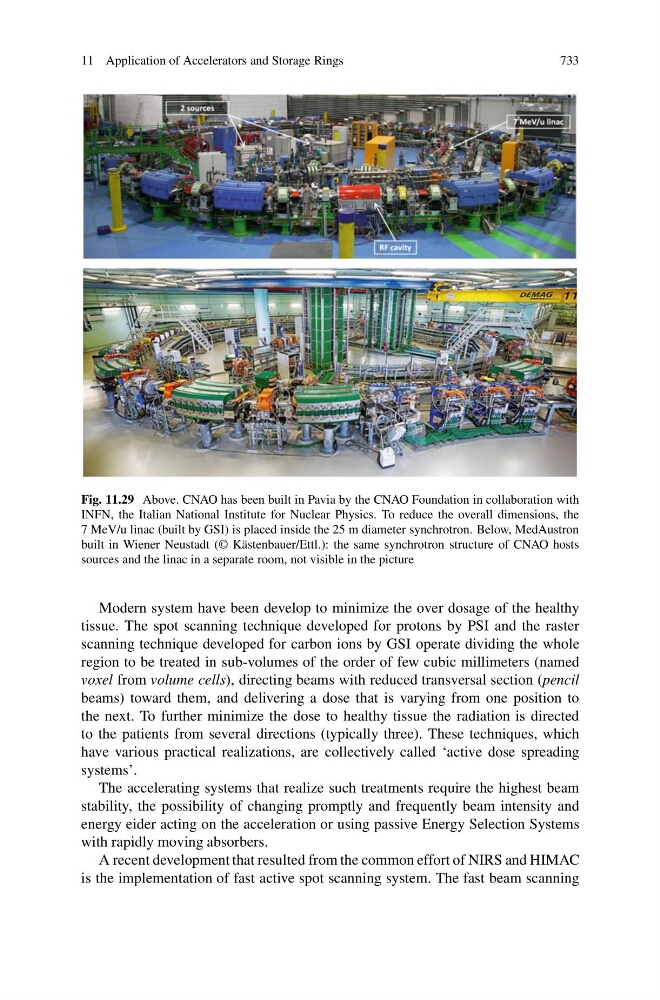
Fig. 11.29 Above. CNAO has been built in Pavia by the CNAO Foundation in collaboration with
INFN, the Italian National Institute for Nuclear Physics. To reduce the overall dimensions, the
7 MeV/u linac (built by GSI) is placed inside the 25 m diameter synchrotron. Below, MedAustron
built in Wiener Neustadt (© Kästenbauer/Ettl.): the same synchrotron structure of CNAO hosts
sources and the linac in a separate room, not visible in the picture
Modern system have been develop to minimize the over dosage of the healthy
tissue. The spot scanning technique developed for protons by PSI and the raster
scanning technique developed for carbon ions by GSI operate dividing the whole
region to be treated in sub-volumes of the order of few cubic millimeters (named
voxel from volume cells), directing beams with reduced transversal section (pencil
beams) toward them, and delivering a dose that is varying from one position to
the next. To further minimize the dose to healthy tissue the radiation is directed
to the patients from several directions (typically three). These techniques, which
have various practical realizations, are collectively called ‘active dose spreading
systems’.
The accelerating systems that realize such treatments require the highest beam
stability, the possibility of changing promptly and frequently beam intensity and
energy eider acting on the acceleration or using passive Energy Selection Systems
with rapidly moving absorbers.
A recent development that resulted from the common effort of NIRS and HIMAC
is the implementation of fast active spot scanning system. The fast beam scanning