

420
F. Bordry et al.
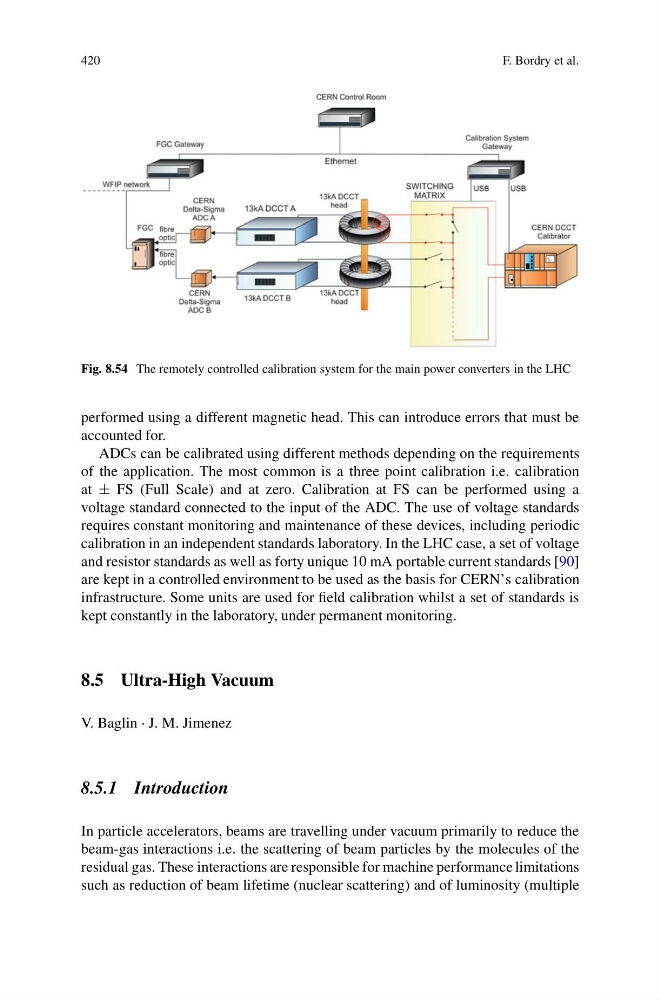
Fig. 8.54 The remotely controlled calibration system for the main power converters in the LHC
performed using a different magnetic head. This can introduce errors that must be
accounted for.
ADCs can be calibrated using different methods depending on the requirements
of the application. The most common is a three point calibration i.e. calibration
at ± FS (Full Scale) and at zero. Calibration at FS can be performed using a
voltage standard connected to the input of the ADC. The use of voltage standards
requires constant monitoring and maintenance of these devices, including periodic
calibration in an independent standards laboratory. In the LHC case, a set of voltage
and resistor standards as well as forty unique 10 mA portable current standards [90]
are kept in a controlled environment to be used as the basis for CERN’s calibration
infrastructure. Some units are used for field calibration whilst a set of standards is
kept constantly in the laboratory, under permanent monitoring.
8.5 Ultra-High Vacuum
V. Baglin · J. M. Jimenez
8.5.1 Introduction
In particle accelerators, beams are travelling under vacuum primarily to reduce the
beam-gas interactions i.e. the scattering of beam particles by the molecules of the
residual gas. These interactions are responsible for machine performance limitations
such as reduction of beam lifetime (nuclear scattering) and of luminosity (multiple
F. Bordry et al.
Fig. 8.54 The remotely controlled calibration system for the main power converters in the LHC
performed using a different magnetic head. This can introduce errors that must be
accounted for.
ADCs can be calibrated using different methods depending on the requirements
of the application. The most common is a three point calibration i.e. calibration
at ± FS (Full Scale) and at zero. Calibration at FS can be performed using a
voltage standard connected to the input of the ADC. The use of voltage standards
requires constant monitoring and maintenance of these devices, including periodic
calibration in an independent standards laboratory. In the LHC case, a set of voltage
and resistor standards as well as forty unique 10 mA portable current standards [90]
are kept in a controlled environment to be used as the basis for CERN’s calibration
infrastructure. Some units are used for field calibration whilst a set of standards is
kept constantly in the laboratory, under permanent monitoring.
8.5 Ultra-High Vacuum
V. Baglin · J. M. Jimenez
8.5.1 Introduction
In particle accelerators, beams are travelling under vacuum primarily to reduce the
beam-gas interactions i.e. the scattering of beam particles by the molecules of the
residual gas. These interactions are responsible for machine performance limitations
such as reduction of beam lifetime (nuclear scattering) and of luminosity (multiple