

326
J. Seeman et al.
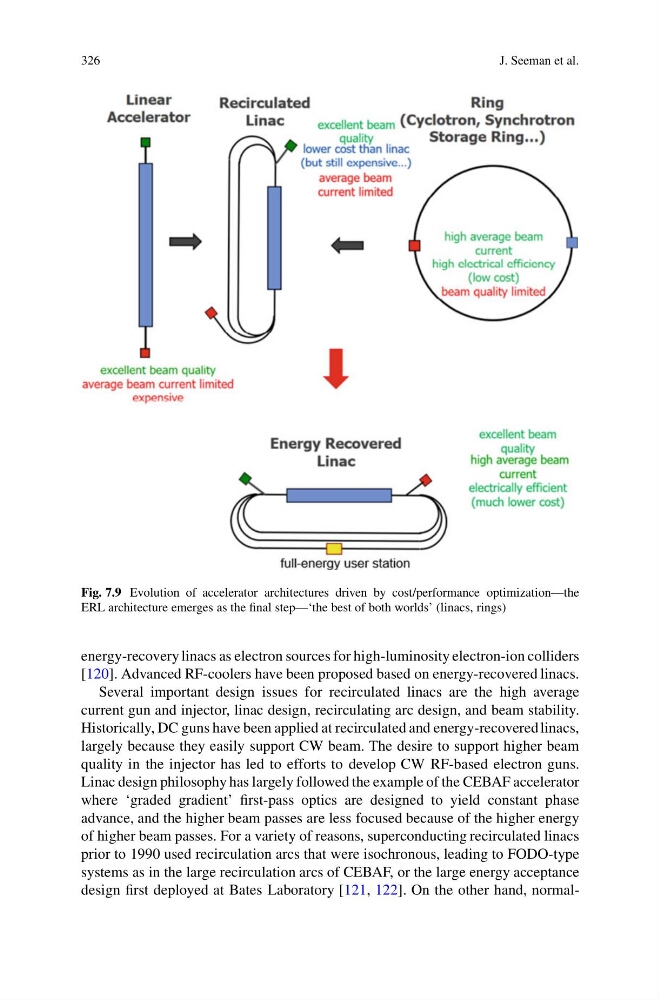
Fig. 7.9 Evolution of accelerator architectures driven by cost/performance optimization—the
ERL architecture emerges as the final step—‘the best of both worlds’ (linacs, rings)
energy-recovery linacs as electron sources for high-luminosity electron-ion colliders
[120]. Advanced RF-coolers have been proposed based on energy-recovered linacs.
Several important design issues for recirculated linacs are the high average
current gun and injector, linac design, recirculating arc design, and beam stability.
Historically, DC guns have been applied at recirculated and energy-recovered linacs,
largely because they easily support CW beam. The desire to support higher beam
quality in the injector has led to efforts to develop CW RF-based electron guns.
Linac design philosophy has largely followed the example of the CEBAF accelerator
where ‘graded gradient’ first-pass optics are designed to yield constant phase
advance, and the higher beam passes are less focused because of the higher energy
of higher beam passes. For a variety of reasons, superconducting recirculated linacs
prior to 1990 used recirculation arcs that were isochronous, leading to FODO-type
systems as in the large recirculation arcs of CEBAF, or the large energy acceptance
design first deployed at Bates Laboratory [121, 122]. On the other hand, normal-
J. Seeman et al.
Fig. 7.9 Evolution of accelerator architectures driven by cost/performance optimization—the
ERL architecture emerges as the final step—‘the best of both worlds’ (linacs, rings)
energy-recovery linacs as electron sources for high-luminosity electron-ion colliders
[120]. Advanced RF-coolers have been proposed based on energy-recovered linacs.
Several important design issues for recirculated linacs are the high average
current gun and injector, linac design, recirculating arc design, and beam stability.
Historically, DC guns have been applied at recirculated and energy-recovered linacs,
largely because they easily support CW beam. The desire to support higher beam
quality in the injector has led to efforts to develop CW RF-based electron guns.
Linac design philosophy has largely followed the example of the CEBAF accelerator
where ‘graded gradient’ first-pass optics are designed to yield constant phase
advance, and the higher beam passes are less focused because of the higher energy
of higher beam passes. For a variety of reasons, superconducting recirculated linacs
prior to 1990 used recirculation arcs that were isochronous, leading to FODO-type
systems as in the large recirculation arcs of CEBAF, or the large energy acceptance
design first deployed at Bates Laboratory [121, 122]. On the other hand, normal-