

• Sourcing and sales of goods, resulting in trade (S)
• Mode of transport for inland modes (M)
• Transhipment terminals inland and for maritime traffic (T)
• Choice of vehicle type (truck size and engine type) (V)
• Route choice over the transport network (R)
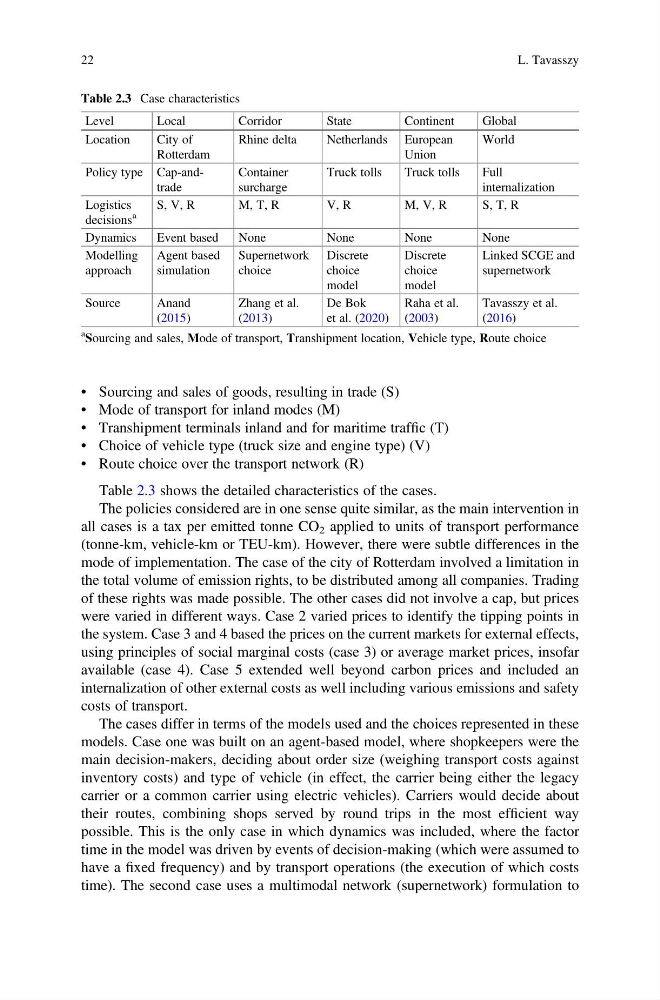
Table 2.3 shows the detailed characteristics of the cases.
The policies considered are in one sense quite similar, as the main intervention in
all cases is a tax per emitted tonne CO 2 applied to units of transport performance
(tonne-km, vehicle-km or TEU-km). However, there were subtle differences in the
mode of implementation. The case of the city of Rotterdam involved a limitation in
the total volume of emission rights, to be distributed among all companies. Trading
of these rights was made possible. The other cases did not involve a cap, but prices
were varied in different ways. Case 2 varied prices to identify the tipping points in
the system. Case 3 and 4 based the prices on the current markets for external effects,
using principles of social marginal costs (case 3) or average market prices, insofar
available (case 4). Case 5 extended well beyond carbon prices and included an
internalization of other external costs as well including various emissions and safety
costs of transport.
The cases differ in terms of the models used and the choices represented in these
models. Case one was built on an agent-based model, where shopkeepers were the
main decision-makers, deciding about order size (weighing transport costs against
inventory costs) and type of vehicle (in effect, the carrier being either the legacy
carrier or a common carrier using electric vehicles). Carriers would decide about
their routes, combining shops served by round trips in the most efficient way
possible. This is the only case in which dynamics was included, where the factor
time in the model was driven by events of decision-making (which were assumed to
have a fixed frequency) and by transport operations (the execution of which costs
time). The second case uses a multimodal network (supernetwork) formulation to
Table 2.3 Case characteristics
Level
Local
Corridor
State
Continent
Global
Location
City of
Rotterdam
Rhine delta
Netherlands European
Union
World
Policy type Cap-andtrade
Container
surcharge
Truck tolls
Truck tolls
Full
internalization
Logistics
decisions
a
S, V, R
M, T, R
V, R
M, V, R
S, T, R
Dynamics
Event based
None
None
None
None
Modelling
approach
Agent based
simulation
Supernetwork
choice
Discrete
choice
model
Discrete
choice
model
Linked SCGE and
supernetwork
Source
Anand
(2015)
Zhang et al.
(2013)
De Bok
et al. (2020)
Raha et al.
(2003)
Tavasszy et al.
(2016)
a Sourcing and sales, Mode of transport, Transhipment location, Vehicle type, Route choice
22
L. Tavasszy
• Mode of transport for inland modes (M)
• Transhipment terminals inland and for maritime traffic (T)
• Choice of vehicle type (truck size and engine type) (V)
• Route choice over the transport network (R)
Table 2.3 shows the detailed characteristics of the cases.
The policies considered are in one sense quite similar, as the main intervention in
all cases is a tax per emitted tonne CO 2 applied to units of transport performance
(tonne-km, vehicle-km or TEU-km). However, there were subtle differences in the
mode of implementation. The case of the city of Rotterdam involved a limitation in
the total volume of emission rights, to be distributed among all companies. Trading
of these rights was made possible. The other cases did not involve a cap, but prices
were varied in different ways. Case 2 varied prices to identify the tipping points in
the system. Case 3 and 4 based the prices on the current markets for external effects,
using principles of social marginal costs (case 3) or average market prices, insofar
available (case 4). Case 5 extended well beyond carbon prices and included an
internalization of other external costs as well including various emissions and safety
costs of transport.
The cases differ in terms of the models used and the choices represented in these
models. Case one was built on an agent-based model, where shopkeepers were the
main decision-makers, deciding about order size (weighing transport costs against
inventory costs) and type of vehicle (in effect, the carrier being either the legacy
carrier or a common carrier using electric vehicles). Carriers would decide about
their routes, combining shops served by round trips in the most efficient way
possible. This is the only case in which dynamics was included, where the factor
time in the model was driven by events of decision-making (which were assumed to
have a fixed frequency) and by transport operations (the execution of which costs
time). The second case uses a multimodal network (supernetwork) formulation to
Table 2.3 Case characteristics
Level
Local
Corridor
State
Continent
Global
Location
City of
Rotterdam
Rhine delta
Netherlands European
Union
World
Policy type Cap-andtrade
Container
surcharge
Truck tolls
Truck tolls
Full
internalization
Logistics
decisions
a
S, V, R
M, T, R
V, R
M, V, R
S, T, R
Dynamics
Event based
None
None
None
None
Modelling
approach
Agent based
simulation
Supernetwork
choice
Discrete
choice
model
Discrete
choice
model
Linked SCGE and
supernetwork
Source
Anand
(2015)
Zhang et al.
(2013)
De Bok
et al. (2020)
Raha et al.
(2003)
Tavasszy et al.
(2016)
a Sourcing and sales, Mode of transport, Transhipment location, Vehicle type, Route choice
22
L. Tavasszy