

5 Discussions, Conclusions, and Scope of Future Work
The analysis of the case companies after the application of three-phase methodologies suggests that lack of technological abilities, lack of finance, and consequently
lack of infrastructure are the major internal barriers to green innovation. Organizations are lacking on the front of availability of the latest technologies, like most
organizations don’t have any recycling facility at their end, and they are mostly
dependent on external parties for recycling their products or by-products and often
end up doing away with any recycling due to high cost of outsourcing. Thus
organizations fail to recycle, reuse, or refurbish their products. This has great impact
on environment as organizations are forced to use more and more of resources due to
lack of technological facilities (Gupta and Barua 2017, 2018). Another barrier
related to technologies is the inability of the organizations to use energy-efficient
materials for their manufacturing; the organizations are not well equipped with the
required technologies to process those materials, and they are often stuck on
traditional raw materials which are harmful for the environment (Collins et al.
2007). Lack of finance is another major barrier to green innovation, and results of
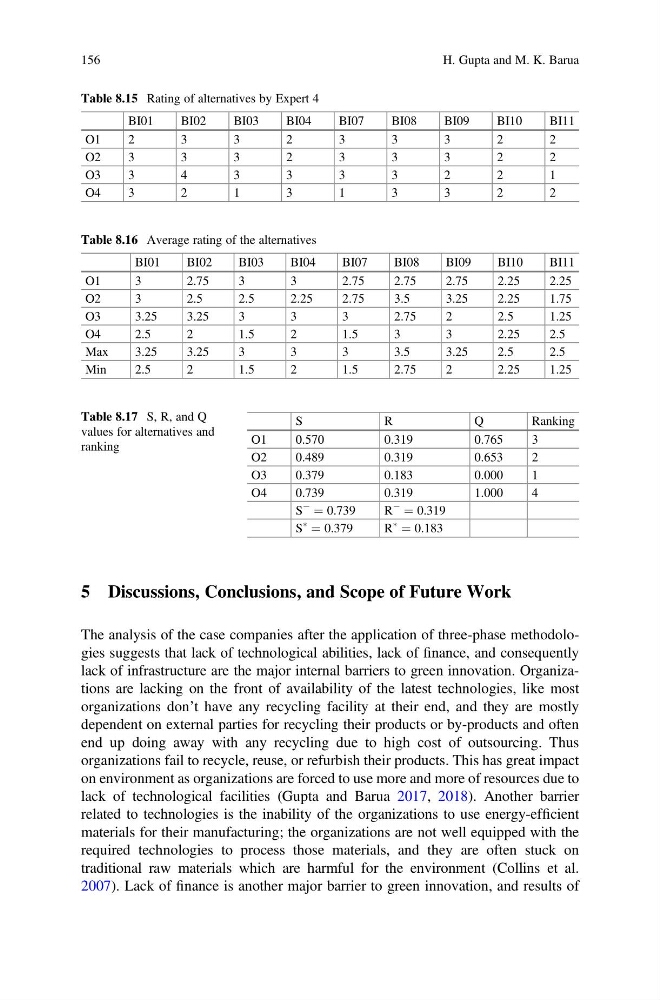
Table 8.15 Rating of alternatives by Expert 4
BI01
BI02
BI03
BI04
BI07
BI08
BI09
BI10
BI11
O 1
2
3
3
2
3
3
3
2
2
O 2
3
3
3
2
3
3
3
2
2
O 3
3
4
3
3
3
3
2
2
1
O 4
3
2
1
3
1
3
3
2
2
Table 8.16 Average rating of the alternatives
BI01
BI02
BI03
BI04
BI07
BI08
BI09
BI10
BI11
O1
3
2.75
3
3
2.75
2.75
2.75
2.25
2.25
O2
3
2.5
2.5
2.25
2.75
3.5
3.25
2.25
1.75
O3
3.25
3.25
3
3
3
2.75
2
2.5
1.25
O4
2.5
2
1.5
2
1.5
3
3
2.25
2.5
Max
3.25
3.25
3
3
3
3.5
3.25
2.5
2.5
Min
2.5
2
1.5
2
1.5
2.75
2
2.25
1.25
Table 8.17 S, R, and Q
values for alternatives and
ranking
S
R
Q
Ranking
O1
0.570
0.319
0.765
3
O2
0.489
0.319
0.653
2
O3
0.379
0.183
0.000
1
O4
0.739
0.319
1.000
4
S
À ¼ 0.739
R
À ¼ 0.319
S
à ¼ 0.379
R
à ¼ 0.183
156
H. Gupta and M. K. Barua
The analysis of the case companies after the application of three-phase methodologies suggests that lack of technological abilities, lack of finance, and consequently
lack of infrastructure are the major internal barriers to green innovation. Organizations are lacking on the front of availability of the latest technologies, like most
organizations don’t have any recycling facility at their end, and they are mostly
dependent on external parties for recycling their products or by-products and often
end up doing away with any recycling due to high cost of outsourcing. Thus
organizations fail to recycle, reuse, or refurbish their products. This has great impact
on environment as organizations are forced to use more and more of resources due to
lack of technological facilities (Gupta and Barua 2017, 2018). Another barrier
related to technologies is the inability of the organizations to use energy-efficient
materials for their manufacturing; the organizations are not well equipped with the
required technologies to process those materials, and they are often stuck on
traditional raw materials which are harmful for the environment (Collins et al.
2007). Lack of finance is another major barrier to green innovation, and results of
Table 8.15 Rating of alternatives by Expert 4
BI01
BI02
BI03
BI04
BI07
BI08
BI09
BI10
BI11
O 1
2
3
3
2
3
3
3
2
2
O 2
3
3
3
2
3
3
3
2
2
O 3
3
4
3
3
3
3
2
2
1
O 4
3
2
1
3
1
3
3
2
2
Table 8.16 Average rating of the alternatives
BI01
BI02
BI03
BI04
BI07
BI08
BI09
BI10
BI11
O1
3
2.75
3
3
2.75
2.75
2.75
2.25
2.25
O2
3
2.5
2.5
2.25
2.75
3.5
3.25
2.25
1.75
O3
3.25
3.25
3
3
3
2.75
2
2.5
1.25
O4
2.5
2
1.5
2
1.5
3
3
2.25
2.5
Max
3.25
3.25
3
3
3
3.5
3.25
2.5
2.5
Min
2.5
2
1.5
2
1.5
2.75
2
2.25
1.25
Table 8.17 S, R, and Q
values for alternatives and
ranking
S
R
Q
Ranking
O1
0.570
0.319
0.765
3
O2
0.489
0.319
0.653
2
O3
0.379
0.183
0.000
1
O4
0.739
0.319
1.000
4
S
À ¼ 0.739
R
À ¼ 0.319
S
à ¼ 0.379
R
à ¼ 0.183
156
H. Gupta and M. K. Barua