

are considered more important than other barriers. A total of nine barriers are
selected for the second phase. The panel of four experts is asked to first identify
best and worst barriers among the list of barriers and then give pairwise comparison
ratings among best to others as well as others to best sing 9 point scale. These ratings
are shown in Table 8.10 below.
After obtaining the pairwise ratings of best to others and others to worst barriers,
next step is to obtain the weights of the barriers and hence their ranking. Using
Eqs. 8.1 and 8.2 mentioned in Sect. 3.2, the weights and ranking of the barriers are
obtained and are presented in Table 8.11.
According to best worst analysis, lack of financial resources (BI10) is the most
important internal barrier to green innovation in manufacturing industries, followed
by lack of technology (BI09) and lack of required infrastructure (BI08).
In the third phase of the research, the weights obtained through Best-Worst
Method is used in VIKOR analysis to rank the best organization among four selected
organizations on the basis of their ability to handle these internal barriers to green
innovation. In this case, each expert is asked to individually rate the ability of four
organizations to tackle these internal barriers to green innovation. The pairwise
ratings of each of the organization w.r.t the listed nine barriers are obtained on a
scale of 0–4 from each expert. Tables 8.12, 8.13, 8.14, 8.15, and 8.16 represent the
ratings and average ratings given by four experts for different organizations.
Using the steps mentioned in Sect. 3.3, the ranking of each organization is
obtained. The results (Table 8.17) show that the third organization is ranked first
among all and other organizations can learn from the practices being followed at the
top-ranked organization to incorporate green practices at their end.
Lag between design and diffusion
(BI06)
Lack of perceived benefits (BI05)
Lack of top
management
commitment
(BI01)
Resistance
from employees (BI02)
Lack of
skilled human
resources
(BI03)
Insufficient
motivation
and rewards
(BI04)
Insufficient
knowledge
(BI07)
Lack of required infrastructure
(BI08)
Insufficient
R&D facilities (BI11)
Lack of technologies (BI09)
Lack of financial support (BI10)
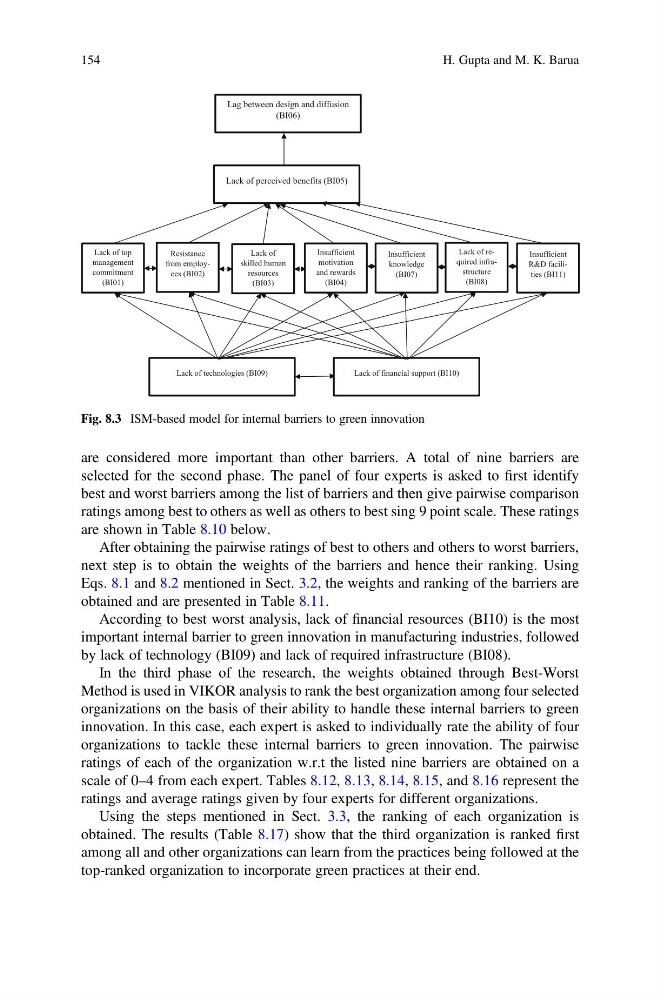
Fig. 8.3 ISM-based model for internal barriers to green innovation
154
H. Gupta and M. K. Barua
selected for the second phase. The panel of four experts is asked to first identify
best and worst barriers among the list of barriers and then give pairwise comparison
ratings among best to others as well as others to best sing 9 point scale. These ratings
are shown in Table 8.10 below.
After obtaining the pairwise ratings of best to others and others to worst barriers,
next step is to obtain the weights of the barriers and hence their ranking. Using
Eqs. 8.1 and 8.2 mentioned in Sect. 3.2, the weights and ranking of the barriers are
obtained and are presented in Table 8.11.
According to best worst analysis, lack of financial resources (BI10) is the most
important internal barrier to green innovation in manufacturing industries, followed
by lack of technology (BI09) and lack of required infrastructure (BI08).
In the third phase of the research, the weights obtained through Best-Worst
Method is used in VIKOR analysis to rank the best organization among four selected
organizations on the basis of their ability to handle these internal barriers to green
innovation. In this case, each expert is asked to individually rate the ability of four
organizations to tackle these internal barriers to green innovation. The pairwise
ratings of each of the organization w.r.t the listed nine barriers are obtained on a
scale of 0–4 from each expert. Tables 8.12, 8.13, 8.14, 8.15, and 8.16 represent the
ratings and average ratings given by four experts for different organizations.
Using the steps mentioned in Sect. 3.3, the ranking of each organization is
obtained. The results (Table 8.17) show that the third organization is ranked first
among all and other organizations can learn from the practices being followed at the
top-ranked organization to incorporate green practices at their end.
Lag between design and diffusion
(BI06)
Lack of perceived benefits (BI05)
Lack of top
management
commitment
(BI01)
Resistance
from employees (BI02)
Lack of
skilled human
resources
(BI03)
Insufficient
motivation
and rewards
(BI04)
Insufficient
knowledge
(BI07)
Lack of required infrastructure
(BI08)
Insufficient
R&D facilities (BI11)
Lack of technologies (BI09)
Lack of financial support (BI10)
Fig. 8.3 ISM-based model for internal barriers to green innovation
154
H. Gupta and M. K. Barua