

26
2 Biphenyl Moiety for a Solvent Responsive Aryl Gold(I) …
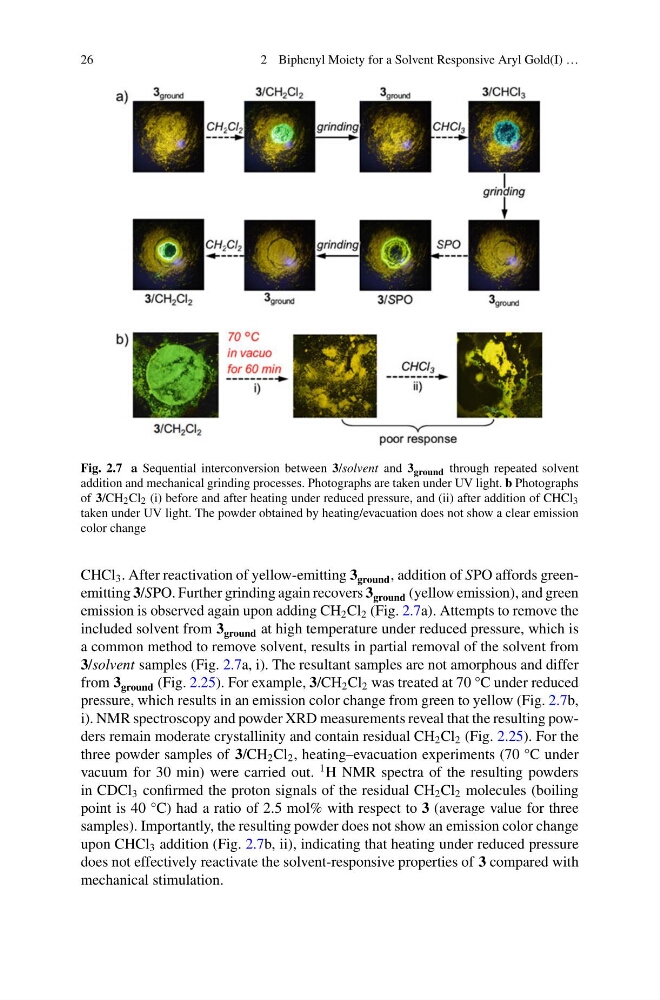
Fig. 2.7 a Sequential interconversion between 3/solvent and 3 ground through repeated solvent
addition and mechanical grinding processes. Photographs are taken under UV light. b Photographs
of 3/CH 2 Cl 2 (i) before and after heating under reduced pressure, and (ii) after addition of CHCl 3
taken under UV light. The powder obtained by heating/evacuation does not show a clear emission
color change
CHCl 3 . After reactivation of yellow-emitting 3 ground , addition of SPO affords greenemitting 3/SPO. Further grinding again recovers 3 ground (yellow emission), and green
emission is observed again upon adding CH 2 Cl 2 (Fig. 2.7a). Attempts to remove the
included solvent from 3 ground at high temperature under reduced pressure, which is
a common method to remove solvent, results in partial removal of the solvent from
3/solvent samples (Fig. 2.7a, i). The resultant samples are not amorphous and differ
from 3 ground (Fig. 2.25). For example, 3/CH 2 Cl 2 was treated at 70 °C under reduced
pressure, which results in an emission color change from green to yellow (Fig. 2.7b,
i). NMR spectroscopy and powder XRD measurements reveal that the resulting powders remain moderate crystallinity and contain residual CH 2 Cl 2 (Fig. 2.25). For the
three powder samples of 3/CH 2 Cl 2 , heating–evacuation experiments (70 °C under
vacuum for 30 min) were carried out.
1 H NMR spectra of the resulting powders
in CDCl 3 confirmed the proton signals of the residual CH 2 Cl 2 molecules (boiling
point is 40 °C) had a ratio of 2.5 mol% with respect to 3 (average value for three
samples). Importantly, the resulting powder does not show an emission color change
upon CHCl 3 addition (Fig. 2.7b, ii), indicating that heating under reduced pressure
does not effectively reactivate the solvent-responsive properties of 3 compared with
mechanical stimulation.
2 Biphenyl Moiety for a Solvent Responsive Aryl Gold(I) …
Fig. 2.7 a Sequential interconversion between 3/solvent and 3 ground through repeated solvent
addition and mechanical grinding processes. Photographs are taken under UV light. b Photographs
of 3/CH 2 Cl 2 (i) before and after heating under reduced pressure, and (ii) after addition of CHCl 3
taken under UV light. The powder obtained by heating/evacuation does not show a clear emission
color change
CHCl 3 . After reactivation of yellow-emitting 3 ground , addition of SPO affords greenemitting 3/SPO. Further grinding again recovers 3 ground (yellow emission), and green
emission is observed again upon adding CH 2 Cl 2 (Fig. 2.7a). Attempts to remove the
included solvent from 3 ground at high temperature under reduced pressure, which is
a common method to remove solvent, results in partial removal of the solvent from
3/solvent samples (Fig. 2.7a, i). The resultant samples are not amorphous and differ
from 3 ground (Fig. 2.25). For example, 3/CH 2 Cl 2 was treated at 70 °C under reduced
pressure, which results in an emission color change from green to yellow (Fig. 2.7b,
i). NMR spectroscopy and powder XRD measurements reveal that the resulting powders remain moderate crystallinity and contain residual CH 2 Cl 2 (Fig. 2.25). For the
three powder samples of 3/CH 2 Cl 2 , heating–evacuation experiments (70 °C under
vacuum for 30 min) were carried out.
1 H NMR spectra of the resulting powders
in CDCl 3 confirmed the proton signals of the residual CH 2 Cl 2 molecules (boiling
point is 40 °C) had a ratio of 2.5 mol% with respect to 3 (average value for three
samples). Importantly, the resulting powder does not show an emission color change
upon CHCl 3 addition (Fig. 2.7b, ii), indicating that heating under reduced pressure
does not effectively reactivate the solvent-responsive properties of 3 compared with
mechanical stimulation.