

182
6 Thermo-Responsive Phosphorescence Control Mediated …
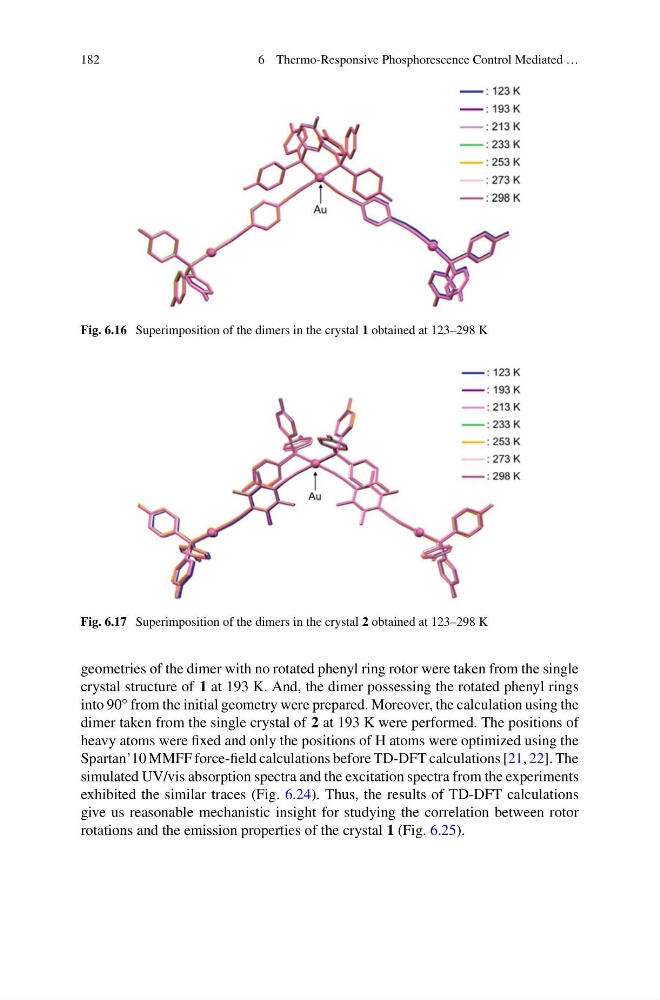
Fig. 6.16 Superimposition of the dimers in the crystal 1 obtained at 123–298 K
Fig. 6.17 Superimposition of the dimers in the crystal 2 obtained at 123–298 K
geometries of the dimer with no rotated phenyl ring rotor were taken from the single
crystal structure of 1 at 193 K. And, the dimer possessing the rotated phenyl rings
into 90° from the initial geometry were prepared. Moreover, the calculation using the
dimer taken from the single crystal of 2 at 193 K were performed. The positions of
heavy atoms were fixed and only the positions of H atoms were optimized using the
Spartan’10 MMFF force-field calculations before TD-DFT calculations [21, 22]. The
simulated UV/vis absorption spectra and the excitation spectra from the experiments
exhibited the similar traces (Fig. 6.24). Thus, the results of TD-DFT calculations
give us reasonable mechanistic insight for studying the correlation between rotor
rotations and the emission properties of the crystal 1 (Fig. 6.25).
6 Thermo-Responsive Phosphorescence Control Mediated …
Fig. 6.16 Superimposition of the dimers in the crystal 1 obtained at 123–298 K
Fig. 6.17 Superimposition of the dimers in the crystal 2 obtained at 123–298 K
geometries of the dimer with no rotated phenyl ring rotor were taken from the single
crystal structure of 1 at 193 K. And, the dimer possessing the rotated phenyl rings
into 90° from the initial geometry were prepared. Moreover, the calculation using the
dimer taken from the single crystal of 2 at 193 K were performed. The positions of
heavy atoms were fixed and only the positions of H atoms were optimized using the
Spartan’10 MMFF force-field calculations before TD-DFT calculations [21, 22]. The
simulated UV/vis absorption spectra and the excitation spectra from the experiments
exhibited the similar traces (Fig. 6.24). Thus, the results of TD-DFT calculations
give us reasonable mechanistic insight for studying the correlation between rotor
rotations and the emission properties of the crystal 1 (Fig. 6.25).