

radiotracers, CLI with biomolecule radiotracers such as peptides and antibodies has
also been reported. For example, a gastrin-releasing peptide receptor, or bombesin
receptor, agonist was labeled with
90 Y and enabled imaging of prostate tumors in
mice by CLI [71]. Further, the anti-prostate-specific membrane antigen (PSMA)
antibody labeled with
64 Cu was shown to visualize PSMA-positive tumors in mice
by both CLI and PET [72].
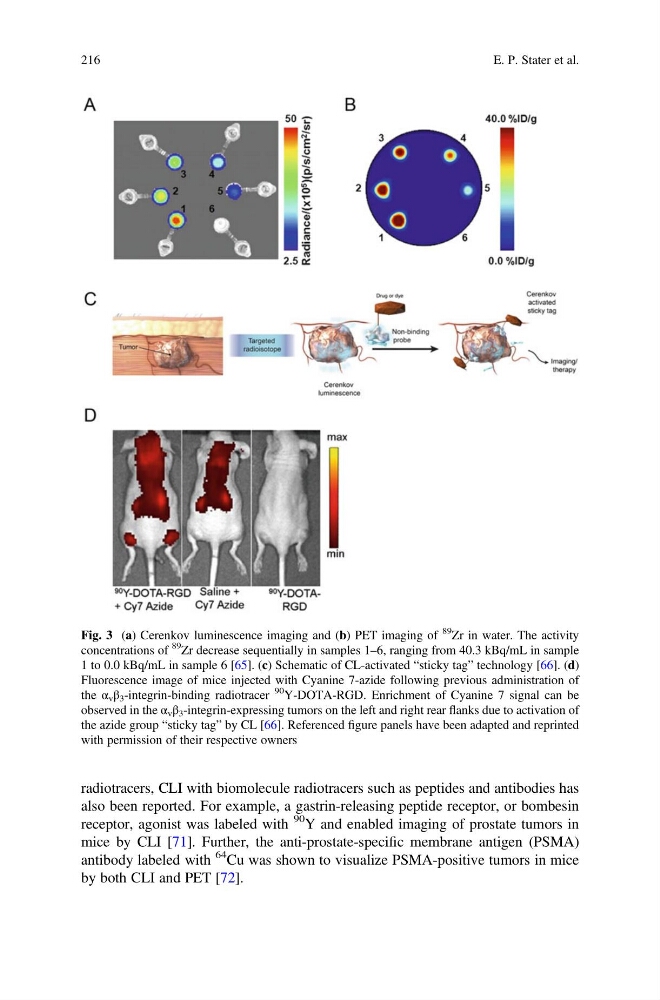
Fig. 3 (a) Cerenkov luminescence imaging and (b) PET imaging of
89
Zr in water. The activity
concentrations of
89
Zr decrease sequentially in samples 1–6, ranging from 40.3 kBq/mL in sample
1 to 0.0 kBq/mL in sample 6 [65]. (c) Schematic of CL-activated “sticky tag” technology [66]. (d)
Fluorescence image of mice injected with Cyanine 7-azide following previous administration of
the α v β 3 -integrin-binding radiotracer
90
Y-DOTA-RGD. Enrichment of Cyanine 7 signal can be
observed in the α v β 3 -integrin-expressing tumors on the left and right rear flanks due to activation of
the azide group “sticky tag” by CL [66]. Referenced figure panels have been adapted and reprinted
with permission of their respective owners
216
E. P. Stater et al.
also been reported. For example, a gastrin-releasing peptide receptor, or bombesin
receptor, agonist was labeled with
90 Y and enabled imaging of prostate tumors in
mice by CLI [71]. Further, the anti-prostate-specific membrane antigen (PSMA)
antibody labeled with
64 Cu was shown to visualize PSMA-positive tumors in mice
by both CLI and PET [72].
Fig. 3 (a) Cerenkov luminescence imaging and (b) PET imaging of
89
Zr in water. The activity
concentrations of
89
Zr decrease sequentially in samples 1–6, ranging from 40.3 kBq/mL in sample
1 to 0.0 kBq/mL in sample 6 [65]. (c) Schematic of CL-activated “sticky tag” technology [66]. (d)
Fluorescence image of mice injected with Cyanine 7-azide following previous administration of
the α v β 3 -integrin-binding radiotracer
90
Y-DOTA-RGD. Enrichment of Cyanine 7 signal can be
observed in the α v β 3 -integrin-expressing tumors on the left and right rear flanks due to activation of
the azide group “sticky tag” by CL [66]. Referenced figure panels have been adapted and reprinted
with permission of their respective owners
216
E. P. Stater et al.