

3.2 Synthesis Strategy
Thermal decomposition and solvo(hydro)thermal methods are two methods to
synthesize RENPs with controlled physical characteristics and heterostructures by
adjusting the role of precursor and solvent chemistries [48–50]. The comparison of
thermal decomposition and the solvo(hydro)thermal method is shown in Table 1.
Generally, a higher yield of the product is obtained using the solvothermal method,
while a narrower size distribution of particles in nanosize (typically sub-20 nm) at a
lower yield is obtained using the thermal decomposition method.
Briefly, the thermal decomposition method involves (1) dissolution of organometallic precursors for corresponding fluorides or oxides in high-boiling point
organic solvents; (2) removal of residual moisture, oxygen, and other smallmolecule impurities in the solution under an inert atmosphere (e.g., N2, Ar); and
(3) rapid decomposition of organometallic precursors at a specific elevated temperature leading to rapid nucleation followed by growth (see Fig. 12). Generally, the
organic precursors are rare-earth-based organic salts (e.g., trifluoroacetates, oleates).
Octadecene (ODE), oleic acid (OA), and oleylamine (OM) are commonly used as
high-boiling point solvents. Rapid decomposition of organometallic precursors at
the specific temperature allows for the burst of crystal nucleation, which essentially
decouples the nucleation from the growth phase. By decoupling nucleation from
growth, highly monodispersed nanocrystals are obtained. Further growth of the
crystals is limited since most of the precursors are consumed. However, through
the Ostwald ripening phenomenon, the small crystals may dissolve and redeposit
onto larger crystals resulting in a larger average particle size and a broader size
distribution. The crystal nucleation and growth processes are further adjusted using
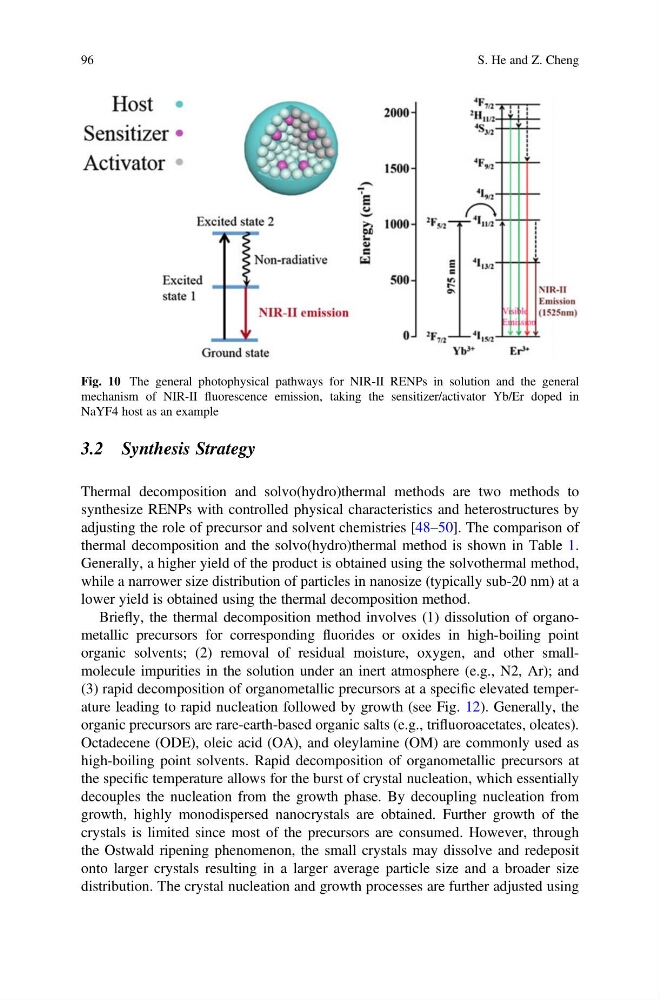
Fig. 10 The general photophysical pathways for NIR-II RENPs in solution and the general
mechanism of NIR-II fluorescence emission, taking the sensitizer/activator Yb/Er doped in
NaYF4 host as an example
96
S. He and Z. Cheng
Thermal decomposition and solvo(hydro)thermal methods are two methods to
synthesize RENPs with controlled physical characteristics and heterostructures by
adjusting the role of precursor and solvent chemistries [48–50]. The comparison of
thermal decomposition and the solvo(hydro)thermal method is shown in Table 1.
Generally, a higher yield of the product is obtained using the solvothermal method,
while a narrower size distribution of particles in nanosize (typically sub-20 nm) at a
lower yield is obtained using the thermal decomposition method.
Briefly, the thermal decomposition method involves (1) dissolution of organometallic precursors for corresponding fluorides or oxides in high-boiling point
organic solvents; (2) removal of residual moisture, oxygen, and other smallmolecule impurities in the solution under an inert atmosphere (e.g., N2, Ar); and
(3) rapid decomposition of organometallic precursors at a specific elevated temperature leading to rapid nucleation followed by growth (see Fig. 12). Generally, the
organic precursors are rare-earth-based organic salts (e.g., trifluoroacetates, oleates).
Octadecene (ODE), oleic acid (OA), and oleylamine (OM) are commonly used as
high-boiling point solvents. Rapid decomposition of organometallic precursors at
the specific temperature allows for the burst of crystal nucleation, which essentially
decouples the nucleation from the growth phase. By decoupling nucleation from
growth, highly monodispersed nanocrystals are obtained. Further growth of the
crystals is limited since most of the precursors are consumed. However, through
the Ostwald ripening phenomenon, the small crystals may dissolve and redeposit
onto larger crystals resulting in a larger average particle size and a broader size
distribution. The crystal nucleation and growth processes are further adjusted using
Fig. 10 The general photophysical pathways for NIR-II RENPs in solution and the general
mechanism of NIR-II fluorescence emission, taking the sensitizer/activator Yb/Er doped in
NaYF4 host as an example
96
S. He and Z. Cheng