

manufacturing, the products can be recycled to obtain valuable components for the
disposed devices. It may also be noted that such recycling also reduces air or water
pollution which is a by-product of manufacturing such components. Pyrolysis is
another technique which is a process of destructive distillation, in this process the
waste products are heated in a reactor at around 650
C to 1000
C in an oxygen less
environment which results in the generation of chemical gases for this waste. Such
valuable gases such as methane, carbon, charcoal, etc. can be used for energy
generation in various applications. Design optimization and resource reduction is
another technique to minimize the use of materials while production of industrial
goods. In recent years, design optimization has gained popularity as it helps design a
product which bears equal strength and complexity with reduced number of
components. Various CAD (Computer Aided Design) software’s help develop
such design models in which the product is simulated for the desired characteristics
before actual manufacturing.
1.4
Conclusion
The purpose of this chapter is to create an educated awareness among reader to
understand the hazardous impact of pollution whether its air, water, soil or solid
waste on ecosystem. The impact of each type of pollution has been discussed in
detail and their remedies have been discussed. Causes of every pollution have been
discussed to understand the effect of harmful industrial and human activities which is
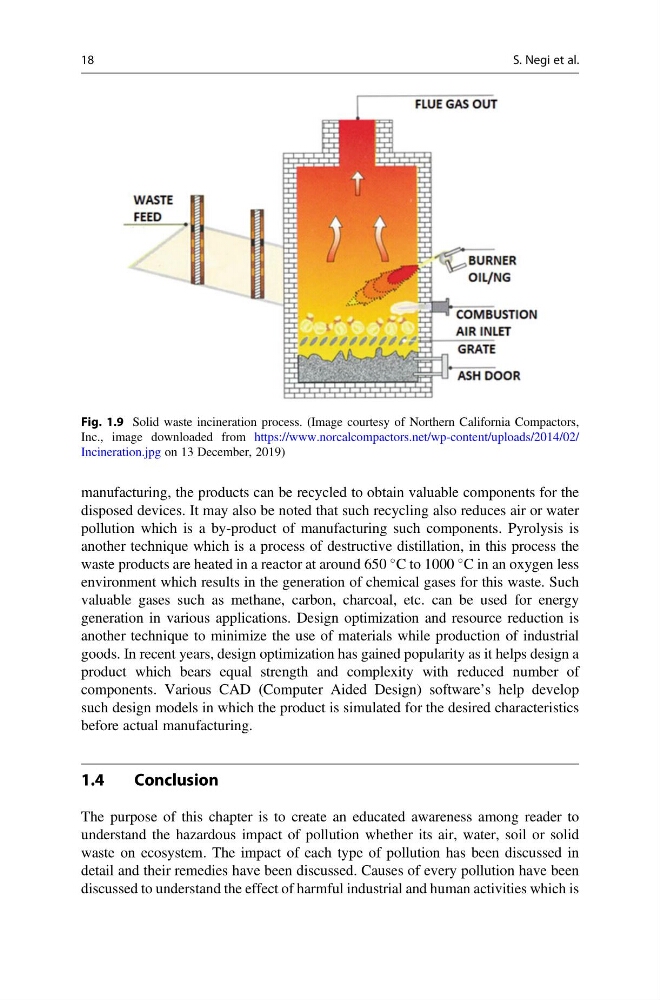
Fig. 1.9 Solid waste incineration process. (Image courtesy of Northern California Compactors,
Inc., image downloaded from https://www.norcalcompactors.net/wp-content/uploads/2014/02/
Incineration.jpg on 13 December, 2019)
18
S. Negi et al.
disposed devices. It may also be noted that such recycling also reduces air or water
pollution which is a by-product of manufacturing such components. Pyrolysis is
another technique which is a process of destructive distillation, in this process the
waste products are heated in a reactor at around 650
C to 1000
C in an oxygen less
environment which results in the generation of chemical gases for this waste. Such
valuable gases such as methane, carbon, charcoal, etc. can be used for energy
generation in various applications. Design optimization and resource reduction is
another technique to minimize the use of materials while production of industrial
goods. In recent years, design optimization has gained popularity as it helps design a
product which bears equal strength and complexity with reduced number of
components. Various CAD (Computer Aided Design) software’s help develop
such design models in which the product is simulated for the desired characteristics
before actual manufacturing.
1.4
Conclusion
The purpose of this chapter is to create an educated awareness among reader to
understand the hazardous impact of pollution whether its air, water, soil or solid
waste on ecosystem. The impact of each type of pollution has been discussed in
detail and their remedies have been discussed. Causes of every pollution have been
discussed to understand the effect of harmful industrial and human activities which is
Fig. 1.9 Solid waste incineration process. (Image courtesy of Northern California Compactors,
Inc., image downloaded from https://www.norcalcompactors.net/wp-content/uploads/2014/02/
Incineration.jpg on 13 December, 2019)
18
S. Negi et al.