

6.5
Silica-Based Nanomaterials
Another important material used for the eradication of hazardous heavy metals is
silica-based nanomaterial. These nanomaterials have excellent surface properties,
non-toxic, biocompatible, controlled morphology and are light in weight. Their
porosity, particle size, and crystallinity can be controlled with more sophisticated
functions. All these properties make them more promising adsorbent for removal of
metal waste (Mahmoud et al. 2016b). Their surface properties can be enhanced by
the addition of different functional groups like –SH, –NH 2 . It was investigated that
silica can also act as protective shield at low pH solution. Low filler polymer layer
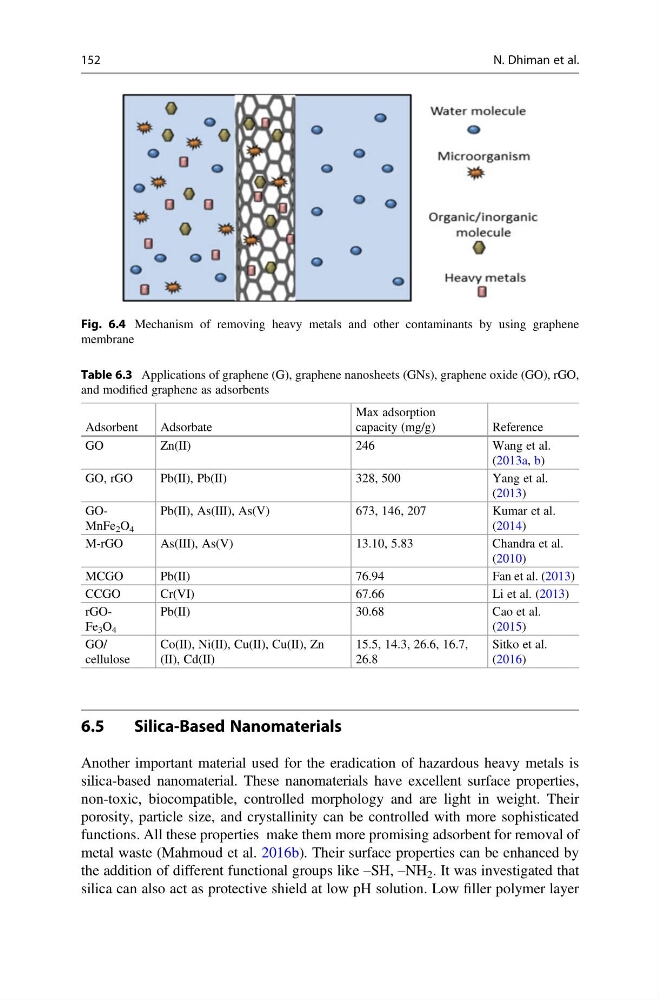
Fig. 6.4 Mechanism of removing heavy metals and other contaminants by using graphene
membrane
Table 6.3 Applications of graphene (G), graphene nanosheets (GNs), graphene oxide (GO), rGO,
and modified graphene as adsorbents
Adsorbent
Adsorbate
Max adsorption
capacity (mg/g)
Reference
GO
Zn(II)
246
Wang et al.
(2013a, b)
GO, rGO
Pb(II), Pb(II)
328, 500
Yang et al.
(2013)
GOMnFe 2 O 4
Pb(II), As(III), As(V)
673, 146, 207
Kumar et al.
(2014)
M-rGO
As(III), As(V)
13.10, 5.83
Chandra et al.
(2010)
MCGO
Pb(II)
76.94
Fan et al. (2013)
CCGO
Cr(VI)
67.66
Li et al. (2013)
rGOFe 3 O 4
Pb(II)
30.68
Cao et al.
(2015)
GO/
cellulose
Co(II), Ni(II), Cu(II), Cu(II), Zn
(II), Cd(II)
15.5, 14.3, 26.6, 16.7,
26.8
Sitko et al.
(2016)
152
N. Dhiman et al.
Silica-Based Nanomaterials
Another important material used for the eradication of hazardous heavy metals is
silica-based nanomaterial. These nanomaterials have excellent surface properties,
non-toxic, biocompatible, controlled morphology and are light in weight. Their
porosity, particle size, and crystallinity can be controlled with more sophisticated
functions. All these properties make them more promising adsorbent for removal of
metal waste (Mahmoud et al. 2016b). Their surface properties can be enhanced by
the addition of different functional groups like –SH, –NH 2 . It was investigated that
silica can also act as protective shield at low pH solution. Low filler polymer layer
Fig. 6.4 Mechanism of removing heavy metals and other contaminants by using graphene
membrane
Table 6.3 Applications of graphene (G), graphene nanosheets (GNs), graphene oxide (GO), rGO,
and modified graphene as adsorbents
Adsorbent
Adsorbate
Max adsorption
capacity (mg/g)
Reference
GO
Zn(II)
246
Wang et al.
(2013a, b)
GO, rGO
Pb(II), Pb(II)
328, 500
Yang et al.
(2013)
GOMnFe 2 O 4
Pb(II), As(III), As(V)
673, 146, 207
Kumar et al.
(2014)
M-rGO
As(III), As(V)
13.10, 5.83
Chandra et al.
(2010)
MCGO
Pb(II)
76.94
Fan et al. (2013)
CCGO
Cr(VI)
67.66
Li et al. (2013)
rGOFe 3 O 4
Pb(II)
30.68
Cao et al.
(2015)
GO/
cellulose
Co(II), Ni(II), Cu(II), Cu(II), Zn
(II), Cd(II)
15.5, 14.3, 26.6, 16.7,
26.8
Sitko et al.
(2016)
152
N. Dhiman et al.