

Gui et al. (2013) also reported a ratiometric sensor for greater accuracy for their
Cd
2+ sensing devices. For reduction of error by fluctuation in PL of QDs, two
different chromophores were taken for fluorescence measurement. PEI polymer
was coated on the CdTe QD cores, to reduce interactions between the secondary
dye and QDs, after that fluorescein isothiocyanate (FITC) was conjugated in the
system. Thus, signal of FITC was maintained, when the signals of QDs were
quenched. In the presence of Cd
2+ , PL of QDs was restored. LOD was slightly
more (12 nM) than the previous reported sensor (6 nM), but the linear detection
range was much higher, i.e., 0.1–15 μM in comparison to 0.1–2 μM obtained in the
previous work.
Pathogens
Water-borne pathogens cause great threat of water contamination. Serious waterborne diseases like cholera are spread by such pathogens. WHO have listed
2 helminths, 7 protozoas, 8 viruses and 12 bacteria as potentially significant
pathogens in drinking water supply. Pathogen detection is an important and
emerging research area. There are mainly three pathogen associated analytes considered for pathogen detection: (1) products e.g., toxins produced by pathogens,
(2) genetic material, (3) representative epitome on cell membrane or whole analyte
(cell). In their reviews, Willner and Vikesland (2018), Mocan et al. (2017) and
Kumar et al. (2018) have provided detailed discussion about different water-borne
pathogens and the methods of detection. Here we are presenting some recent
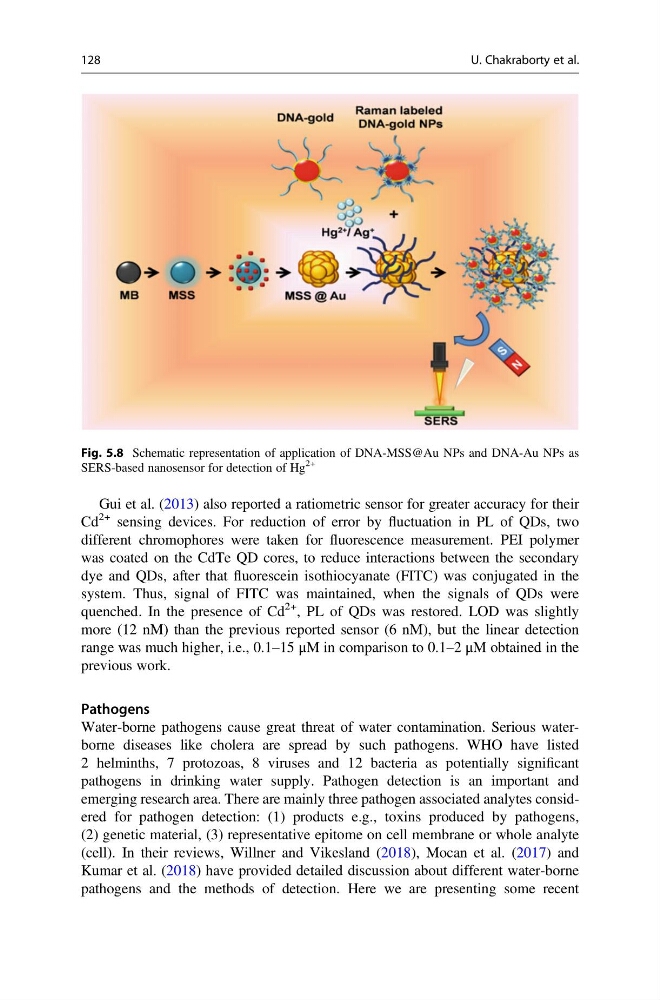
Fig. 5.8 Schematic representation of application of DNA-MSS@Au NPs and DNA-Au NPs as
SERS-based nanosensor for detection of Hg
2+
128
U. Chakraborty et al.
Cd
2+ sensing devices. For reduction of error by fluctuation in PL of QDs, two
different chromophores were taken for fluorescence measurement. PEI polymer
was coated on the CdTe QD cores, to reduce interactions between the secondary
dye and QDs, after that fluorescein isothiocyanate (FITC) was conjugated in the
system. Thus, signal of FITC was maintained, when the signals of QDs were
quenched. In the presence of Cd
2+ , PL of QDs was restored. LOD was slightly
more (12 nM) than the previous reported sensor (6 nM), but the linear detection
range was much higher, i.e., 0.1–15 μM in comparison to 0.1–2 μM obtained in the
previous work.
Pathogens
Water-borne pathogens cause great threat of water contamination. Serious waterborne diseases like cholera are spread by such pathogens. WHO have listed
2 helminths, 7 protozoas, 8 viruses and 12 bacteria as potentially significant
pathogens in drinking water supply. Pathogen detection is an important and
emerging research area. There are mainly three pathogen associated analytes considered for pathogen detection: (1) products e.g., toxins produced by pathogens,
(2) genetic material, (3) representative epitome on cell membrane or whole analyte
(cell). In their reviews, Willner and Vikesland (2018), Mocan et al. (2017) and
Kumar et al. (2018) have provided detailed discussion about different water-borne
pathogens and the methods of detection. Here we are presenting some recent
Fig. 5.8 Schematic representation of application of DNA-MSS@Au NPs and DNA-Au NPs as
SERS-based nanosensor for detection of Hg
2+
128
U. Chakraborty et al.