

44
H. K. Timken et al.
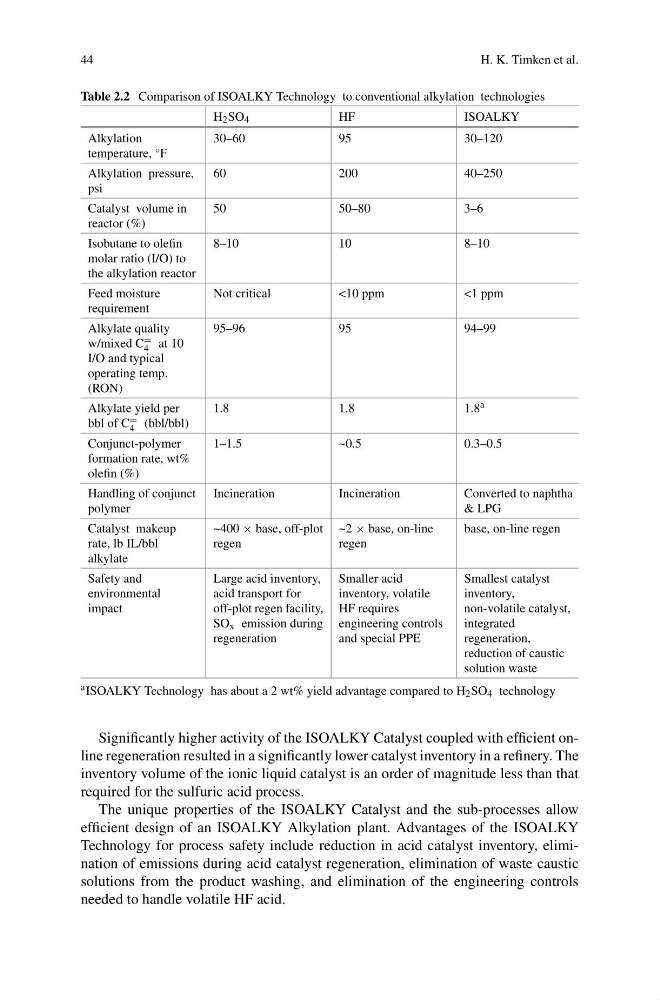
Table 2.2 Comparison of ISOALKY Technology to conventional alkylation technologies
H 2 SO 4
HF
ISOALKY
Alkylation
temperature, °F
30–60
95
30–120
Alkylation pressure,
psi
60
200
40–250
Catalyst volume in
reactor (%)
50
50–80
3–6
Isobutane to olefin
molar ratio (I/O) to
the alkylation reactor
8–10
10
8–10
Feed moisture
requirement
Not critical
<10 ppm
<1 ppm
Alkylate quality
w/mixed C =
4 at 10
I/O and typical
operating temp.
(RON)
95–96
95
94–99
Alkylate yield per
bbl of C =
4 (bbl/bbl)
1.8
1.8
1.8 a
Conjunct-polymer
formation rate, wt%
olefin (%)
1–1.5
~0.5
0.3–0.5
Handling of conjunct
polymer
Incineration
Incineration
Converted to naphtha
& LPG
Catalyst makeup
rate, lb IL/bbl
alkylate
~400 × base, off-plot
regen
~2 × base, on-line
regen
base, on-line regen
Safety and
environmental
impact
Large acid inventory,
acid transport for
off-plot regen facility,
SO x emission during
regeneration
Smaller acid
inventory, volatile
HF requires
engineering controls
and special PPE
Smallest catalyst
inventory,
non-volatile catalyst,
integrated
regeneration,
reduction of caustic
solution waste
a ISOALKY Technology has about a 2 wt% yield advantage compared to H 2 SO 4 technology
Significantly higher activity of the ISOALKY Catalyst coupled with efficient online regeneration resulted in a significantly lower catalyst inventory in a refinery. The
inventory volume of the ionic liquid catalyst is an order of magnitude less than that
required for the sulfuric acid process.
The unique properties of the ISOALKY Catalyst and the sub-processes allow
efficient design of an ISOALKY Alkylation plant. Advantages of the ISOALKY
Technology for process safety include reduction in acid catalyst inventory, elimination of emissions during acid catalyst regeneration, elimination of waste caustic
solutions from the product washing, and elimination of the engineering controls
needed to handle volatile HF acid.
H. K. Timken et al.
Table 2.2 Comparison of ISOALKY Technology to conventional alkylation technologies
H 2 SO 4
HF
ISOALKY
Alkylation
temperature, °F
30–60
95
30–120
Alkylation pressure,
psi
60
200
40–250
Catalyst volume in
reactor (%)
50
50–80
3–6
Isobutane to olefin
molar ratio (I/O) to
the alkylation reactor
8–10
10
8–10
Feed moisture
requirement
Not critical
<10 ppm
<1 ppm
Alkylate quality
w/mixed C =
4 at 10
I/O and typical
operating temp.
(RON)
95–96
95
94–99
Alkylate yield per
bbl of C =
4 (bbl/bbl)
1.8
1.8
1.8 a
Conjunct-polymer
formation rate, wt%
olefin (%)
1–1.5
~0.5
0.3–0.5
Handling of conjunct
polymer
Incineration
Incineration
Converted to naphtha
& LPG
Catalyst makeup
rate, lb IL/bbl
alkylate
~400 × base, off-plot
regen
~2 × base, on-line
regen
base, on-line regen
Safety and
environmental
impact
Large acid inventory,
acid transport for
off-plot regen facility,
SO x emission during
regeneration
Smaller acid
inventory, volatile
HF requires
engineering controls
and special PPE
Smallest catalyst
inventory,
non-volatile catalyst,
integrated
regeneration,
reduction of caustic
solution waste
a ISOALKY Technology has about a 2 wt% yield advantage compared to H 2 SO 4 technology
Significantly higher activity of the ISOALKY Catalyst coupled with efficient online regeneration resulted in a significantly lower catalyst inventory in a refinery. The
inventory volume of the ionic liquid catalyst is an order of magnitude less than that
required for the sulfuric acid process.
The unique properties of the ISOALKY Catalyst and the sub-processes allow
efficient design of an ISOALKY Alkylation plant. Advantages of the ISOALKY
Technology for process safety include reduction in acid catalyst inventory, elimination of emissions during acid catalyst regeneration, elimination of waste caustic
solutions from the product washing, and elimination of the engineering controls
needed to handle volatile HF acid.