

6 Gas Chromatography Columns Using Ionic Liquids …
143
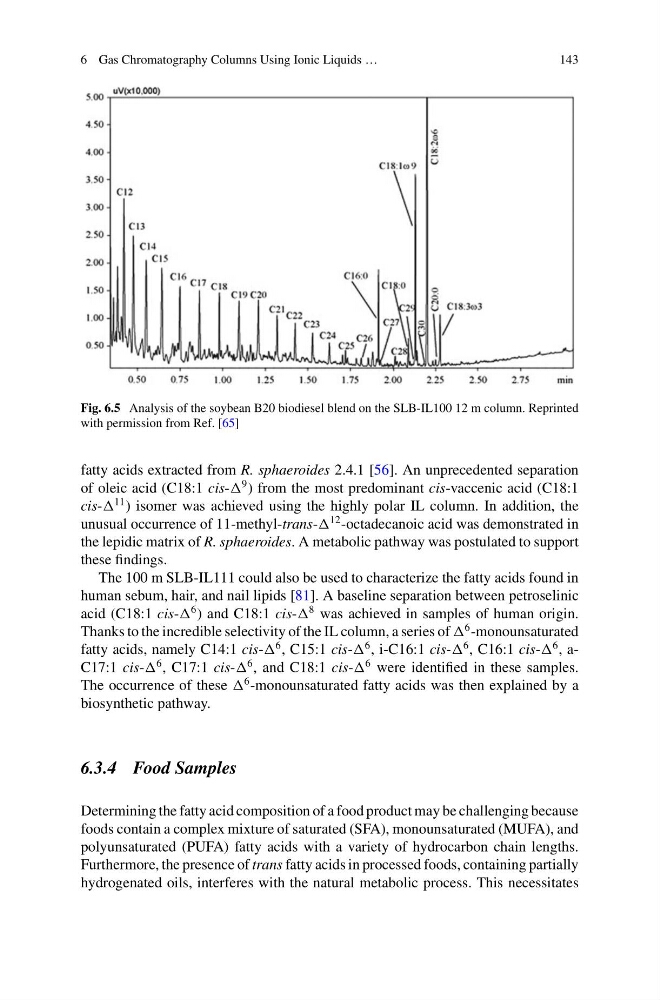
Fig. 6.5 Analysis of the soybean B20 biodiesel blend on the SLB-IL100 12 m column. Reprinted
with permission from Ref. [65]
fatty acids extracted from R. sphaeroides 2.4.1 [56]. An unprecedented separation
of oleic acid (C18:1 cis9 ) from the most predominant cis-vaccenic acid (C18:1
cis11 ) isomer was achieved using the highly polar IL column. In addition, the
unusual occurrence of 11-methyl-trans12 -octadecanoic acid was demonstrated in
the lepidic matrix of R. sphaeroides. A metabolic pathway was postulated to support
these findings.
The 100 m SLB-IL111 could also be used to characterize the fatty acids found in
human sebum, hair, and nail lipids [81]. A baseline separation between petroselinic
acid (C18:1 cis6 ) and C18:1 cis8 was achieved in samples of human origin.
Thanks to the incredible selectivity of the IL column, a series of
6 -monounsaturated
fatty acids, namely C14:1 cis6 , C15:1 cis6 , i-C16:1 cis6 , C16:1 cis6 , aC17:1 cis6 , C17:1 cis6 , and C18:1 cis6 were identified in these samples.
The occurrence of these
6 -monounsaturated fatty acids was then explained by a
biosynthetic pathway.
6.3.4 Food Samples
Determining the fatty acid composition of a food product may be challenging because
foods contain a complex mixture of saturated (SFA), monounsaturated (MUFA), and
polyunsaturated (PUFA) fatty acids with a variety of hydrocarbon chain lengths.
Furthermore, the presence of trans fatty acids in processed foods, containing partially
hydrogenated oils, interferes with the natural metabolic process. This necessitates
143
Fig. 6.5 Analysis of the soybean B20 biodiesel blend on the SLB-IL100 12 m column. Reprinted
with permission from Ref. [65]
fatty acids extracted from R. sphaeroides 2.4.1 [56]. An unprecedented separation
of oleic acid (C18:1 cis9 ) from the most predominant cis-vaccenic acid (C18:1
cis11 ) isomer was achieved using the highly polar IL column. In addition, the
unusual occurrence of 11-methyl-trans12 -octadecanoic acid was demonstrated in
the lepidic matrix of R. sphaeroides. A metabolic pathway was postulated to support
these findings.
The 100 m SLB-IL111 could also be used to characterize the fatty acids found in
human sebum, hair, and nail lipids [81]. A baseline separation between petroselinic
acid (C18:1 cis6 ) and C18:1 cis8 was achieved in samples of human origin.
Thanks to the incredible selectivity of the IL column, a series of
6 -monounsaturated
fatty acids, namely C14:1 cis6 , C15:1 cis6 , i-C16:1 cis6 , C16:1 cis6 , aC17:1 cis6 , C17:1 cis6 , and C18:1 cis6 were identified in these samples.
The occurrence of these
6 -monounsaturated fatty acids was then explained by a
biosynthetic pathway.
6.3.4 Food Samples
Determining the fatty acid composition of a food product may be challenging because
foods contain a complex mixture of saturated (SFA), monounsaturated (MUFA), and
polyunsaturated (PUFA) fatty acids with a variety of hydrocarbon chain lengths.
Furthermore, the presence of trans fatty acids in processed foods, containing partially
hydrogenated oils, interferes with the natural metabolic process. This necessitates