

106
A. R. Abouelela et al.
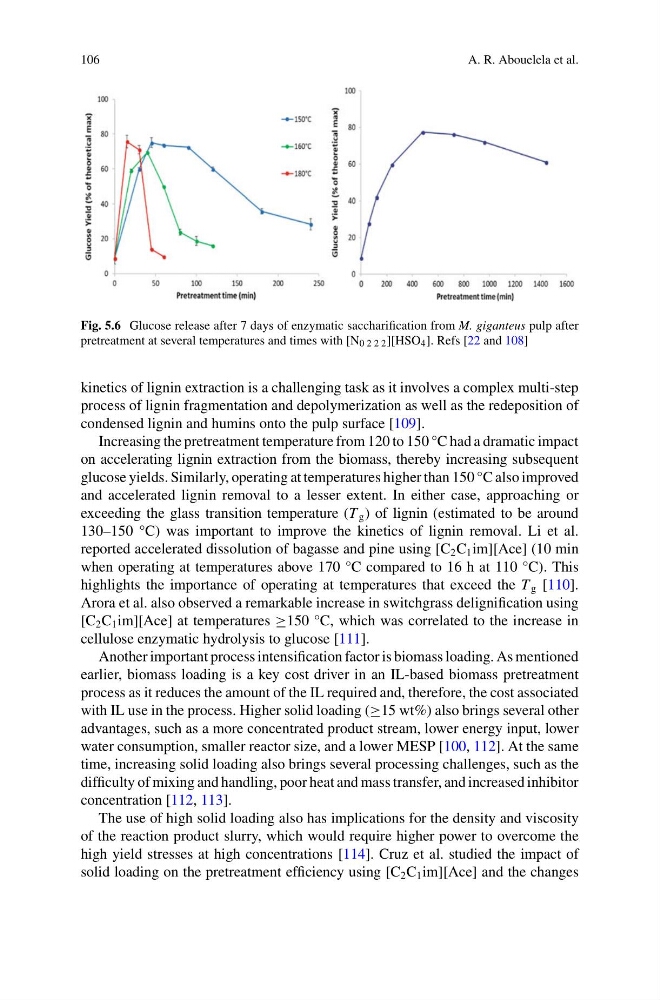
Fig. 5.6 Glucose release after 7 days of enzymatic saccharification from M. giganteus pulp after
pretreatment at several temperatures and times with [N 0 2 2 2 ][HSO 4 ]. Refs [22 and 108]
kinetics of lignin extraction is a challenging task as it involves a complex multi-step
process of lignin fragmentation and depolymerization as well as the redeposition of
condensed lignin and humins onto the pulp surface [109].
Increasing the pretreatment temperature from 120 to 150 °C had a dramatic impact
on accelerating lignin extraction from the biomass, thereby increasing subsequent
glucose yields. Similarly, operating at temperatures higher than 150 °C also improved
and accelerated lignin removal to a lesser extent. In either case, approaching or
exceeding the glass transition temperature (T g ) of lignin (estimated to be around
130–150 °C) was important to improve the kinetics of lignin removal. Li et al.
reported accelerated dissolution of bagasse and pine using [C 2 C 1 im][Ace] (10 min
when operating at temperatures above 170 °C compared to 16 h at 110 °C). This
highlights the importance of operating at temperatures that exceed the T g [110].
Arora et al. also observed a remarkable increase in switchgrass delignification using
[C 2 C 1 im][Ace] at temperatures ≥150 °C, which was correlated to the increase in
cellulose enzymatic hydrolysis to glucose [111].
Another important process intensification factor is biomass loading. As mentioned
earlier, biomass loading is a key cost driver in an IL-based biomass pretreatment
process as it reduces the amount of the IL required and, therefore, the cost associated
with IL use in the process. Higher solid loading (≥15 wt%) also brings several other
advantages, such as a more concentrated product stream, lower energy input, lower
water consumption, smaller reactor size, and a lower MESP [100, 112]. At the same
time, increasing solid loading also brings several processing challenges, such as the
difficulty of mixing and handling, poor heat and mass transfer, and increased inhibitor
concentration [112, 113].
The use of high solid loading also has implications for the density and viscosity
of the reaction product slurry, which would require higher power to overcome the
high yield stresses at high concentrations [114]. Cruz et al. studied the impact of
solid loading on the pretreatment efficiency using [C 2 C 1 im][Ace] and the changes
A. R. Abouelela et al.
Fig. 5.6 Glucose release after 7 days of enzymatic saccharification from M. giganteus pulp after
pretreatment at several temperatures and times with [N 0 2 2 2 ][HSO 4 ]. Refs [22 and 108]
kinetics of lignin extraction is a challenging task as it involves a complex multi-step
process of lignin fragmentation and depolymerization as well as the redeposition of
condensed lignin and humins onto the pulp surface [109].
Increasing the pretreatment temperature from 120 to 150 °C had a dramatic impact
on accelerating lignin extraction from the biomass, thereby increasing subsequent
glucose yields. Similarly, operating at temperatures higher than 150 °C also improved
and accelerated lignin removal to a lesser extent. In either case, approaching or
exceeding the glass transition temperature (T g ) of lignin (estimated to be around
130–150 °C) was important to improve the kinetics of lignin removal. Li et al.
reported accelerated dissolution of bagasse and pine using [C 2 C 1 im][Ace] (10 min
when operating at temperatures above 170 °C compared to 16 h at 110 °C). This
highlights the importance of operating at temperatures that exceed the T g [110].
Arora et al. also observed a remarkable increase in switchgrass delignification using
[C 2 C 1 im][Ace] at temperatures ≥150 °C, which was correlated to the increase in
cellulose enzymatic hydrolysis to glucose [111].
Another important process intensification factor is biomass loading. As mentioned
earlier, biomass loading is a key cost driver in an IL-based biomass pretreatment
process as it reduces the amount of the IL required and, therefore, the cost associated
with IL use in the process. Higher solid loading (≥15 wt%) also brings several other
advantages, such as a more concentrated product stream, lower energy input, lower
water consumption, smaller reactor size, and a lower MESP [100, 112]. At the same
time, increasing solid loading also brings several processing challenges, such as the
difficulty of mixing and handling, poor heat and mass transfer, and increased inhibitor
concentration [112, 113].
The use of high solid loading also has implications for the density and viscosity
of the reaction product slurry, which would require higher power to overcome the
high yield stresses at high concentrations [114]. Cruz et al. studied the impact of
solid loading on the pretreatment efficiency using [C 2 C 1 im][Ace] and the changes