

though its adoption and implementation was
donor dependent (Saravanan et al. 2009). Water
reforms were initiated by the state with assistance
from donor states, particularly the Netherlands,
UK, Sweden Norway and Germany and therefore
it was a top-down process (Dube and Swatuk
2002). These reforms took place at a time when a
wave of the New Public Management
(NPM) approaches were being introduced to
Africa and it is therefore not surprising that in
Zimbabwe the initial step involved the setting up
of the Water Resources Management Secretariat
(WRMS), which was tasked with the responsibility of ensuring that water resources in the
country are managed in an accountable, transparent, democratic and participatory way. At the
same time, good governance was viewed as an
important prerequisite for successful water governance and management. The WRMS spelt out
the intentions of government as ensuring equal
access to water by all Zimbabweans, improvement of management of water resources,
increasing the protection of the environment and
the administration of the Water Act.
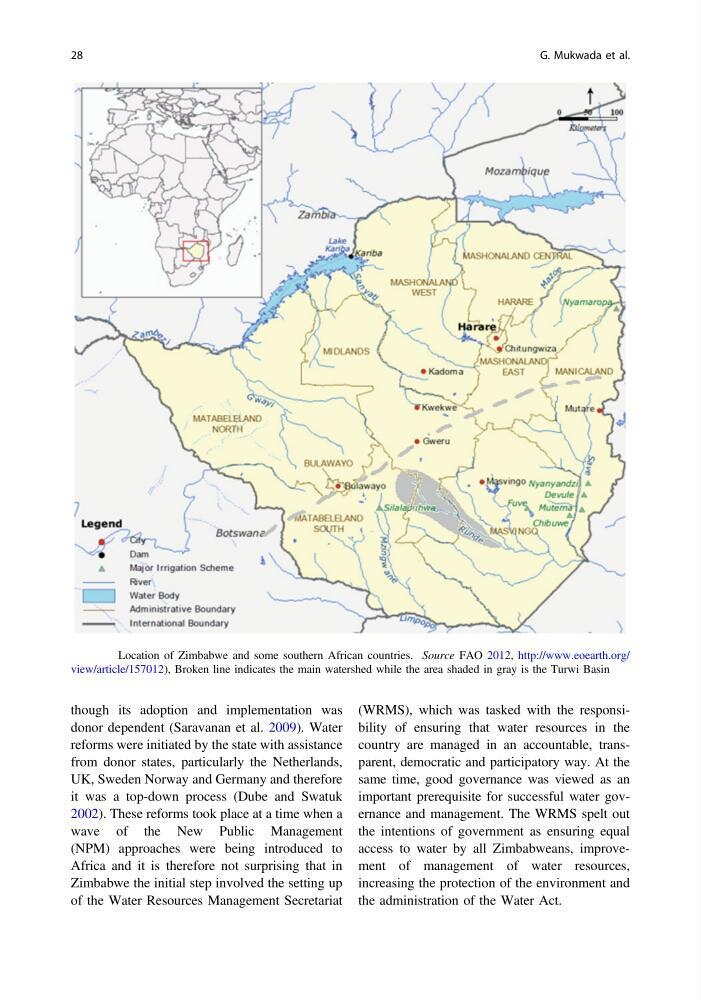
Fig. 4.1 Location of Zimbabwe and some southern African countries. Source FAO 2012, http://www.eoearth.org/
view/article/157012), Broken line indicates the main watershed while the area shaded in gray is the Turwi Basin
28
G. Mukwada et al.
donor dependent (Saravanan et al. 2009). Water
reforms were initiated by the state with assistance
from donor states, particularly the Netherlands,
UK, Sweden Norway and Germany and therefore
it was a top-down process (Dube and Swatuk
2002). These reforms took place at a time when a
wave of the New Public Management
(NPM) approaches were being introduced to
Africa and it is therefore not surprising that in
Zimbabwe the initial step involved the setting up
of the Water Resources Management Secretariat
(WRMS), which was tasked with the responsibility of ensuring that water resources in the
country are managed in an accountable, transparent, democratic and participatory way. At the
same time, good governance was viewed as an
important prerequisite for successful water governance and management. The WRMS spelt out
the intentions of government as ensuring equal
access to water by all Zimbabweans, improvement of management of water resources,
increasing the protection of the environment and
the administration of the Water Act.
Fig. 4.1 Location of Zimbabwe and some southern African countries. Source FAO 2012, http://www.eoearth.org/
view/article/157012), Broken line indicates the main watershed while the area shaded in gray is the Turwi Basin
28
G. Mukwada et al.