

and the PP specimen passed the UL-94 test with V-0 rating and resulted in a high
char residue. Compared to CFA, even at low percentages of APP, these PP systems
showed strong FR activity due to the presence of P and N elements in the PEPAPC
structure. The degradation characteristics of melamine alone and when in combination with MPP and PER were studied by TG-FTIR. It was observed that in the
presence of MPP, the degradation and sublimation of melamine are highly inhibited
whereas when it was used in combination with MPP and PER, sublimation does not
occur. Furthermore, in this case, the evolution of volatile combustible substrates is
limited [12].
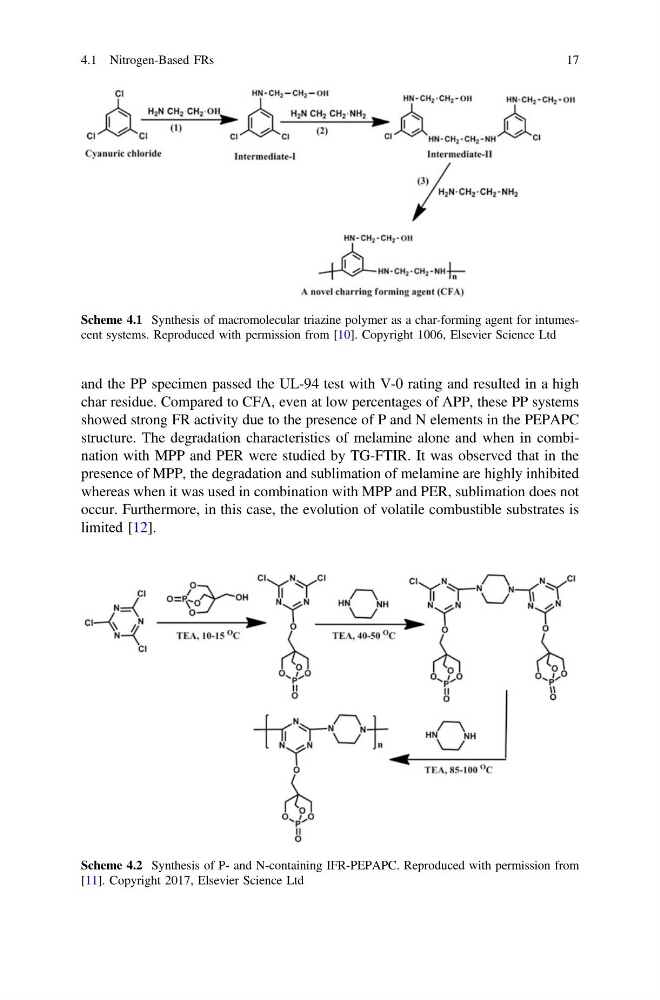
Scheme 4.1 Synthesis of macromolecular triazine polymer as a char-forming agent for intumescent systems. Reproduced with permission from [10]. Copyright 1006, Elsevier Science Ltd
Scheme 4.2 Synthesis of P- and N-containing IFR-PEPAPC. Reproduced with permission from
[11]. Copyright 2017, Elsevier Science Ltd
4.1 Nitrogen-Based FRs
17
char residue. Compared to CFA, even at low percentages of APP, these PP systems
showed strong FR activity due to the presence of P and N elements in the PEPAPC
structure. The degradation characteristics of melamine alone and when in combination with MPP and PER were studied by TG-FTIR. It was observed that in the
presence of MPP, the degradation and sublimation of melamine are highly inhibited
whereas when it was used in combination with MPP and PER, sublimation does not
occur. Furthermore, in this case, the evolution of volatile combustible substrates is
limited [12].
Scheme 4.1 Synthesis of macromolecular triazine polymer as a char-forming agent for intumescent systems. Reproduced with permission from [10]. Copyright 1006, Elsevier Science Ltd
Scheme 4.2 Synthesis of P- and N-containing IFR-PEPAPC. Reproduced with permission from
[11]. Copyright 2017, Elsevier Science Ltd
4.1 Nitrogen-Based FRs
17