

with excellent mechanical and FR properties. In addition, GO contains oxygen
groups, which may undergo decomposition and dehydration even at low temperatures, which cools down the surroundings during combustion and decreases
oxygen concentration. Therefore, graphene can effectively decrease the HRR and
improve char formation during polymer combustion compared to layered silicate
clays and carbon nanotubes. Surface modification of graphene is an important
objective in the preparation of polymer nanocomposites. Due to the occurrence of
p-p interactions and van der Waals forces, it is difficult to disperse graphene evenly
in the polymer matrix. Therefore, surface modification is necessary to avoid such
problems. Graphene and surface-modified GO have been widely used to prepare FR
polymer nanocomposites. FR properties typically depend on the nature of the
surface modifier and its interactions with the polymer matrix. Graphene modified
with various metal oxides was used to prepare polymer nanocomposites; it acts as
an excellent smoke suppressant [1, 23, 89, 90]. Xu et al. [91] synthesized
MgAl-layered double hydroxide loaded graphene (RGO-LDH) via co-precipitation
and introduced CuMoO 4 on the surfaces of RGO-LDH to obtain hydrides of
combination metal oxides, as shown in Fig. 7.8. Further, they used these compounds to prepare EP nanocomposites with different loadings and observed a significant improvement in FR activity and smoke suppression. Combinations of metal
oxides with graphene lead to better properties; during burning, Cu 2 O and MoO 3 are
generated from RGO-LDH/CuMoO 4 . Cu 2 O is well known to suppress of CO,
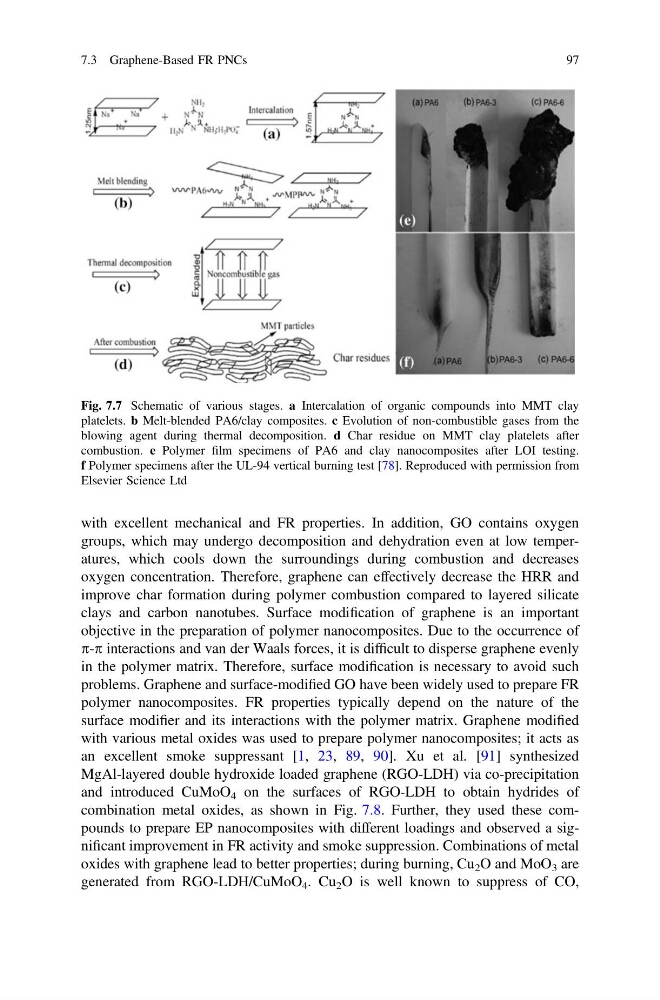
Fig. 7.7 Schematic of various stages. a Intercalation of organic compounds into MMT clay
platelets. b Melt-blended PA6/clay composites. c Evolution of non-combustible gases from the
blowing agent during thermal decomposition. d Char residue on MMT clay platelets after
combustion. e Polymer film specimens of PA6 and clay nanocomposites after LOI testing.
f Polymer specimens after the UL-94 vertical burning test [78]. Reproduced with permission from
Elsevier Science Ltd
7.3 Graphene-Based FR PNCs
97
groups, which may undergo decomposition and dehydration even at low temperatures, which cools down the surroundings during combustion and decreases
oxygen concentration. Therefore, graphene can effectively decrease the HRR and
improve char formation during polymer combustion compared to layered silicate
clays and carbon nanotubes. Surface modification of graphene is an important
objective in the preparation of polymer nanocomposites. Due to the occurrence of
p-p interactions and van der Waals forces, it is difficult to disperse graphene evenly
in the polymer matrix. Therefore, surface modification is necessary to avoid such
problems. Graphene and surface-modified GO have been widely used to prepare FR
polymer nanocomposites. FR properties typically depend on the nature of the
surface modifier and its interactions with the polymer matrix. Graphene modified
with various metal oxides was used to prepare polymer nanocomposites; it acts as
an excellent smoke suppressant [1, 23, 89, 90]. Xu et al. [91] synthesized
MgAl-layered double hydroxide loaded graphene (RGO-LDH) via co-precipitation
and introduced CuMoO 4 on the surfaces of RGO-LDH to obtain hydrides of
combination metal oxides, as shown in Fig. 7.8. Further, they used these compounds to prepare EP nanocomposites with different loadings and observed a significant improvement in FR activity and smoke suppression. Combinations of metal
oxides with graphene lead to better properties; during burning, Cu 2 O and MoO 3 are
generated from RGO-LDH/CuMoO 4 . Cu 2 O is well known to suppress of CO,
Fig. 7.7 Schematic of various stages. a Intercalation of organic compounds into MMT clay
platelets. b Melt-blended PA6/clay composites. c Evolution of non-combustible gases from the
blowing agent during thermal decomposition. d Char residue on MMT clay platelets after
combustion. e Polymer film specimens of PA6 and clay nanocomposites after LOI testing.
f Polymer specimens after the UL-94 vertical burning test [78]. Reproduced with permission from
Elsevier Science Ltd
7.3 Graphene-Based FR PNCs
97