

68
Then, the net heat transformation into the steam generator is determined in order to
confirm the achievement of the maximum heat transfer rate which is found to be
approximately 22.2 MW (Fig. 4.6).
Subsequently, the determination of the net thermal efficiency (η th ) of 132 is confirmed by the calculation of the net work done by the heat exchanger which is 133
to the steam generator which has been calculated as the maximum thermal efficiency of 42% [32, 36, 37]:
K th
turbines
pumps
steam
MW
MW
ª
¬
«
«
º
¼
»
»
ª
W
W
Q
9 65 0 24
22 2
.
.
.
¬ ¬
«
º
¼
» 42%
(4.24)
Since the generation controls the fuel inflow rate which is extracted from the
geothermal heat, the maximum power peak (MPP) is traced in accordance with the
extraction of geothermal energy throughout the feedwater pump piping (Fig. 4.7).
Here, the maximum geothermal heat transformation rate is calculated considering
the speed of the rotor in two different modes of fixed speed and variable speed
which shows that fixed-speed generators are interconnected to an electric circuit in
order to measure precisely the conversion of energy generation rate [17, 38, 39].
Therefore, the maximum geothermal energy generation considering various control strategies has been calculated to track the maximum energy supply for the house
or building by conducting the algorithm analysis of mechanical sensor speed that
forces to produce energy steadily [26, 40, 41]. The results show that this algorithm
continuously controls the highest energy generation point under the conditions of the
rotor velocity which frequently changes and thus the maximum geothermal energy
traced is calculated by generation of current-power output which delivers the highest
energy release due to the results of the rotor speed of the generation (Fig. 4.8).
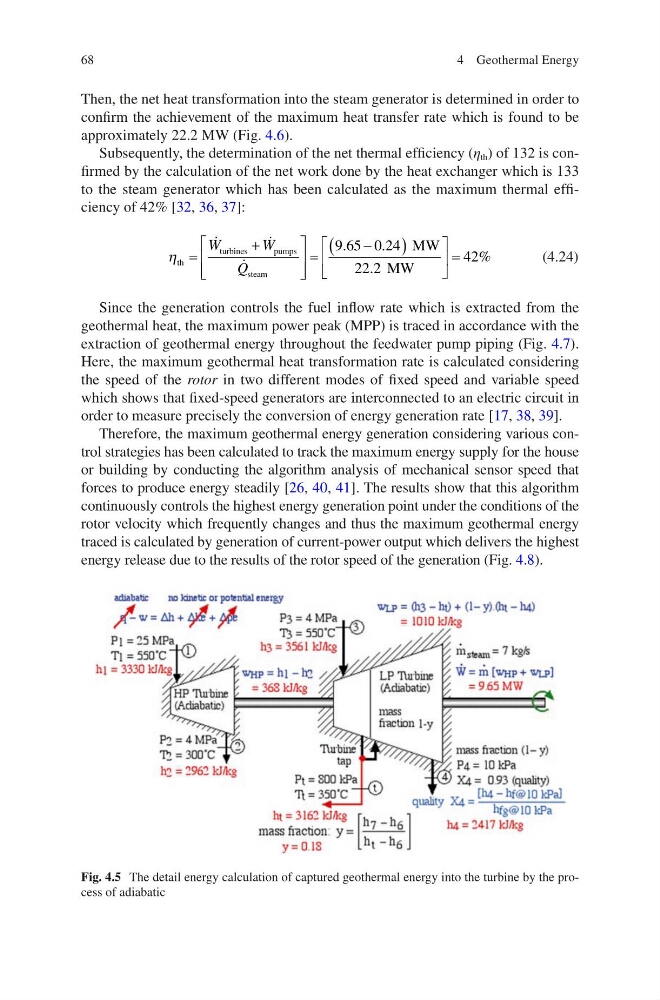
Fig. 4.5 The detail energy calculation of captured geothermal energy into the turbine by the process of adiabatic
4 Geothermal Energy
Then, the net heat transformation into the steam generator is determined in order to
confirm the achievement of the maximum heat transfer rate which is found to be
approximately 22.2 MW (Fig. 4.6).
Subsequently, the determination of the net thermal efficiency (η th ) of 132 is confirmed by the calculation of the net work done by the heat exchanger which is 133
to the steam generator which has been calculated as the maximum thermal efficiency of 42% [32, 36, 37]:
K th
turbines
pumps
steam
MW
MW
ª
¬
«
«
º
¼
»
»
ª
W
W
Q
9 65 0 24
22 2
.
.
.
¬ ¬
«
º
¼
» 42%
(4.24)
Since the generation controls the fuel inflow rate which is extracted from the
geothermal heat, the maximum power peak (MPP) is traced in accordance with the
extraction of geothermal energy throughout the feedwater pump piping (Fig. 4.7).
Here, the maximum geothermal heat transformation rate is calculated considering
the speed of the rotor in two different modes of fixed speed and variable speed
which shows that fixed-speed generators are interconnected to an electric circuit in
order to measure precisely the conversion of energy generation rate [17, 38, 39].
Therefore, the maximum geothermal energy generation considering various control strategies has been calculated to track the maximum energy supply for the house
or building by conducting the algorithm analysis of mechanical sensor speed that
forces to produce energy steadily [26, 40, 41]. The results show that this algorithm
continuously controls the highest energy generation point under the conditions of the
rotor velocity which frequently changes and thus the maximum geothermal energy
traced is calculated by generation of current-power output which delivers the highest
energy release due to the results of the rotor speed of the generation (Fig. 4.8).
Fig. 4.5 The detail energy calculation of captured geothermal energy into the turbine by the process of adiabatic
4 Geothermal Energy