

7
oxygen charge to oxidize the DNA bases causing them to prohibit the mutations
just because most of the common mutations occurred at the G-T transversion
process where guanine gets oxidized due to the reactive oxygen charge into the
8-oxo-7,8-dihydroguanine (8-oxoG), hindering its pairing with cytosine. Simply,
UVGI penetration into the pathogen bodies completely interrupts this biochemical function by damaging the 8-oxoG to form pair with adenine during the strand
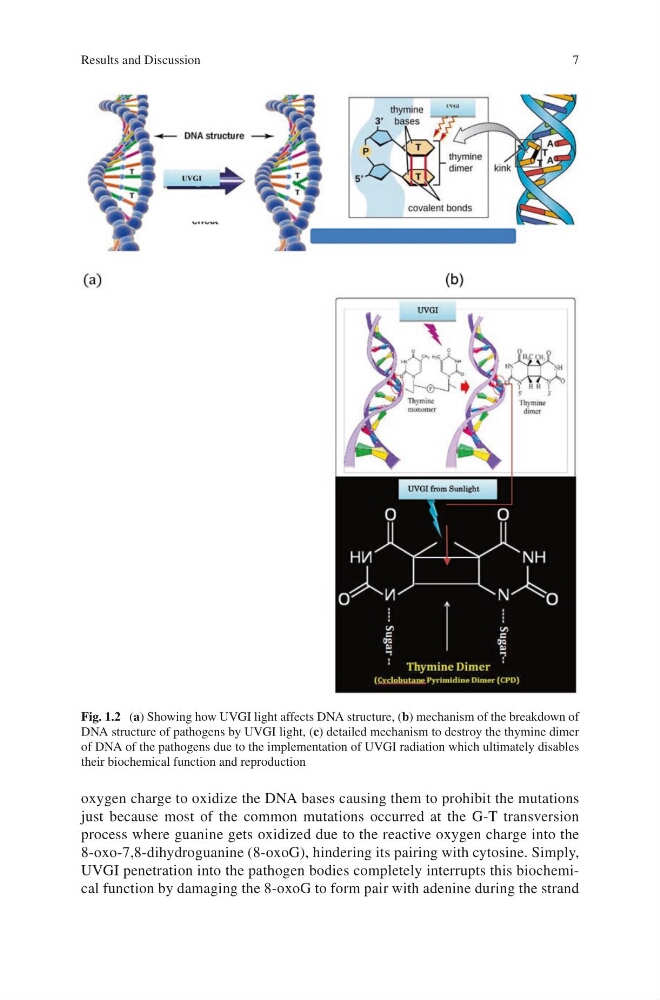
Fig. 1.2 (a) Showing how UVGI light affects DNA structure, (b) mechanism of the breakdown of
DNA structure of pathogens by UVGI light, (c) detailed mechanism to destroy the thymine dimer
of DNA of the pathogens due to the implementation of UVGI radiation which ultimately disables
their biochemical function and reproduction
Results and Discussion
oxygen charge to oxidize the DNA bases causing them to prohibit the mutations
just because most of the common mutations occurred at the G-T transversion
process where guanine gets oxidized due to the reactive oxygen charge into the
8-oxo-7,8-dihydroguanine (8-oxoG), hindering its pairing with cytosine. Simply,
UVGI penetration into the pathogen bodies completely interrupts this biochemical function by damaging the 8-oxoG to form pair with adenine during the strand
Fig. 1.2 (a) Showing how UVGI light affects DNA structure, (b) mechanism of the breakdown of
DNA structure of pathogens by UVGI light, (c) detailed mechanism to destroy the thymine dimer
of DNA of the pathogens due to the implementation of UVGI radiation which ultimately disables
their biochemical function and reproduction
Results and Discussion