

132
potential V −0.4 (vs. Ag/AgCl), with a pH of 6.46, with the flowing rate of 1.5 mL/
min and the dissolved oxygen (DO) content of 1.95 mol/L/m
2
. Additionally, phenol
(C 6 H 5 OH) is being induced as an aromatic element for addressing the removal efficiency by clarifying the oxidation rate directed to the H 2 O 2 flow [21–23]. Consequently,
the electrochemical carbon nanotube filters activate the H 2 O 2 generation tremendously in order for carbon nanotubes to work most effectively to remove the organic
contaminants from the biowaste at nearly 100%.
Once the sludge is disinfected, the product is placed into the closed bioreactor
tank to allow for anaerobic co-digestion process [24–26]. Thereafter, the product is
heated at 95 °F for 15 days which will stimulate the growth of anaerobic bacteria of
Desulfovibrio and Methanococcus, which engulf the organic material of the sludge
and produce biogas through biosynthesis process (Fig. 7.3).
Then the biogas is to be conducted for transforming process to generate electricity energy through the semiconductor diodes of the circuit panel (Fig. 7.4). Hence,
the electricity production from biogas into the circuit panel is being examined by
detailed mathematical computations [5, 27, 28].
Hence, to achieve a successful conversion of biogas into electricity energy, the
first-order perturbation theory has been implemented considering the production of
biogas [18, 19, 29]. The first-order mechanism of the transformation of the biogas
into the electricity energy needs the adequate surface into the bioreactor to separate
the electrons into the semiconductor to produce the electric charge by the given term
below [30–32]:
I I
I
V R I
V
V R I
R
=
−
+
−
−
+
ph
ph
s
r
s
p
exp
1
(7.1)
Here I is the current and V is the voltage into the circuit panel. I ph (=N p I ph , cell ) is the
electricity energy-created current running inside the circuit module which consists
of N p cells that are connected in parallel. I 0 (=N pI0, cell ) is called the reverse current
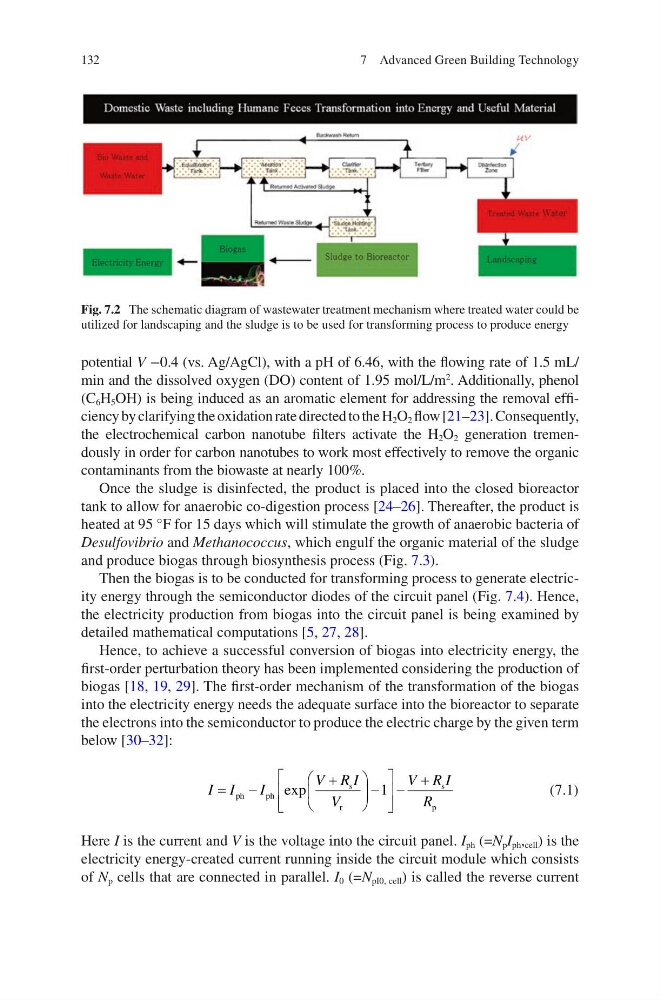
Fig. 7.2 The schematic diagram of wastewater treatment mechanism where treated water could be
utilized for landscaping and the sludge is to be used for transforming process to produce energy
7 Advanced Green Building Technology
potential V −0.4 (vs. Ag/AgCl), with a pH of 6.46, with the flowing rate of 1.5 mL/
min and the dissolved oxygen (DO) content of 1.95 mol/L/m
2
. Additionally, phenol
(C 6 H 5 OH) is being induced as an aromatic element for addressing the removal efficiency by clarifying the oxidation rate directed to the H 2 O 2 flow [21–23]. Consequently,
the electrochemical carbon nanotube filters activate the H 2 O 2 generation tremendously in order for carbon nanotubes to work most effectively to remove the organic
contaminants from the biowaste at nearly 100%.
Once the sludge is disinfected, the product is placed into the closed bioreactor
tank to allow for anaerobic co-digestion process [24–26]. Thereafter, the product is
heated at 95 °F for 15 days which will stimulate the growth of anaerobic bacteria of
Desulfovibrio and Methanococcus, which engulf the organic material of the sludge
and produce biogas through biosynthesis process (Fig. 7.3).
Then the biogas is to be conducted for transforming process to generate electricity energy through the semiconductor diodes of the circuit panel (Fig. 7.4). Hence,
the electricity production from biogas into the circuit panel is being examined by
detailed mathematical computations [5, 27, 28].
Hence, to achieve a successful conversion of biogas into electricity energy, the
first-order perturbation theory has been implemented considering the production of
biogas [18, 19, 29]. The first-order mechanism of the transformation of the biogas
into the electricity energy needs the adequate surface into the bioreactor to separate
the electrons into the semiconductor to produce the electric charge by the given term
below [30–32]:
I I
I
V R I
V
V R I
R
=
−
+
−
−
+
ph
ph
s
r
s
p
exp
1
(7.1)
Here I is the current and V is the voltage into the circuit panel. I ph (=N p I ph , cell ) is the
electricity energy-created current running inside the circuit module which consists
of N p cells that are connected in parallel. I 0 (=N pI0, cell ) is called the reverse current
Fig. 7.2 The schematic diagram of wastewater treatment mechanism where treated water could be
utilized for landscaping and the sludge is to be used for transforming process to produce energy
7 Advanced Green Building Technology