

48
3.2 Ionization Techniques
Ionization is the crucial event in every MS experiment: if ions are not formed, no
any datum will be obtained.
Mass spectrometry can study wide classes of molecules with different chemicophysical properties. Having different properties, they cannot be ionized with the
same ionization technique. So there are ionization techniques for volatile molecules
and many others for ionizing polar analytes. All of them can be used for ionizing
different toxins [4].
3.2.1 Volatile Molecules
Ionization techniques for ionizing volatile molecules are mostly limited to electron
ionization and chemical ionization. The former is the first ionization technique used
in MS more than one century ago and it is based on gas phase interactions between
a molecule with an energetic electron beam. Chemical ionization has been introduced around the middle of the previous century and it is based on gas-phase ionmolecule reactions between the neutral analyte and a gas introduced in the ion source.
Both these ionization techniques can be coupled to gas chromatography (GCMS) for the analysis of complex mixtures.
As an example, volatile toxins, such as polychlorinated dibenzo-p-dioxins
(PCDDs), poly-chlorinated dibenzofurans (PCDFs), polychlorinated biphenyls
(PCBs) [5] and mycotoxins [6] can be ionized by electron ionization and chemical
ionization.
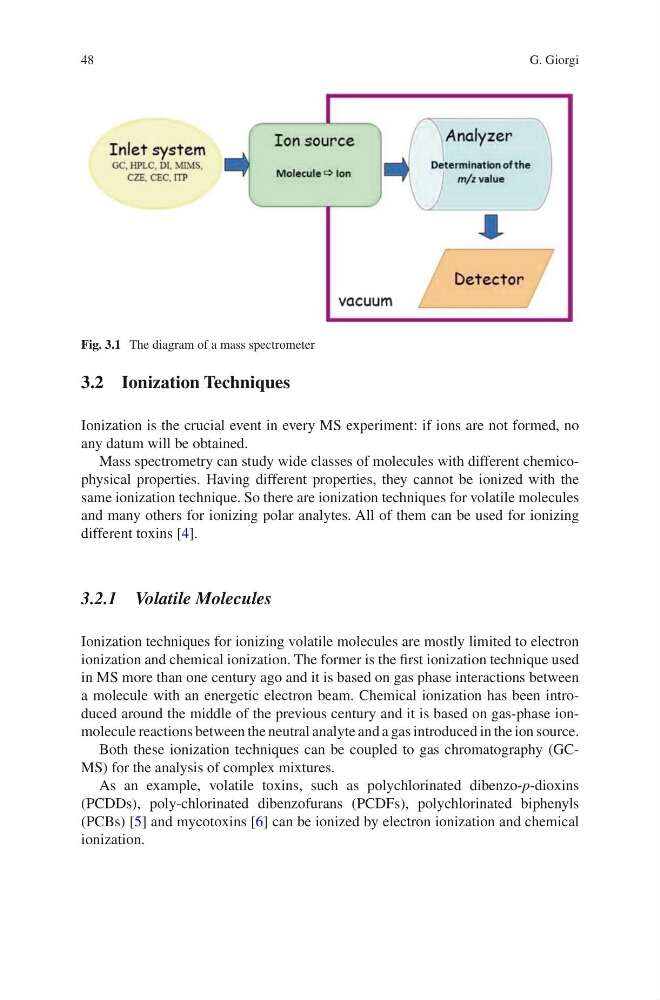
Fig. 3.1 The diagram of a mass spectrometer
G. Giorgi
3.2 Ionization Techniques
Ionization is the crucial event in every MS experiment: if ions are not formed, no
any datum will be obtained.
Mass spectrometry can study wide classes of molecules with different chemicophysical properties. Having different properties, they cannot be ionized with the
same ionization technique. So there are ionization techniques for volatile molecules
and many others for ionizing polar analytes. All of them can be used for ionizing
different toxins [4].
3.2.1 Volatile Molecules
Ionization techniques for ionizing volatile molecules are mostly limited to electron
ionization and chemical ionization. The former is the first ionization technique used
in MS more than one century ago and it is based on gas phase interactions between
a molecule with an energetic electron beam. Chemical ionization has been introduced around the middle of the previous century and it is based on gas-phase ionmolecule reactions between the neutral analyte and a gas introduced in the ion source.
Both these ionization techniques can be coupled to gas chromatography (GCMS) for the analysis of complex mixtures.
As an example, volatile toxins, such as polychlorinated dibenzo-p-dioxins
(PCDDs), poly-chlorinated dibenzofurans (PCDFs), polychlorinated biphenyls
(PCBs) [5] and mycotoxins [6] can be ionized by electron ionization and chemical
ionization.
Fig. 3.1 The diagram of a mass spectrometer
G. Giorgi