

23
Consequently, to permits the use of a SAW device as a biosensor, the device has to
be coated with a biospecific layer corresponding to the analyte. The immobilization
chemistry strongly depends upon the underlying SAW substrate with or without a
guiding layer and hence on the chemical environment available. Gold surfaces, for
example, allow the use of functionalized thiols, whereas quartz or SiO2 surfaces
enable the use of various silanes [42]. Analyte-specific molecules (e.g., antibodies)
are immobilized on the SAW device to catch analyte molecules (e.g., antigens) from
the sample stream. Analytes binding to the immobilized capture molecules will
affect the speed of the SAW and hence the output signal generated by the driving
electronics [39].
SAW detectors can identify and measure many BAs simultaneously and are relatively inexpensive, making them a popular choice amongst civilian response units
[39–42]. SAW detectors detect changes in the properties of acoustic waves as they
travel at ultrasonic frequencies in piezoelectric materials. The basic transduction
mechanism involves the interaction of these waves with surface-attached matter.
Multiple sensor arrays with multiple coatings and pattern recognition algorithms
provide the methods to identify agent classes and reject interferant responses that
could cause false alarms [39–43].
Recently, SAW immunosensors were successfully applied to detect E. coli,
Legionella, the anthracis simulant B8 Bacillus thuringiensis (B8), and M13
bacteriophage (M13) acting as model analyte for bacteria or viruses. Tamarin et al.
used Love wave sensors based on a quartz substrate with a SiO2 wave-guiding
layer. Antibodies against M13 were immobilized on the sensor surface to detect the
bacteriophage directly [43].
Stubbs et al. developed a SAW immunoassay for the detection of analytes in the
gas phase, e.g., cocaine plumes [44]. For this purpose, SAW devices based on quartz
were used. Antibodies were coupled to the SAW device via adsorbed protein A and
coated with a hydrogel layer to overcome the problem of hydration of the
biomolecule [44]. Benzoylecgonine, the major metabolite of cocaine, could be
detected in vapor [45]. In general, it can be specified that SAW-based biosensors
offer the possibility of observing real-time binding events of proteins at appropriate
sensitivity levels [45, 46].
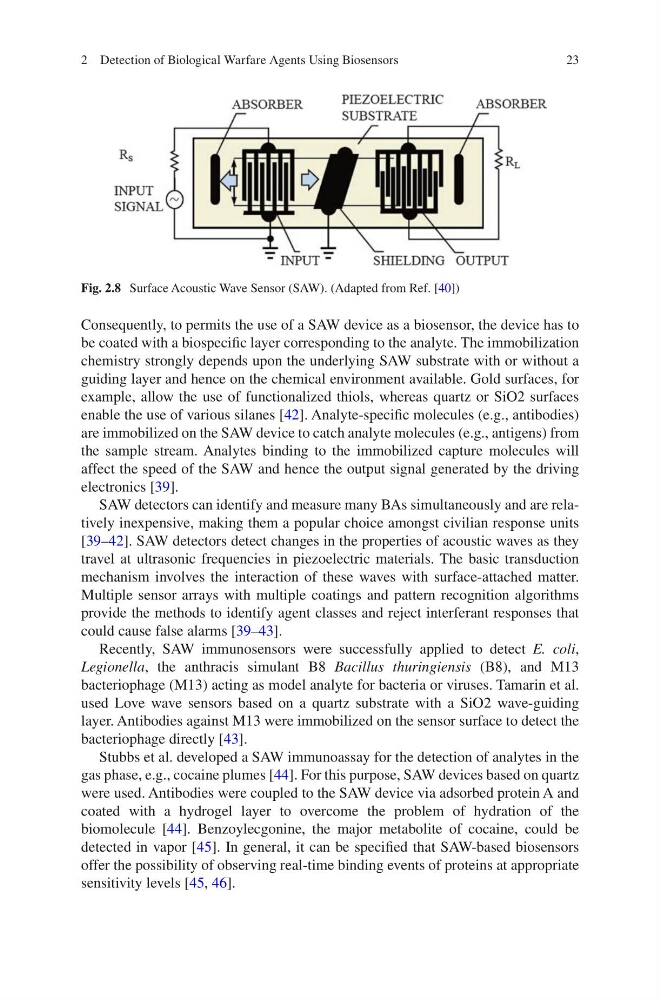
Fig. 2.8 Surface Acoustic Wave Sensor (SAW). (Adapted from Ref. [40])
2 Detection of Biological Warfare Agents Using Biosensors
Consequently, to permits the use of a SAW device as a biosensor, the device has to
be coated with a biospecific layer corresponding to the analyte. The immobilization
chemistry strongly depends upon the underlying SAW substrate with or without a
guiding layer and hence on the chemical environment available. Gold surfaces, for
example, allow the use of functionalized thiols, whereas quartz or SiO2 surfaces
enable the use of various silanes [42]. Analyte-specific molecules (e.g., antibodies)
are immobilized on the SAW device to catch analyte molecules (e.g., antigens) from
the sample stream. Analytes binding to the immobilized capture molecules will
affect the speed of the SAW and hence the output signal generated by the driving
electronics [39].
SAW detectors can identify and measure many BAs simultaneously and are relatively inexpensive, making them a popular choice amongst civilian response units
[39–42]. SAW detectors detect changes in the properties of acoustic waves as they
travel at ultrasonic frequencies in piezoelectric materials. The basic transduction
mechanism involves the interaction of these waves with surface-attached matter.
Multiple sensor arrays with multiple coatings and pattern recognition algorithms
provide the methods to identify agent classes and reject interferant responses that
could cause false alarms [39–43].
Recently, SAW immunosensors were successfully applied to detect E. coli,
Legionella, the anthracis simulant B8 Bacillus thuringiensis (B8), and M13
bacteriophage (M13) acting as model analyte for bacteria or viruses. Tamarin et al.
used Love wave sensors based on a quartz substrate with a SiO2 wave-guiding
layer. Antibodies against M13 were immobilized on the sensor surface to detect the
bacteriophage directly [43].
Stubbs et al. developed a SAW immunoassay for the detection of analytes in the
gas phase, e.g., cocaine plumes [44]. For this purpose, SAW devices based on quartz
were used. Antibodies were coupled to the SAW device via adsorbed protein A and
coated with a hydrogel layer to overcome the problem of hydration of the
biomolecule [44]. Benzoylecgonine, the major metabolite of cocaine, could be
detected in vapor [45]. In general, it can be specified that SAW-based biosensors
offer the possibility of observing real-time binding events of proteins at appropriate
sensitivity levels [45, 46].
Fig. 2.8 Surface Acoustic Wave Sensor (SAW). (Adapted from Ref. [40])
2 Detection of Biological Warfare Agents Using Biosensors