

184
11.4 Assessing Degrees of Mucosal Involvement
In order to develop a vaccine for biodefense, it is primordial to know the difference
between biological agents that elicit mucosal infections, and the biological agents
that simply exploit mucosal tissues as a means to gain access to the systemic compartment. Consequently, mucosal immunity likely plays an essential role in preventing and clearing infections. This is why vaccines against these agents have to involve
mucosa-associated lymphoid tissues.
On the other hand, situations where the mucosa functions act solely as the port
of entry, systemic immunity is likely to be sufficient to control infection. For example, we can consider the case of anthrax. Although the B. anthracis spores are highly
infectious by aerosol, the vegetative bacteria generally do not multiply locally.
Somewhat, after inhalation of the spores, the bacteria circulate systemically via the
lymphatics and the circulatory system. Then, within the systemic compartment,
B. anthracis germinates and produces two toxins, which account for the lethality
associated with this infection [17]. For these reasons, protective immunity to
B. anthracis is associated primarily with anti-toxin serum IgG antibodies. The
mucosal defense is of little (if any) importance in con-trolling anthrax.
Contrary to protective immunity, mucosal immunity plays an important role in
controlling infections caused by two other Category A bacterial pathogens, notably
Y. pestis and F. tularensis that are the main cause of mucosal and systemic complications following inhalation [18].
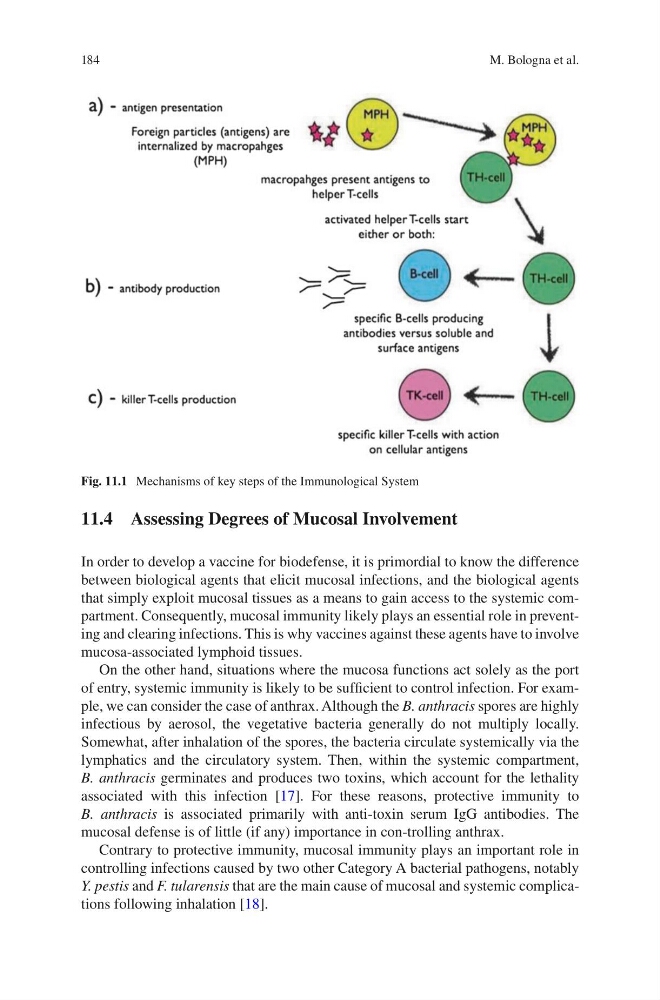
Fig. 11.1 Mechanisms of key steps of the Immunological System
M. Bologna et al.
11.4 Assessing Degrees of Mucosal Involvement
In order to develop a vaccine for biodefense, it is primordial to know the difference
between biological agents that elicit mucosal infections, and the biological agents
that simply exploit mucosal tissues as a means to gain access to the systemic compartment. Consequently, mucosal immunity likely plays an essential role in preventing and clearing infections. This is why vaccines against these agents have to involve
mucosa-associated lymphoid tissues.
On the other hand, situations where the mucosa functions act solely as the port
of entry, systemic immunity is likely to be sufficient to control infection. For example, we can consider the case of anthrax. Although the B. anthracis spores are highly
infectious by aerosol, the vegetative bacteria generally do not multiply locally.
Somewhat, after inhalation of the spores, the bacteria circulate systemically via the
lymphatics and the circulatory system. Then, within the systemic compartment,
B. anthracis germinates and produces two toxins, which account for the lethality
associated with this infection [17]. For these reasons, protective immunity to
B. anthracis is associated primarily with anti-toxin serum IgG antibodies. The
mucosal defense is of little (if any) importance in con-trolling anthrax.
Contrary to protective immunity, mucosal immunity plays an important role in
controlling infections caused by two other Category A bacterial pathogens, notably
Y. pestis and F. tularensis that are the main cause of mucosal and systemic complications following inhalation [18].
Fig. 11.1 Mechanisms of key steps of the Immunological System
M. Bologna et al.