

165
alternative methods for the hazard assessment of substances in order to reduce the
number of tests on animals.
REACH applies to about 30,000 chemical substances produced in excess of 1 ton
per year and used in industrial processes but also in our day-to-day lives (e.g.,
paints, cleaning products, cosmetics, electrical appliances, etc.). To comply with the
regulation, companies must register their substances, identify and manage the risks
linked to the substances they manufacture and market in the EU. They have to demonstrate to the European Chemicals Agency (ECHA) how the substance can be
safely used, and must communicate the risk management measures to users. ECHA
evaluates individual registrations of substances and the EU Member States evaluate
selected substances to clarify initial concerns for human health or for the environment. Authorities and ECHA’s scientific committees assess whether the risks of
substances can be managed. If the risks cannot be managed, authorities can restrict
the use of substances in different ways. In principle, in the long run, the most hazardous substances should be substituted with less dangerous ones.
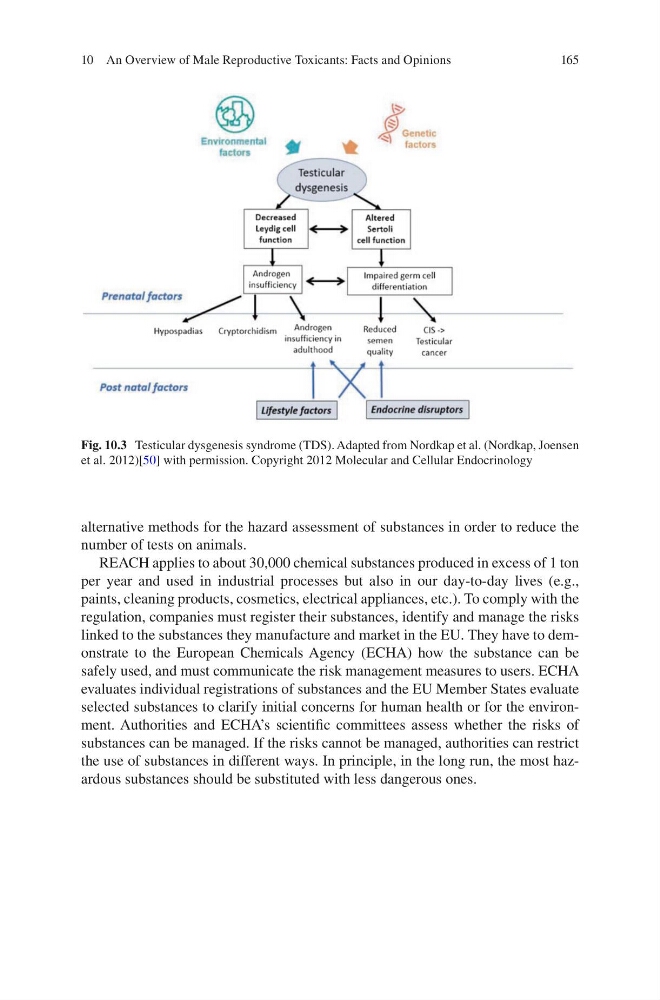
Fig. 10.3 Testicular dysgenesis syndrome (TDS). Adapted from Nordkap et al. (Nordkap, Joensen
et al. 2012)[50] with permission. Copyright 2012 Molecular and Cellular Endocrinology
10 An Overview of Male Reproductive Toxicants: Facts and Opinions
alternative methods for the hazard assessment of substances in order to reduce the
number of tests on animals.
REACH applies to about 30,000 chemical substances produced in excess of 1 ton
per year and used in industrial processes but also in our day-to-day lives (e.g.,
paints, cleaning products, cosmetics, electrical appliances, etc.). To comply with the
regulation, companies must register their substances, identify and manage the risks
linked to the substances they manufacture and market in the EU. They have to demonstrate to the European Chemicals Agency (ECHA) how the substance can be
safely used, and must communicate the risk management measures to users. ECHA
evaluates individual registrations of substances and the EU Member States evaluate
selected substances to clarify initial concerns for human health or for the environment. Authorities and ECHA’s scientific committees assess whether the risks of
substances can be managed. If the risks cannot be managed, authorities can restrict
the use of substances in different ways. In principle, in the long run, the most hazardous substances should be substituted with less dangerous ones.
Fig. 10.3 Testicular dysgenesis syndrome (TDS). Adapted from Nordkap et al. (Nordkap, Joensen
et al. 2012)[50] with permission. Copyright 2012 Molecular and Cellular Endocrinology
10 An Overview of Male Reproductive Toxicants: Facts and Opinions