

thermal equilibrium and if not, which of the two is the hotter body. The degree of
heat of A, or of a body in thermal equilibrium with A, can thus be defined by either
the volume of A or volume of A in reference to some arbitrarily selected normal
volume.
One established practice is the selection of normal volumes when A is in thermal
equilibrium with melting ice under atmospheric pressure and with steam under
atmospheric pressure as the two reference points, or fixed points (the ice point and
the steam point) and the division of the volume difference (or height difference)
between the normal volume at the steam point, X 1 , and at the ice point, X 2 , by 100.
Reading based on this choice of units is called temperature, t, in degrees
Centigrade,
tðXÞ ¼ 100 Â
X À X 2
X 1 À X 2
which ranges from 0 °C at the ice point to 100 °C at the steam point. Temperature is
the quantitative measure of the degree of heat. Two bodies of equal temperature are,
therefore, in thermal equilibrium and vice versa.
The volume of a thermometric substance is one example of thermometric
properties; other substance properties (pressure, electric resistance, thermal EMF,
etc.) can also be used as thermometric properties. The temperature readings of no
two thermometric substances agree in general except at 0 and 100 °C. The definition of temperature given above is, therefore, somewhat arbitrary. This will be
rectified in terms of its numerical accuracy in Sect. 1.5. The definition of thermodynamic temperature (or absolute temperature) in terms of its
theoretical/conceptual meaning will be given in Sect. 4.3.
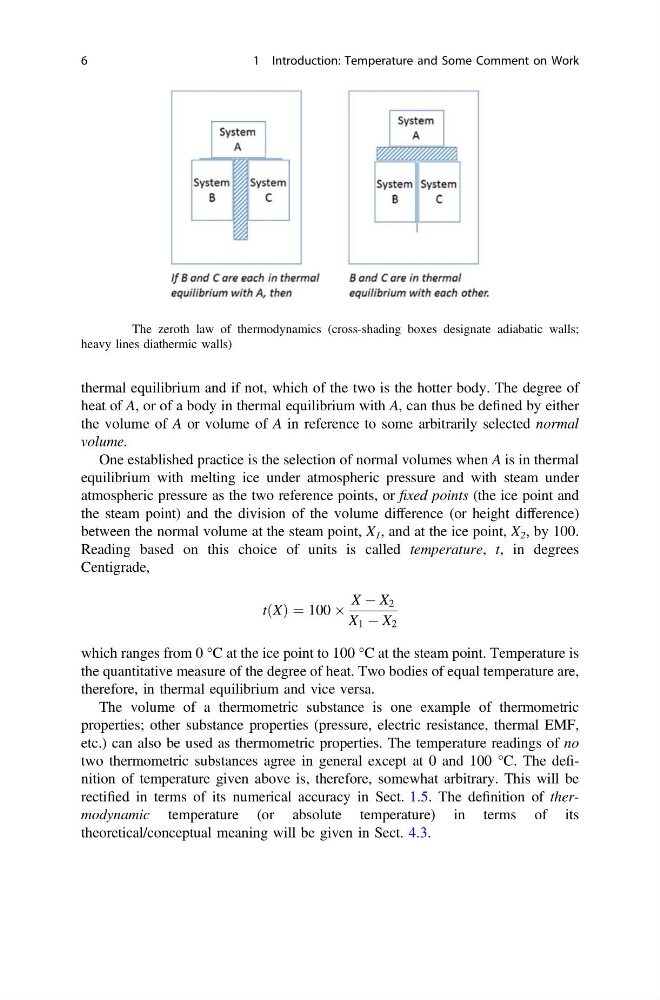
Fig. 1.1 The zeroth law of thermodynamics (cross-shading boxes designate adiabatic walls;
heavy lines diathermic walls)
6
1 Introduction: Temperature and Some Comment on Work
heat of A, or of a body in thermal equilibrium with A, can thus be defined by either
the volume of A or volume of A in reference to some arbitrarily selected normal
volume.
One established practice is the selection of normal volumes when A is in thermal
equilibrium with melting ice under atmospheric pressure and with steam under
atmospheric pressure as the two reference points, or fixed points (the ice point and
the steam point) and the division of the volume difference (or height difference)
between the normal volume at the steam point, X 1 , and at the ice point, X 2 , by 100.
Reading based on this choice of units is called temperature, t, in degrees
Centigrade,
tðXÞ ¼ 100 Â
X À X 2
X 1 À X 2
which ranges from 0 °C at the ice point to 100 °C at the steam point. Temperature is
the quantitative measure of the degree of heat. Two bodies of equal temperature are,
therefore, in thermal equilibrium and vice versa.
The volume of a thermometric substance is one example of thermometric
properties; other substance properties (pressure, electric resistance, thermal EMF,
etc.) can also be used as thermometric properties. The temperature readings of no
two thermometric substances agree in general except at 0 and 100 °C. The definition of temperature given above is, therefore, somewhat arbitrary. This will be
rectified in terms of its numerical accuracy in Sect. 1.5. The definition of thermodynamic temperature (or absolute temperature) in terms of its
theoretical/conceptual meaning will be given in Sect. 4.3.
Fig. 1.1 The zeroth law of thermodynamics (cross-shading boxes designate adiabatic walls;
heavy lines diathermic walls)
6
1 Introduction: Temperature and Some Comment on Work