

73
ethanol, the first reaction step in its oxidation. The efforts to improve activity of Pt
have been concentrated on the addition of co-catalysts. Various approaches have
been developed, for instance, adatom- or adlayer-modified Pt, Pt-M (metal), etc.
Adzic et al. developed the multifunctional ternary Pt-RhSnO 2 electrocatalyst,
which is effective in splitting the C–C bond in ethanol at room temperature and
carrying out the reaction to CO 2 [73]. The catalytic property of the ternary catalyst
is attributed to the synergistic effect among all three constituents where Pt provides
sites for ethanol adsorption and dehydrogenation, SnO 2 supplies oxygen-containing
species, and Rh cleaves the C–C bond. The effect of Rh in splitting C–C bond in
ethanol molecules has been first observed in metal/gas interface studies [74, 75].
Electrochemical measurements demonstrate a considerably higher EOR activity
of the ternary PtRhSnO 2 catalyst with respect to that of a commercial Pt/C catalyst
with over two orders of magnitude higher activity at 0.3 V (Fig. 6.3a), as well as the
binary Pt-SnO 2 catalyst, highlighting the importance of the Rh component [73, 76–
78]. DFT calculations of ethanol decomposition on the Rh(111) and the PtRh/
SnO 2 (110) model catalysts propose that Rh can adsorb and stabilize a key intermediate CH 2 CH 2 O* leading to the cleavage of C–C bond [73, 79]. In situ infrared
reflection-absorption spectroscopy (IRRAS, See Sect. 7.4.1) confirmed that the
addition of Rh enhances EOR activity via facilitating ethanol total oxidation to CO 2
(Fig. 6.3) and verified by the comparison on both single-crystal-based model catalysts (i.e. SnO 2 /Pt(111) and RhSnO 2 /Pt(111)) and carbon-supported nanoparticle
catalysts (i.e. Pt-SnO 2 /C and Pt-RhSnO 2 /C) [79].
Further work on this catalyst was aimed to substitute the Rh metal with a cheaper
and possibly more abundant metal. Iridium is in the same group of the periodic
system, so it is expected to have similar catalytic properties as Rh. Electrochemical
and in situ IR experiments performed on several PtIrSnO 2 catalysts showed that Ir
has the ability to split the C–C bond in ethanol [80]. Furthermore, XANES spectra
showed that Ir were in oxidized state even at the lowest potentials. As seen in
Fig. 6.4, both Ir and Pt spectra show a dependence of the white lines on potential,
indicating oxidation of both metals with the potential increase. In series of
PtIrRhSnO 2 catalysts, the highest activity for ethanol oxidation showed the ternary
catalyst having Pt:Ir:Sn = 1:1:1 atomic ratio. Of the catalysts with both Rh and Ir,
the highest CO 2 production was found for the catalyst with atomic ratio
Pt:Ir:Rh:Sn = 1:1:1:1. Nevertheless, even the best catalyst containing Ir was inferior
in comparison to the optimized PtRhSnO 2 /C. This was ascribed to the inability of
SnO 2 to keep the Ir and Pt in metallic state, unlike its behavior in PtRhSnO 2 catalysts.
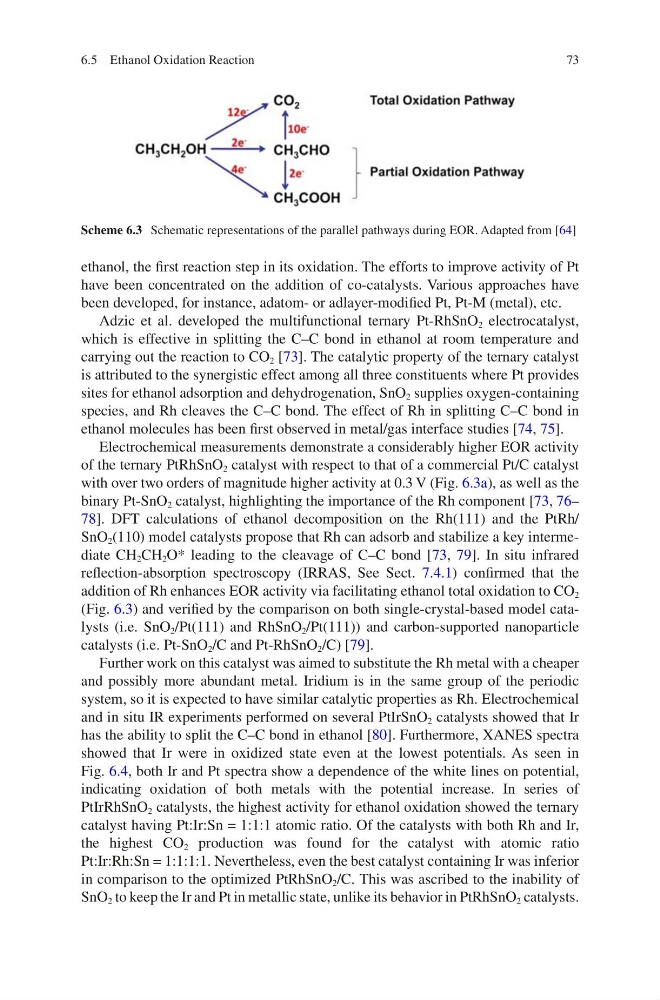
Scheme 6.3 Schematic representations of the parallel pathways during EOR. Adapted from [64]
6.5 Ethanol Oxidation Reaction
ethanol, the first reaction step in its oxidation. The efforts to improve activity of Pt
have been concentrated on the addition of co-catalysts. Various approaches have
been developed, for instance, adatom- or adlayer-modified Pt, Pt-M (metal), etc.
Adzic et al. developed the multifunctional ternary Pt-RhSnO 2 electrocatalyst,
which is effective in splitting the C–C bond in ethanol at room temperature and
carrying out the reaction to CO 2 [73]. The catalytic property of the ternary catalyst
is attributed to the synergistic effect among all three constituents where Pt provides
sites for ethanol adsorption and dehydrogenation, SnO 2 supplies oxygen-containing
species, and Rh cleaves the C–C bond. The effect of Rh in splitting C–C bond in
ethanol molecules has been first observed in metal/gas interface studies [74, 75].
Electrochemical measurements demonstrate a considerably higher EOR activity
of the ternary PtRhSnO 2 catalyst with respect to that of a commercial Pt/C catalyst
with over two orders of magnitude higher activity at 0.3 V (Fig. 6.3a), as well as the
binary Pt-SnO 2 catalyst, highlighting the importance of the Rh component [73, 76–
78]. DFT calculations of ethanol decomposition on the Rh(111) and the PtRh/
SnO 2 (110) model catalysts propose that Rh can adsorb and stabilize a key intermediate CH 2 CH 2 O* leading to the cleavage of C–C bond [73, 79]. In situ infrared
reflection-absorption spectroscopy (IRRAS, See Sect. 7.4.1) confirmed that the
addition of Rh enhances EOR activity via facilitating ethanol total oxidation to CO 2
(Fig. 6.3) and verified by the comparison on both single-crystal-based model catalysts (i.e. SnO 2 /Pt(111) and RhSnO 2 /Pt(111)) and carbon-supported nanoparticle
catalysts (i.e. Pt-SnO 2 /C and Pt-RhSnO 2 /C) [79].
Further work on this catalyst was aimed to substitute the Rh metal with a cheaper
and possibly more abundant metal. Iridium is in the same group of the periodic
system, so it is expected to have similar catalytic properties as Rh. Electrochemical
and in situ IR experiments performed on several PtIrSnO 2 catalysts showed that Ir
has the ability to split the C–C bond in ethanol [80]. Furthermore, XANES spectra
showed that Ir were in oxidized state even at the lowest potentials. As seen in
Fig. 6.4, both Ir and Pt spectra show a dependence of the white lines on potential,
indicating oxidation of both metals with the potential increase. In series of
PtIrRhSnO 2 catalysts, the highest activity for ethanol oxidation showed the ternary
catalyst having Pt:Ir:Sn = 1:1:1 atomic ratio. Of the catalysts with both Rh and Ir,
the highest CO 2 production was found for the catalyst with atomic ratio
Pt:Ir:Rh:Sn = 1:1:1:1. Nevertheless, even the best catalyst containing Ir was inferior
in comparison to the optimized PtRhSnO 2 /C. This was ascribed to the inability of
SnO 2 to keep the Ir and Pt in metallic state, unlike its behavior in PtRhSnO 2 catalysts.
Scheme 6.3 Schematic representations of the parallel pathways during EOR. Adapted from [64]
6.5 Ethanol Oxidation Reaction