

1.4 Developmental Biology Background
7
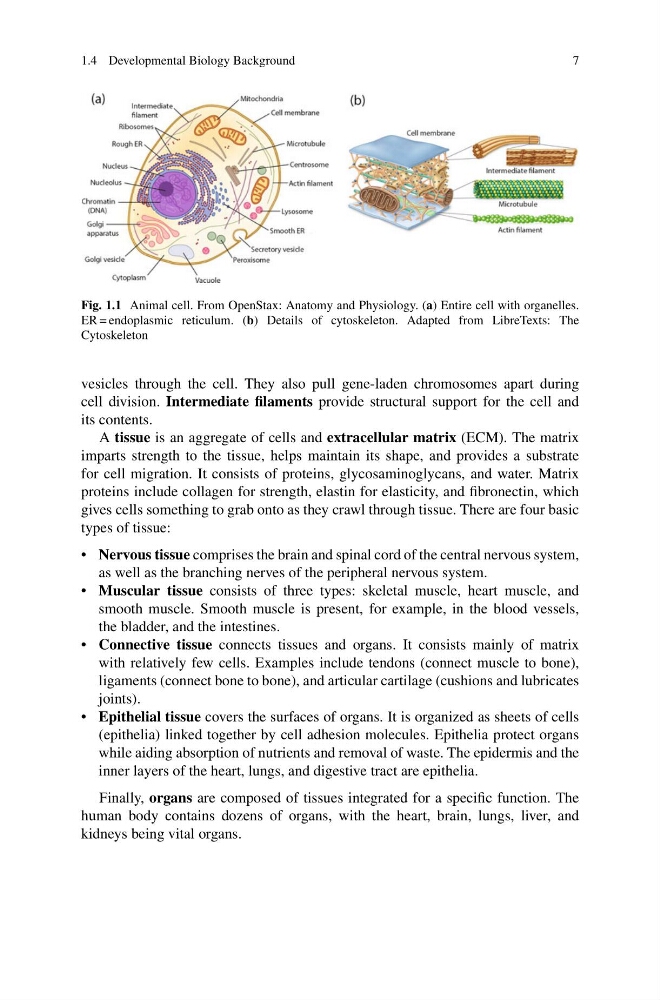
Fig. 1.1 Animal cell. From OpenStax: Anatomy and Physiology. (a) Entire cell with organelles.
ER = endoplasmic reticulum. (b) Details of cytoskeleton. Adapted from LibreTexts: The
Cytoskeleton
vesicles through the cell. They also pull gene-laden chromosomes apart during
cell division. Intermediate filaments provide structural support for the cell and
its contents.
A tissue is an aggregate of cells and extracellular matrix (ECM). The matrix
imparts strength to the tissue, helps maintain its shape, and provides a substrate
for cell migration. It consists of proteins, glycosaminoglycans, and water. Matrix
proteins include collagen for strength, elastin for elasticity, and fibronectin, which
gives cells something to grab onto as they crawl through tissue. There are four basic
types of tissue:
• Nervous tissue comprises the brain and spinal cord of the central nervous system,
as well as the branching nerves of the peripheral nervous system.
• Muscular tissue consists of three types: skeletal muscle, heart muscle, and
smooth muscle. Smooth muscle is present, for example, in the blood vessels,
the bladder, and the intestines.
• Connective tissue connects tissues and organs. It consists mainly of matrix
with relatively few cells. Examples include tendons (connect muscle to bone),
ligaments (connect bone to bone), and articular cartilage (cushions and lubricates
joints).
• Epithelial tissue covers the surfaces of organs. It is organized as sheets of cells
(epithelia) linked together by cell adhesion molecules. Epithelia protect organs
while aiding absorption of nutrients and removal of waste. The epidermis and the
inner layers of the heart, lungs, and digestive tract are epithelia.
Finally, organs are composed of tissues integrated for a specific function. The
human body contains dozens of organs, with the heart, brain, lungs, liver, and
kidneys being vital organs.
7
Fig. 1.1 Animal cell. From OpenStax: Anatomy and Physiology. (a) Entire cell with organelles.
ER = endoplasmic reticulum. (b) Details of cytoskeleton. Adapted from LibreTexts: The
Cytoskeleton
vesicles through the cell. They also pull gene-laden chromosomes apart during
cell division. Intermediate filaments provide structural support for the cell and
its contents.
A tissue is an aggregate of cells and extracellular matrix (ECM). The matrix
imparts strength to the tissue, helps maintain its shape, and provides a substrate
for cell migration. It consists of proteins, glycosaminoglycans, and water. Matrix
proteins include collagen for strength, elastin for elasticity, and fibronectin, which
gives cells something to grab onto as they crawl through tissue. There are four basic
types of tissue:
• Nervous tissue comprises the brain and spinal cord of the central nervous system,
as well as the branching nerves of the peripheral nervous system.
• Muscular tissue consists of three types: skeletal muscle, heart muscle, and
smooth muscle. Smooth muscle is present, for example, in the blood vessels,
the bladder, and the intestines.
• Connective tissue connects tissues and organs. It consists mainly of matrix
with relatively few cells. Examples include tendons (connect muscle to bone),
ligaments (connect bone to bone), and articular cartilage (cushions and lubricates
joints).
• Epithelial tissue covers the surfaces of organs. It is organized as sheets of cells
(epithelia) linked together by cell adhesion molecules. Epithelia protect organs
while aiding absorption of nutrients and removal of waste. The epidermis and the
inner layers of the heart, lungs, and digestive tract are epithelia.
Finally, organs are composed of tissues integrated for a specific function. The
human body contains dozens of organs, with the heart, brain, lungs, liver, and
kidneys being vital organs.