

plastids (plastoglobuli) before being transferred to the cytosol. The secretion is
located and visible in the cytoplasm as lipid bodies are free in the cytosol or
packed in vesicles [254].
Epidermis
4
Vascular tissue
Subsecretory
parenchyma
1
2
Mitochondrion
Chloroplast
Plastids with starch grain
Dictyosome
Vacuole
Nucleus
Rough ER
Sucrose
Sucrose symplast route
Sucrose apoplast route
Elaioplast
Ribosomes
Cuticule
Oil droplets
Oil secretion
3
5
Smooth ER
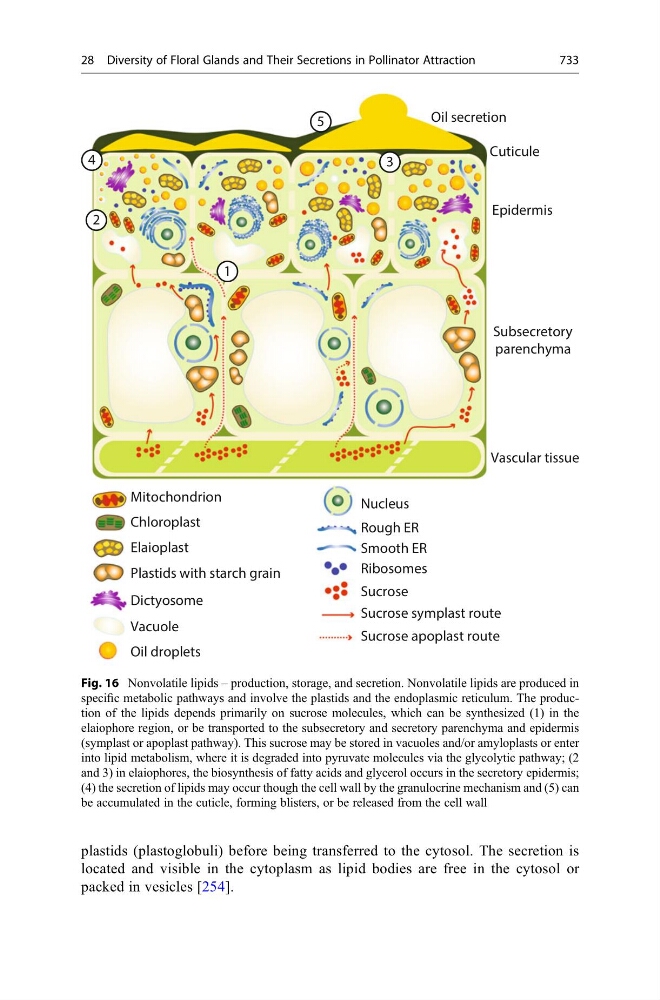
Fig. 16 Nonvolatile lipids – production, storage, and secretion. Nonvolatile lipids are produced in
specific metabolic pathways and involve the plastids and the endoplasmic reticulum. The production of the lipids depends primarily on sucrose molecules, which can be synthesized (1) in the
elaiophore region, or be transported to the subsecretory and secretory parenchyma and epidermis
(symplast or apoplast pathway). This sucrose may be stored in vacuoles and/or amyloplasts or enter
into lipid metabolism, where it is degraded into pyruvate molecules via the glycolytic pathway; (2
and 3) in elaiophores, the biosynthesis of fatty acids and glycerol occurs in the secretory epidermis;
(4) the secretion of lipids may occur though the cell wall by the granulocrine mechanism and (5) can
be accumulated in the cuticle, forming blisters, or be released from the cell wall
28 Diversity of Floral Glands and Their Secretions in Pollinator Attraction
733