

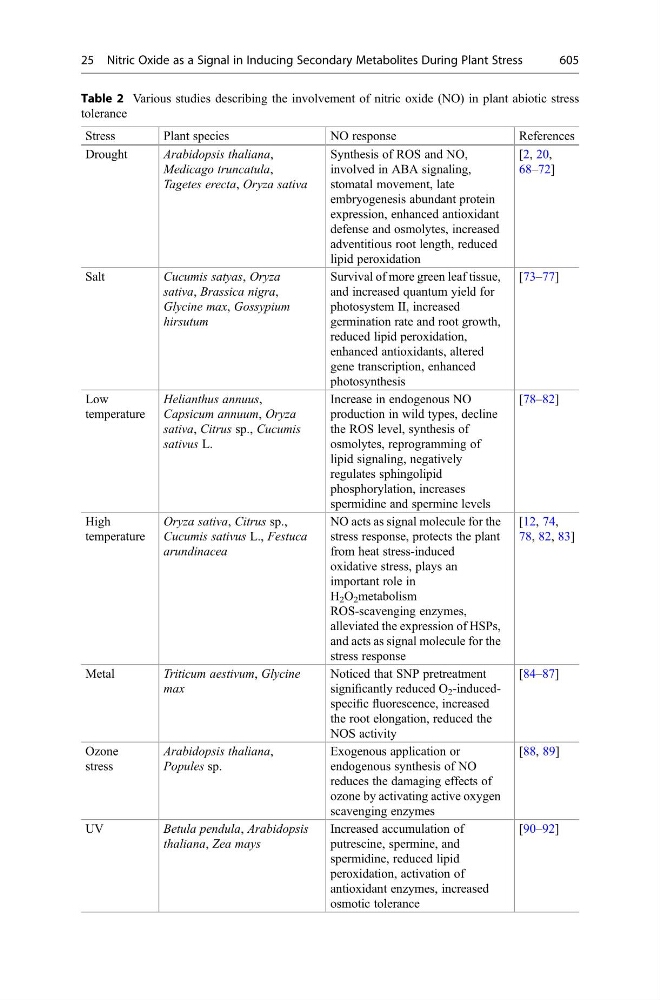
Table 2 Various studies describing the involvement of nitric oxide (NO) in plant abiotic stress
tolerance
Stress
Plant species
NO response
References
Drought
Arabidopsis thaliana,
Medicago truncatula,
Tagetes erecta, Oryza sativa
Synthesis of ROS and NO,
involved in ABA signaling,
stomatal movement, late
embryogenesis abundant protein
expression, enhanced antioxidant
defense and osmolytes, increased
adventitious root length, reduced
lipid peroxidation
[2, 20,
68–72]
Salt
Cucumis satyas, Oryza
sativa, Brassica nigra,
Glycine max, Gossypium
hirsutum
Survival of more green leaf tissue,
and increased quantum yield for
photosystem II, increased
germination rate and root growth,
reduced lipid peroxidation,
enhanced antioxidants, altered
gene transcription, enhanced
photosynthesis
[73–77]
Low
temperature
Helianthus annuus,
Capsicum annuum, Oryza
sativa, Citrus sp., Cucumis
sativus L.
Increase in endogenous NO
production in wild types, decline
the ROS level, synthesis of
osmolytes, reprogramming of
lipid signaling, negatively
regulates sphingolipid
phosphorylation, increases
spermidine and spermine levels
[78–82]
High
temperature
Oryza sativa, Citrus sp.,
Cucumis sativus L., Festuca
arundinacea
NO acts as signal molecule for the
stress response, protects the plant
from heat stress-induced
oxidative stress, plays an
important role in
H 2 O 2 metabolism
ROS-scavenging enzymes,
alleviated the expression of HSPs,
and acts as signal molecule for the
stress response
[12, 74,
78, 82, 83]
Metal
Triticum aestivum, Glycine
max
Noticed that SNP pretreatment
significantly reduced O 2 -inducedspecific fluorescence, increased
the root elongation, reduced the
NOS activity
[84–87]
Ozone
stress
Arabidopsis thaliana,
Popules sp.
Exogenous application or
endogenous synthesis of NO
reduces the damaging effects of
ozone by activating active oxygen
scavenging enzymes
[88, 89]
UV
Betula pendula, Arabidopsis
thaliana, Zea mays
Increased accumulation of
putrescine, spermine, and
spermidine, reduced lipid
peroxidation, activation of
antioxidant enzymes, increased
osmotic tolerance
[90–92]
25 Nitric Oxide as a Signal in Inducing Secondary Metabolites During Plant Stress
605