

are involved in protective functions in response to both biotic and abiotic stress
conditions. Abiotic stress-induced accumulation of phenyl amides, anthocyanin,
and polyamines has been reported in the literature [22, 25]. The change in the
accumulation and composition of secondary metabolites in response to stress
factors has been considered as an adaptive strategy leading to tolerance. For
instance, the enhanced synthesis of saponins in Panax ginseng [22], serotonin
in cold-exposed Datura flowers, and enhanced lignification of cell walls in
many plant species are the examples of stress-induced accumulation of
secondary metabolites [43–45]. A number of stresses are capable of redirecting
the metabolism toward the accumulation of biologically active secondary
metabolites. Besides, a number of researchers have applied various elicitors for
enhancement of secondary metabolite production in cultures of plant cell, tissue,
and organ [21].
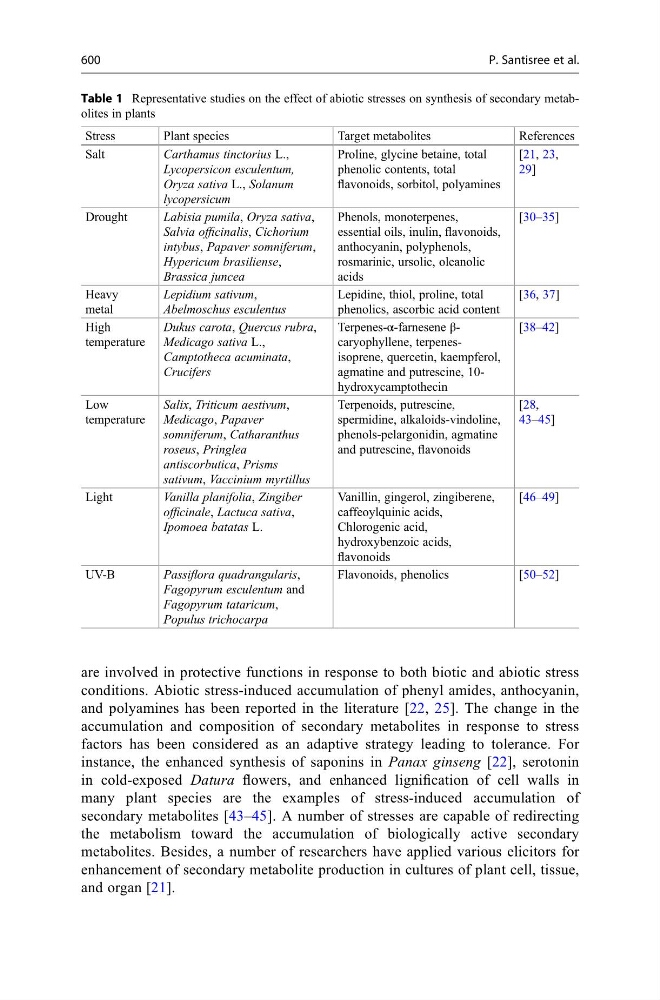
Table 1 Representative studies on the effect of abiotic stresses on synthesis of secondary metabolites in plants
Stress
Plant species
Target metabolites
References
Salt
Carthamus tinctorius L.,
Lycopersicon esculentum,
Oryza sativa L., Solanum
lycopersicum
Proline, glycine betaine, total
phenolic contents, total
flavonoids, sorbitol, polyamines
[21, 23,
29]
Drought
Labisia pumila, Oryza sativa,
Salvia officinalis, Cichorium
intybus, Papaver somniferum,
Hypericum brasiliense,
Brassica juncea
Phenols, monoterpenes,
essential oils, inulin, flavonoids,
anthocyanin, polyphenols,
rosmarinic, ursolic, oleanolic
acids
[30–35]
Heavy
metal
Lepidium sativum,
Abelmoschus esculentus
Lepidine, thiol, proline, total
phenolics, ascorbic acid content
[36, 37]
High
temperature
Dukus carota, Quercus rubra,
Medicago sativa L.,
Camptotheca acuminata,
Crucifers
Terpenes-α-farnesene βcaryophyllene, terpenesisoprene, quercetin, kaempferol,
agmatine and putrescine, 10hydroxycamptothecin
[38–42]
Low
temperature
Salix, Triticum aestivum,
Medicago, Papaver
somniferum, Catharanthus
roseus, Pringlea
antiscorbutica, Prisms
sativum, Vaccinium myrtillus
Terpenoids, putrescine,
spermidine, alkaloids-vindoline,
phenols-pelargonidin, agmatine
and putrescine, flavonoids
[28,
43–45]
Light
Vanilla planifolia, Zingiber
officinale, Lactuca sativa,
Ipomoea batatas L.
Vanillin, gingerol, zingiberene,
caffeoylquinic acids,
Chlorogenic acid,
hydroxybenzoic acids,
flavonoids
[46–49]
UV-B
Passiflora quadrangularis,
Fagopyrum esculentum and
Fagopyrum tataricum,
Populus trichocarpa
Flavonoids, phenolics
[50–52]
600
P. Santisree et al.