

wide range of sesquiterpenes was released. Whereas, in Tetranychus urticae (sapsucking insect), very low diversity of the volatiles were liberated [49].
The class and level of secondary metabolites also play a vital role in the decision
of host plant and the scope of herbivory. Any alteration or fluctuation in the levels
and composition of plant-derived allelochemicals can greatly influence the plantinsect interaction dynamics. As a specialized behavioral modification, insects subject
to minimal exposure of highly toxic tissues [50]. We now discuss in detail about each
type of secondary metabolites in order to get an idea about the intricacies of plant
defense.
3.1
Phenolics
Phenolics represent a prime class of plant secondary metabolites, profoundly comprising of flavonoids, tannins, and lignins. Flavonoids dominate the class of
* *
Caffeic acid
(Phenolics)
Trypsin inhibitor
Cell
disruption
Enzyme
inhibitors
Membrane
channel blocker
Target site
modification
Avoidance
Increase in
gene copy
High enzyme
level
Toxicity
Deterrent
Detoxification
Less
Toxic
Inactivation of
membrane binding
molecules
Active
Cardenoloids
(Steroids)
Na + /K + ATPase
inhibitors
Cyanogenic
glycoside
Quadranguloside
(Saponin)
Cholesterol binding
chemical
Nicotine
(Alkaloids)
Deterrent
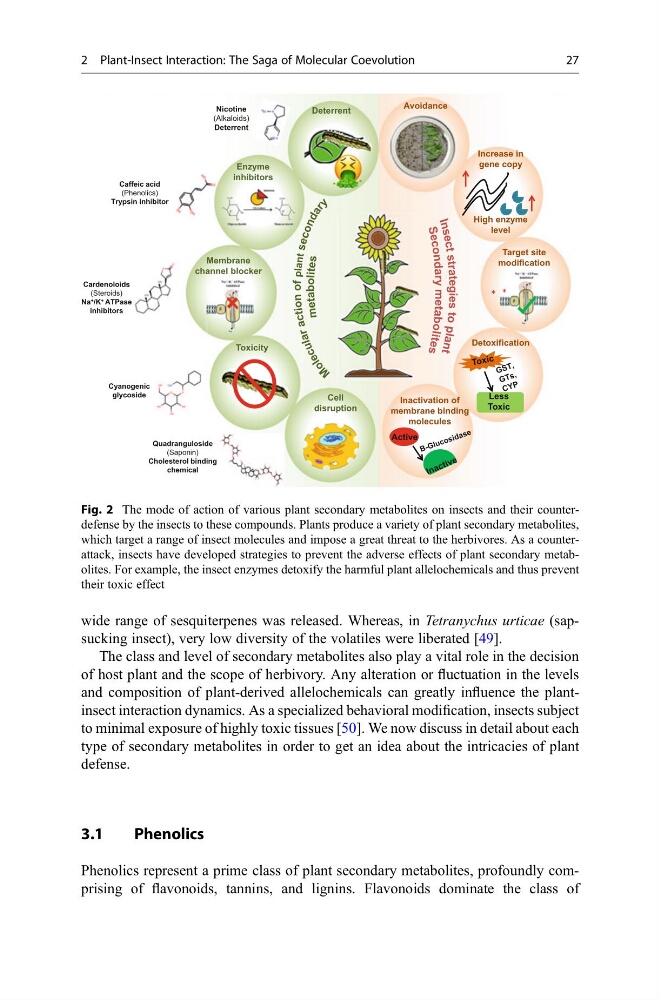
Fig. 2 The mode of action of various plant secondary metabolites on insects and their counterdefense by the insects to these compounds. Plants produce a variety of plant secondary metabolites,
which target a range of insect molecules and impose a great threat to the herbivores. As a counterattack, insects have developed strategies to prevent the adverse effects of plant secondary metabolites. For example, the insect enzymes detoxify the harmful plant allelochemicals and thus prevent
their toxic effect
2 Plant-Insect Interaction: The Saga of Molecular Coevolution
27
The class and level of secondary metabolites also play a vital role in the decision
of host plant and the scope of herbivory. Any alteration or fluctuation in the levels
and composition of plant-derived allelochemicals can greatly influence the plantinsect interaction dynamics. As a specialized behavioral modification, insects subject
to minimal exposure of highly toxic tissues [50]. We now discuss in detail about each
type of secondary metabolites in order to get an idea about the intricacies of plant
defense.
3.1
Phenolics
Phenolics represent a prime class of plant secondary metabolites, profoundly comprising of flavonoids, tannins, and lignins. Flavonoids dominate the class of
* *
Caffeic acid
(Phenolics)
Trypsin inhibitor
Cell
disruption
Enzyme
inhibitors
Membrane
channel blocker
Target site
modification
Avoidance
Increase in
gene copy
High enzyme
level
Toxicity
Deterrent
Detoxification
Less
Toxic
Inactivation of
membrane binding
molecules
Active
Cardenoloids
(Steroids)
Na + /K + ATPase
inhibitors
Cyanogenic
glycoside
Quadranguloside
(Saponin)
Cholesterol binding
chemical
Nicotine
(Alkaloids)
Deterrent
Fig. 2 The mode of action of various plant secondary metabolites on insects and their counterdefense by the insects to these compounds. Plants produce a variety of plant secondary metabolites,
which target a range of insect molecules and impose a great threat to the herbivores. As a counterattack, insects have developed strategies to prevent the adverse effects of plant secondary metabolites. For example, the insect enzymes detoxify the harmful plant allelochemicals and thus prevent
their toxic effect
2 Plant-Insect Interaction: The Saga of Molecular Coevolution
27