

Energy contents (calorie per unit weight) of tree leaves little affect food choice of
herbivores (Table 1). Black colobus monkeys have a negative effect of energy on
their food choice, but this is caused by negative correlation between energy and fiber
contents, the latter of which is avoided by them [32].
Clear preferences for soluble sugar and/or sweetness have been documented in
various mammals [8, 9, 14, 15]. They prefer to eat sweet food materials because
sweetness is a reliable marker of energy (caloric) content [13, 52, 53]. Likewise, roe
deer, black howlers, and giant flying squirrels prefer sweeter leaves when choosing
from various tree species [16, 35, 39]. Although these three species show positive
effects, four of seven have no effect of sugars when they select leaves (Table 1).
Some mammals have significant preferences for specific types of sugars [54–56],
whereas others do not [57, 58]. For example, the honey possum (Tarsipes rostratus),
which feeds only on nectar and pollen, has a significant preference to sucrose,
whereas the pygmy possum (Cercartetus concinnus), which feeds on a wide range
of foods, does not [59].
The contents of acid and neutral detergent fibers, celluloses, hemicelluloses,
lignins, acid detergent lignins, and their mixes have strongly negative effects (18
of 40 cases) on food selection (Table 1). Easily digestible leaves, estimated by the
residue after pepsin/cellulose enzyme treatments, are preferred by herbivores in most
(6 of 8) cases (Table 1). Strong relationships between fiber contents and digestibility
suggest avoidance of fiber-rich leaves [2]. Leaf toughness also increases with fiber
contents and, in general, herbivores avoid harder leaves and harder part of plants
[47]. Hemicellulose contents are, however, positively correlated with food
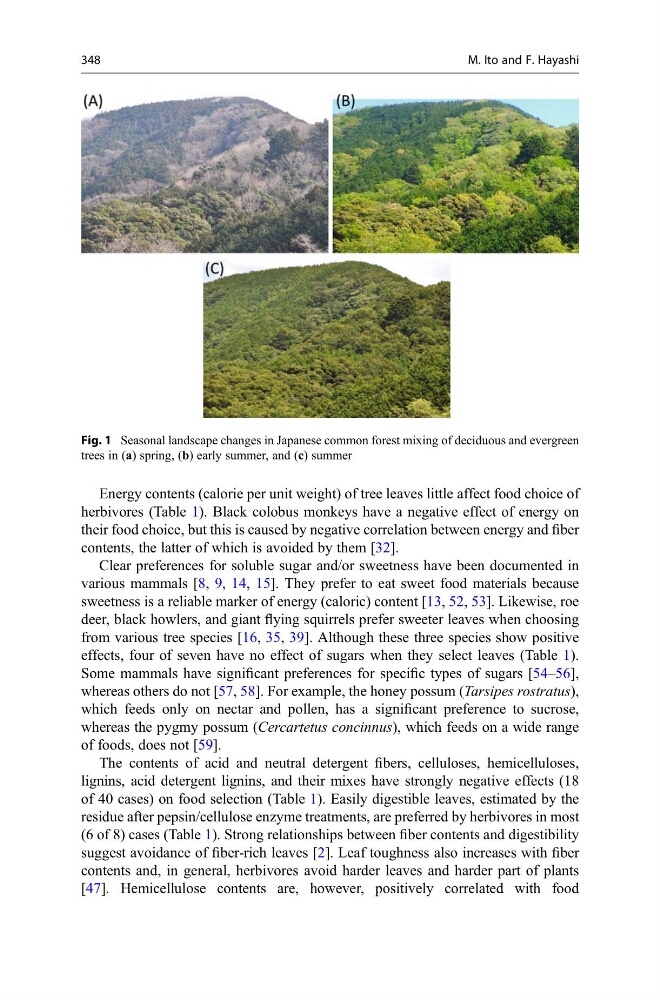
Fig. 1 Seasonal landscape changes in Japanese common forest mixing of deciduous and evergreen
trees in (a) spring, (b) early summer, and (c) summer
348
M. Ito and F. Hayashi
herbivores (Table 1). Black colobus monkeys have a negative effect of energy on
their food choice, but this is caused by negative correlation between energy and fiber
contents, the latter of which is avoided by them [32].
Clear preferences for soluble sugar and/or sweetness have been documented in
various mammals [8, 9, 14, 15]. They prefer to eat sweet food materials because
sweetness is a reliable marker of energy (caloric) content [13, 52, 53]. Likewise, roe
deer, black howlers, and giant flying squirrels prefer sweeter leaves when choosing
from various tree species [16, 35, 39]. Although these three species show positive
effects, four of seven have no effect of sugars when they select leaves (Table 1).
Some mammals have significant preferences for specific types of sugars [54–56],
whereas others do not [57, 58]. For example, the honey possum (Tarsipes rostratus),
which feeds only on nectar and pollen, has a significant preference to sucrose,
whereas the pygmy possum (Cercartetus concinnus), which feeds on a wide range
of foods, does not [59].
The contents of acid and neutral detergent fibers, celluloses, hemicelluloses,
lignins, acid detergent lignins, and their mixes have strongly negative effects (18
of 40 cases) on food selection (Table 1). Easily digestible leaves, estimated by the
residue after pepsin/cellulose enzyme treatments, are preferred by herbivores in most
(6 of 8) cases (Table 1). Strong relationships between fiber contents and digestibility
suggest avoidance of fiber-rich leaves [2]. Leaf toughness also increases with fiber
contents and, in general, herbivores avoid harder leaves and harder part of plants
[47]. Hemicellulose contents are, however, positively correlated with food
Fig. 1 Seasonal landscape changes in Japanese common forest mixing of deciduous and evergreen
trees in (a) spring, (b) early summer, and (c) summer
348
M. Ito and F. Hayashi