

compatible bacteria. At present time, over 10,000 different flavonoids have been
identified in plants. Flavonoids are low-molecular mass secondary metabolites,
which are synthetized via the central phenylpropanoid and acetate-maleic acid
pathways [18–20]. Structure of flavonoids is based on flavone backbone. Different
modifications of this basic structure yield the following subgroups of flavonoids:
flavones, flavonols, flavanones, isoflavones, isoflavans, pterocarpans, proanthocyanidins, and chalcones [18, 75]. Flavonoids can be produced as either
aglycons or glycosidic conjugates [20, 75]. In the form of glycosides, flavonoids
are more water-soluble and can diffuse easily from the root surface into the rhizosphere, where they may undergo hydrolysis to the aglycon form by rhizobia.
Moreover, the bacteria are able to affect the hydrophobicity of flavonoids, as it
was observed for R. meliloti, which produces cyclosophoraoses forming complex
with luteolin and enhancing its solubility [18, 81].
Flavonoids have been involved in many functions in plants, including pigmentation, protection against ultraviolet light, free radical scavenging, pollen fertility,
regulation of auxin transport, and defense against pathogenic bacteria and fungi
[17–20, 75]. In legumes, flavonoids also have a crucial role in the initiation of
the symbiosis acting as principal signals recognized by compatible rhizobia [20, 79].
2.3
Flavonoids as Plant Signal Molecules Activating Bacterial
NodD Factors
Under nitrogen-limiting conditions, legume roots or seeds secrete a cocktail of
different compounds, mostly flavonoids, into the soil. These compounds can passively diffuse across the bacterial membrane. These compounds play an important
role in legume-rhizobium symbiosis, first as chemoattractants for compatible species
of rhizobia and then as primary plant signals that regulate expression of many
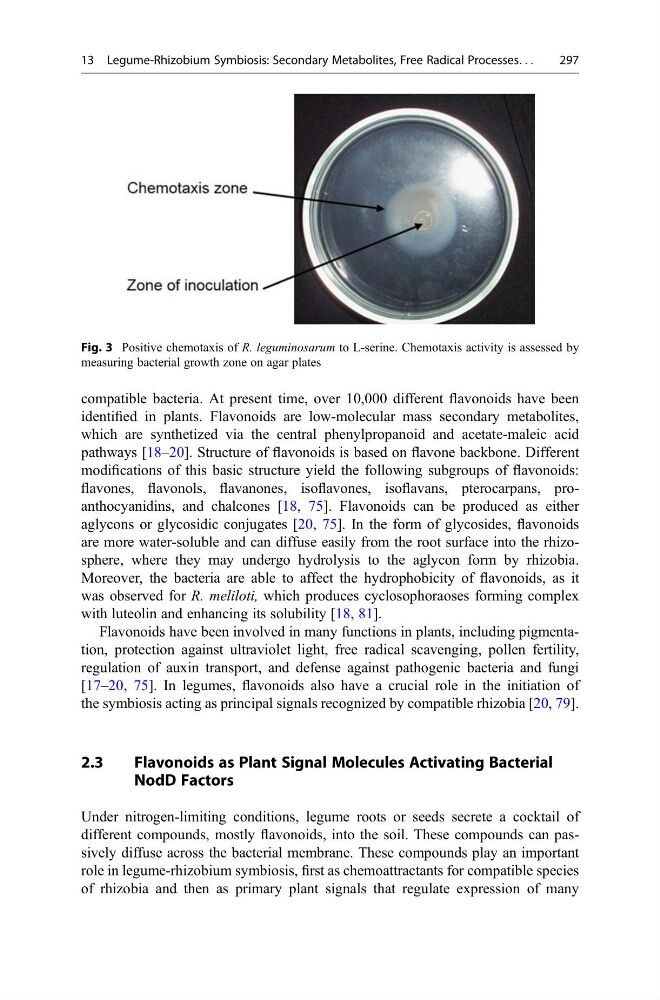
Fig. 3 Positive chemotaxis of R. leguminosarum to L-serine. Chemotaxis activity is assessed by
measuring bacterial growth zone on agar plates
13 Legume-Rhizobium Symbiosis: Secondary Metabolites, Free Radical Processes. . .
297
identified in plants. Flavonoids are low-molecular mass secondary metabolites,
which are synthetized via the central phenylpropanoid and acetate-maleic acid
pathways [18–20]. Structure of flavonoids is based on flavone backbone. Different
modifications of this basic structure yield the following subgroups of flavonoids:
flavones, flavonols, flavanones, isoflavones, isoflavans, pterocarpans, proanthocyanidins, and chalcones [18, 75]. Flavonoids can be produced as either
aglycons or glycosidic conjugates [20, 75]. In the form of glycosides, flavonoids
are more water-soluble and can diffuse easily from the root surface into the rhizosphere, where they may undergo hydrolysis to the aglycon form by rhizobia.
Moreover, the bacteria are able to affect the hydrophobicity of flavonoids, as it
was observed for R. meliloti, which produces cyclosophoraoses forming complex
with luteolin and enhancing its solubility [18, 81].
Flavonoids have been involved in many functions in plants, including pigmentation, protection against ultraviolet light, free radical scavenging, pollen fertility,
regulation of auxin transport, and defense against pathogenic bacteria and fungi
[17–20, 75]. In legumes, flavonoids also have a crucial role in the initiation of
the symbiosis acting as principal signals recognized by compatible rhizobia [20, 79].
2.3
Flavonoids as Plant Signal Molecules Activating Bacterial
NodD Factors
Under nitrogen-limiting conditions, legume roots or seeds secrete a cocktail of
different compounds, mostly flavonoids, into the soil. These compounds can passively diffuse across the bacterial membrane. These compounds play an important
role in legume-rhizobium symbiosis, first as chemoattractants for compatible species
of rhizobia and then as primary plant signals that regulate expression of many
Fig. 3 Positive chemotaxis of R. leguminosarum to L-serine. Chemotaxis activity is assessed by
measuring bacterial growth zone on agar plates
13 Legume-Rhizobium Symbiosis: Secondary Metabolites, Free Radical Processes. . .
297