

3
Coevolution: Mechanism and Consequences
Coevolution is the reciprocal evolutionary change (i.e., changes in the
allelic frequencies within population) in interacting species driven by natural selection
[92]. Coevolution can occur when two species influence each other’s evolution
(pairwise or specific coevolution) or when several species evolve in reciprocity with
another species (guild or diffuse coevolution) [165, 166]. Natural selection acts on the
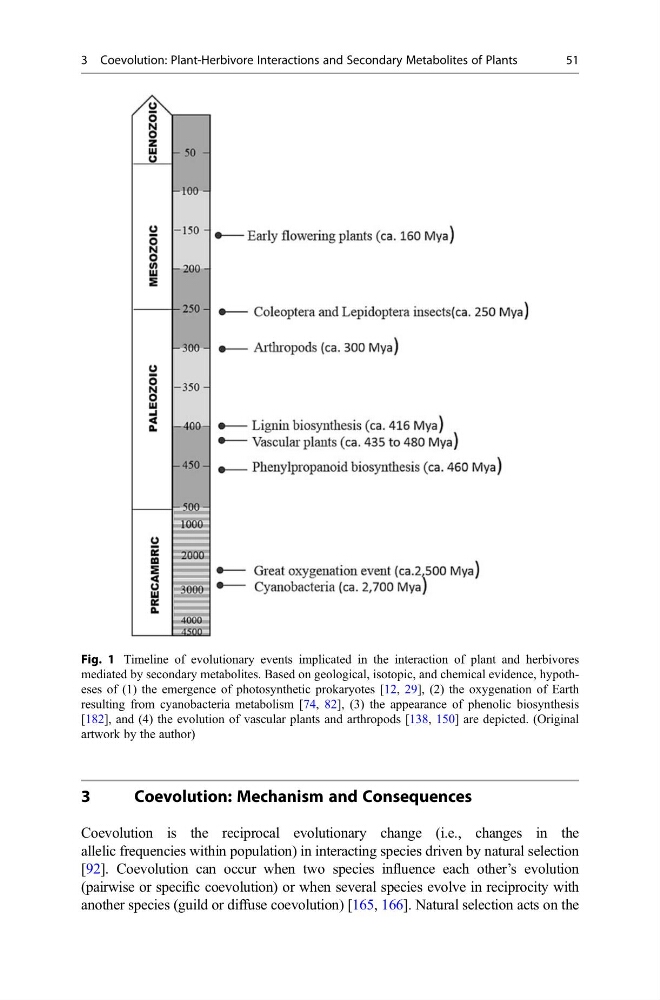
Fig. 1 Timeline of evolutionary events implicated in the interaction of plant and herbivores
mediated by secondary metabolites. Based on geological, isotopic, and chemical evidence, hypotheses of (1) the emergence of photosynthetic prokaryotes [12, 29], (2) the oxygenation of Earth
resulting from cyanobacteria metabolism [74, 82], (3) the appearance of phenolic biosynthesis
[182], and (4) the evolution of vascular plants and arthropods [138, 150] are depicted. (Original
artwork by the author)
3 Coevolution: Plant-Herbivore Interactions and Secondary Metabolites of Plants
51
Coevolution: Mechanism and Consequences
Coevolution is the reciprocal evolutionary change (i.e., changes in the
allelic frequencies within population) in interacting species driven by natural selection
[92]. Coevolution can occur when two species influence each other’s evolution
(pairwise or specific coevolution) or when several species evolve in reciprocity with
another species (guild or diffuse coevolution) [165, 166]. Natural selection acts on the
Fig. 1 Timeline of evolutionary events implicated in the interaction of plant and herbivores
mediated by secondary metabolites. Based on geological, isotopic, and chemical evidence, hypotheses of (1) the emergence of photosynthetic prokaryotes [12, 29], (2) the oxygenation of Earth
resulting from cyanobacteria metabolism [74, 82], (3) the appearance of phenolic biosynthesis
[182], and (4) the evolution of vascular plants and arthropods [138, 150] are depicted. (Original
artwork by the author)
3 Coevolution: Plant-Herbivore Interactions and Secondary Metabolites of Plants
51